• Skip to primary navigation
  • Skip to main content
  • Skip to primary sidebar
  • Skip to footer
TechEngage

TechEngage®

Hands-on reviews, research-backed buying guides and technology news.

  • News
    • Internet & Social
    • Gadgets
    • Car Tech
    • Business
    • Science & Health
  • Reviews
  • Buying Guides
  • How-to
  • AI
  • Computing
    • Apps
    • Security
    • Gaming
  • More
    • Tools
    • Puzzles
    • Mobile
  • Launchpad
  • Sign in
TechEngage » Internet & Social Media

MIT scientists create new deep learning model that aims to identify fake news

Avatar for Jessica Baron, PhD Jessica Baron, PhD Connect with Jessica Baron, PhD on LinkedIn Published: Feb 5, 2019 · 5:46 AM ET Updated: Jan 18, 2020 · 5:48 PM ET

NewsNews report. Not a buying guide or hands-on product test.
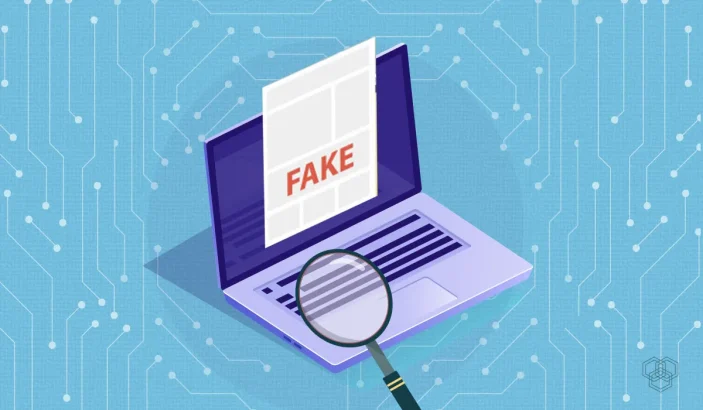
mit researchers to use deep learning to fight fake news
Design by Muntaha Hussain | TechEngage
Shares4FacebookTweetPinLinkedInPrint
Ever wonder how those fake news-detecting algorithms actually work? What, exactly, do they look for and how do they determine the context of a news story in order to classify it? Well, a research team at MIT wondered the same thing and they built a machine learning model that assesses the linguistic hints that indicate whether or not something is “fake news.” One of the problems with so many of the algorithms that govern our lives is that they are sold by companies who claim that their inner workings are intellectual property and so refuse to share the details of how the models work with those who use them. But the MIT scientists aimed to make their model as transparent as possible.
|
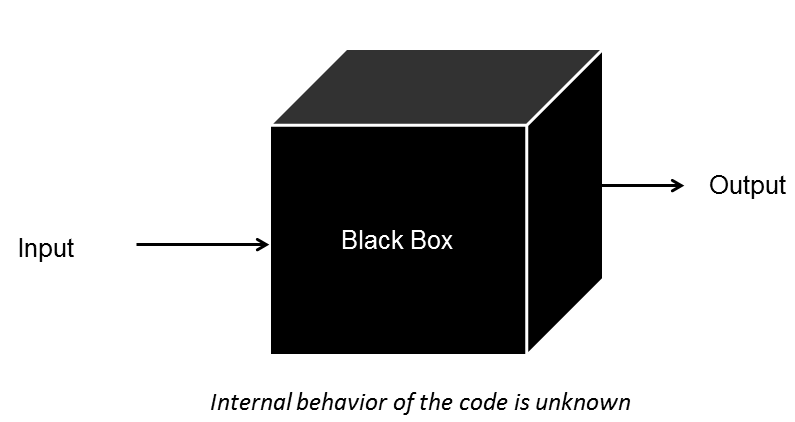
A “black boxed” algorithm, via 360 Logica.
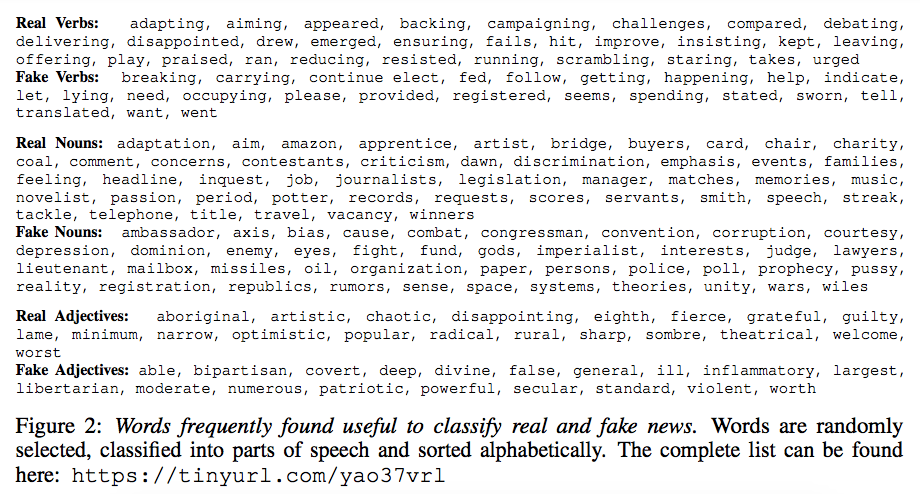
In a paper presented at the Conference and Workshop on Neural Information Processing Systems, the researchers claimed their model could help discover the ways in which algorithms can adapt to analyze newer news topics as well (that is, on issues that include new language the systems weren’t initially trained to assess). Most of the fake news detectors being used now, they claim, “classify articles based on text combined with source information, such as a Wikipedia page or website,” which may not be as reliable when assessing new topics. A press release on the research states that the team developed a deep learning model that works solely by classifying language patterns “which more closely represent a real-world application for news readers.” Their model searchers for words that appear frequently in both types of news to help in the classification – in the case of fake news, it identifies exaggerations and superlatives, for example, to help make an initial classification. You can find the complete list of words they found useful in classifying real and fake news on GitHub by clicking here, but here is a sample:
Screen Shot 2019 02 04 At 5.23.43 Pm |
Diagram via “The Language of Fake News: Opening the Black-Box of Deep Learning Based Detectors,” found at http://cbmm.mit.edu/sites/default/files/publications/fake-news-paper-NIPS.pdf
“In our case, we wanted to understand what was the decision-process of the classifier based only on language, as this can provide insights on what is the language of fake news,” says co-author Xavier Boix, a postdoc at MIT’s Center for Brains, Minds, and Machines (CBMM). In an effort to build a more reliable and transparent model, researchers used a convolutional neural network, which is often used to analyze visual images. These deep learning networks can learn filters that would have previously been hand-coded by engineers. This assures a certain amount of independence and seeks to reduce bias in the system. The researchers also needed to be careful not to train the system on solely political news. Their final product was trained on a set of articles that did not include the word “Trump.” Instead of searching for individual words, their model analyzed triplets of words. The model saw the triplets as patterns that provided more context. The researchers trained the model on a fake news dataset called Kaggle, which contains around 12,000 fake news pieces gathered from 244 different websites and then compiled their own dataset of real news samples with roughly 2,000 hand-picked articles from the New York Times and over 9,000 from The Guardian. The model worked with 87% accuracy (93% when they did an initial test including the word “Trump”). Because these models are often a black box even to those who create them, it’s the job of scientists to then “open them up” to determine how the algorithms operate. This team was able to pull out the instances in which the model made a prediction and track down the exact words it used in each article. This alone could make the model useful to readers if it were able to highlight potentially problematic phrases that citizens could then use to assess the trustworthiness of the source. Boix suggested that:
“If I just give you an article, and highlight those patterns in the article as you’re reading, you could assess if the article is more or less fake. It would be kind of like a warning to say, ‘Hey, maybe there is something strange here.'”
You can even test out their fake news pattern detector by clicking here. For now, the researchers are still working on the model and determining how to make it more useful for readers as well as intermediary automated fact-checkers. But they did suggest that it could be the basis of an app or browser extension in the future. “Fake news is a threat for democracy,” Boix says. “In our lab, our objective isn’t just to push science forward, but also to use technologies to help society. … It would be powerful to have tools for users or companies that could provide an assessment of whether news is fake or not.”

Related reading

  • Russia moves to control online speech with new law banning "fake news" and "disrespect"
  • Social media scammers looted atleast 770 million dollars
  • Social Media Strategies to Try
  • WhatsApp now supports up to four phones
Something incorrect? Report an error in this article. Include a source if you have one; your name and email are optional.

Filed Under: Internet & Social Media, Tech News & Analysis Tagged With: Fake NEWS, MIT, News, Research

Related Stories

  • Googlebook Shows How Android 17 And Gemini Intelligence Could Reshape Google’S Ecosystem

    Googlebook Shows How Android 17 and Gemini Intelligence Could Reshape Google’s Ecosystem

    AIMay 16, 2026

  • Play Fest illustration showing games, rewards and offers for October 13–19.

    Google Play Fest starts October 13: rewards and eligibility

    Tech News & AnalysisOct 10, 2026

  • Editorial illustration of CPU capacity, cloud delivery and AI services for the Akamai and Anthropic agreement.

    Akamai’s $11.6 billion Anthropic cloud deal: costs, timeline and CPU strategy

    Tech News & AnalysisSep 27, 2026

Stay on top of technology

Get TechEngage reviews, buying guides and news in your feed.

Follow on Google News
Shares4FacebookTweetPinLinkedInPrint
Avatar for Jessica Baron, PhD

Jessica Baron, PhD

Science & Health Tech Correspondent

Dr. Jessica Baron is a Science and Health Tech Correspondent at TechEngage. She holds a PhD in History and Philosophy of Science from the University of Notre Dame and has written for outlets including Forbes, HuffPost, and The Daily Beast. She covers health technology, cybersecurity, robotics, and artificial intelligence, bringing an academic and ethical perspective to her reporting.

Joined TechEngage December 2018First article on TechEngage January 2019

Reader Interactions

Share Your Thoughts Cancel reply

Please read our comment policy before submitting your comment. Your email address will not be used or published anywhere. You will only receive comment notifications if you opt to subscribe below.

Primary Sidebar

Google News

Get TechEngage in your feed

Reviews, news, and buying guides as they publish.

Follow on Google News

Recent Stories

  • Windows Screen Recording Guide |
    Apps & SoftwareHow to Screen Record on Windows 11 With AudioOct 10, 2026
  • Chrome Tabs Reloading Techengage |
    Apps & SoftwareHow to Stop Chrome Tabs From ReloadingOct 10, 2026
  • Techengage Windows 11 File Backup |
    Computing & HardwareHow to Back Up Windows 11 Files to an External DriveOct 10, 2026
  • Techengage Ssd Enclosures |
    Computing & Hardware3 Best SSD Enclosures for USB-C and USB4Oct 10, 2026
  • Techengage Office Copilot Frontier |
    AIMicrosoft brings Office editing to Copilot, Frontier firstOct 10, 2026

More in Internet & Social Media

  • Amazon Com Spend Less Smile More |
    Amazon Selling: How to Overcome Common ChallengesFeb 6, 2024
  • Word Image 106600 1 Jpeg |
    Explore Beneficial and Harmful Effects of Social Media UseAug 19, 2023
  • Whatsapp Now Supports Up To Four Phones Jpg |
    WhatsApp now supports up to four phonesApr 27, 2023
  • How To Get Verified On Twitter Jpg |
    How to Get Verified on X/TwitterApr 5, 2023
More Internet & Social Media stories →

Footer

Discover

  • About TechEngage
  • Company News & Updates
  • Our Team
  • Advertise
  • Send us a tip
  • Submit your company to TechEngage Launchpad Hot
  • TechEngage Brand Kit
  • Contact us
  • Tools & Calculators

Legal pages

  • Editorial Standards
  • Reviews Policy
  • Our Ethics
  • Corrections Policy
  • Affiliate Disclosure
  • Privacy Policy
  • Cookies Policy
  • Terms & Conditions
  • GDPR Compliance
  • Copyright & DMCA

Must reads

  • Best Mechanical Keyboards Under $100
  • Best USB-C Hubs
  • Best Portable SSDs
  • Best Gaming Graphics Cards (GPUs)
  • Best Long-Range Outdoor WiFi Extenders
  • Best Wireless CarPlay Adapters
  • Best Slack Alternatives
  • Best Long-Range Walkie-Talkies

Download our apps

TechEngage app coming soon on the App Store Available onChrome

© 2026 TechEngage®. All Rights Reserved. TechEngage® is a project of TechAbout LLC.

TechEngage® is a registered trademark in the United States under Trademark Number 6823709 and in the United Kingdom under Trademark Number UK00003417167. It is also ISSN protected under ISSN 2690-3776 and has OCLC Number 1139335774.

Contact team@techengage.com · WhatsApp +1-307-381-8801

Your analytics choice
Allow Google Analytics to help us understand readership? You can use the site without it and change this choice anytime.

Privacy details