

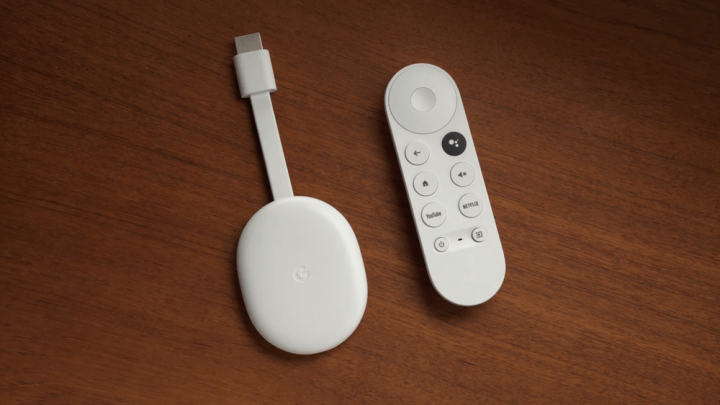
The dedicated Netflix and YouTube buttons on a Google TV remote are there because someone paid for them, not because you asked for them. If you never open Netflix but live in Plex, Prime Video or Jellyfin, those buttons are wasted real estate on the one piece of hardware you touch every single evening.
The good news is that you can change what they do — and how you do it depends entirely on which box you own. Google discontinued the Chromecast line in 2024 and replaced it with the Google TV Streamer, whose remote finally includes a proper customizable button that Google itself lets you program. If you are still on a Chromecast with Google TV, there is no such built-in option for the service buttons, and you will need a third-party app. This guide covers both routes.
First, work out which remote you have
- Chromecast with Google TV (2020 4K model and the 2022 HD model) — a small oval dongle that hangs off the HDMI port. The remote has YouTube and Netflix buttons, a Google Assistant button, and no customizable button.
- Google TV Streamer (launched September 2024, $99.99 at introduction and frequently discounted since) — a flat set-top box rather than a dongle, with a faster processor, 4GB of RAM, 32GB of storage and smart-home hub duties. Its redesigned Voice Remote adds two things people had asked for: a customizable button marked with a star icon, and a find-my-remote chime.
If you can see a star button on your remote, start with the next section. If you cannot, skip ahead to the Chromecast sections.
Google TV Streamer: set up the customizable star button
This is the easy one, because it is an official feature with no app and no payment involved. The star button can be pointed at one of three things:
- Google Home — opens the Google Home panel, so the button becomes a smart-home shortcut for lights, cameras and thermostats.
- A favourite app — pick any installed app and the button launches it.
- Device inputs — turns the button into an input switcher for your TV or other connected devices, so you can cycle through HDMI sources without hunting for the TV’s own remote.
How to create the shortcut
- Press the customizable (star) button on the remote. Because nothing is assigned yet, Google TV shows you the three choices above.
- Pick what you want it to do — Google Home, an app from the list, or your device inputs.
- Select “Create shortcut.” You get an on-screen confirmation when it is done.
- If you chose device inputs, you will be asked to select or add your device first; after that, each press of the star button cycles through inputs, and you confirm your preferred one when prompted.
How to change it later
Two ways:
- The shortcut: hold the star button down for one to two seconds and the edit menu appears, letting you reassign it on the spot.
- Through Settings: go to All Settings → Remotes & Accessories → Set up remote buttons → Customizable button.
The honest limitation: there is only one customizable button. Google’s implementation is clean and reliable, but it does not touch the Netflix or YouTube buttons — those still do what the sticker says. If you want to reclaim those too, you are back to the third-party route below, which works on the Streamer as well as on the older Chromecast.
Chromecast with Google TV: remap the YouTube button
The YouTube button has a small built-in flexibility that most people never discover. It will not launch a non-YouTube app, but it will let you choose which YouTube app it opens:
- Press and hold the YouTube button for a couple of seconds until a menu appears on screen.
- Choose the app you want from the YouTube family that is installed on your device — YouTube, YouTube Kids, YouTube TV or YouTube Music. Your choice sticks.
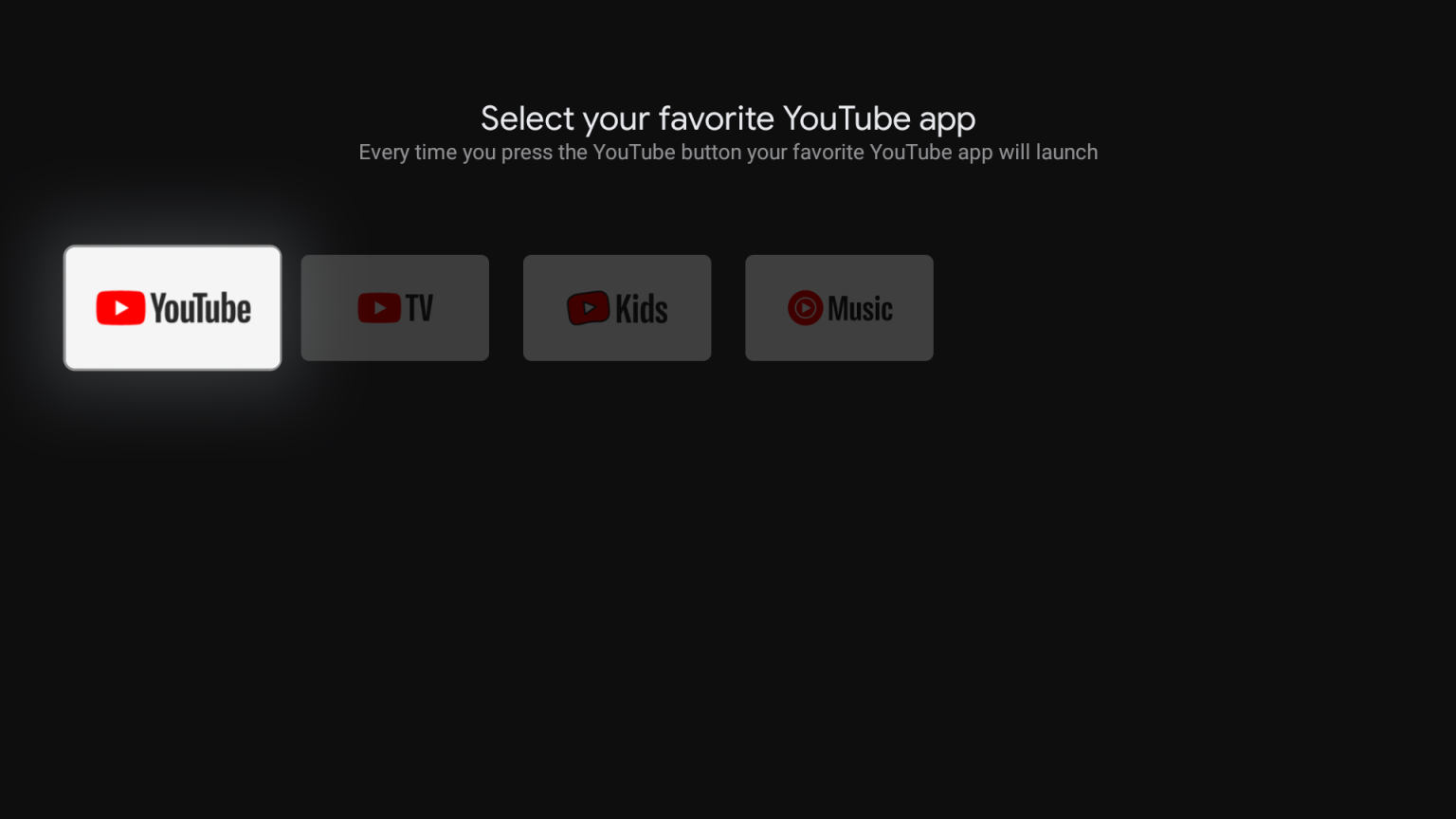
For households where the TV is mostly used for YouTube Kids or YouTube TV, this alone is worth the ten seconds it takes. If you want the button to open something outside the YouTube family, keep reading.
Remap the Netflix button (and any other button) with Button Mapper
The Netflix button has no built-in override at all, so this needs a third-party app. Button Mapper is the established choice: it is free to install, with an in-app purchase of $4.99 plus tax to unlock the pro features you need for remote buttons. It works on Chromecast with Google TV and on the Google TV Streamer, where it goes further than Google’s single star button by letting you remap essentially any button on the remote.
Step 1: install it on the TV device
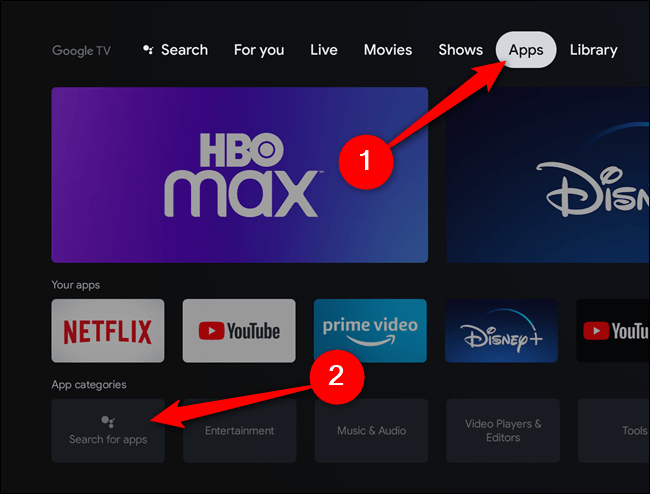
- Open the Apps row on your Google TV home screen and select Search for apps.
- Use the Google Assistant button on the remote and say “Button Mapper” — voice search is far quicker than picking letters off an on-screen keyboard.
- Install Button Mapper: Remap your keys, then open it.
Step 2: grant the accessibility permission
Button Mapper works by watching for physical button presses, which on Android requires an accessibility service. The app will prompt you, or you can enable it yourself at Settings → System → Accessibility → Button Mapper. Nothing you do in this guide works until that toggle is on.
Step 3: map the button
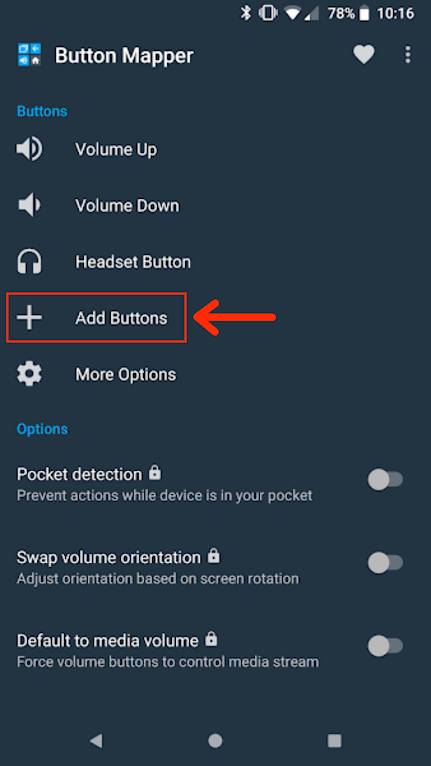
- In Button Mapper, select Add Buttons.
- Press the physical button you want to change — the Netflix button, in this example. It appears in the list underneath.
- Select it, then assign what it should do: launch a specific app, open the app drawer, take a screenshot, or trigger a system action.
Step 4: get three actions out of one button
This is where Button Mapper earns the $4.99. Each button supports a single tap, a double tap and a long press, each with its own action. A practical setup on a four-button remote:
- Netflix — single tap: Plex or Jellyfin. Double tap: Prime Video. Long press: Netflix, so you keep it for the one person in the house who still uses it.
- YouTube — leave the single tap alone, and put YouTube Music on the double tap.
Limitations worth knowing before you start
- The first press after the TV wakes up may not be remapped. Button Mapper is not running while the device is asleep, so pressing Netflix on a cold, off TV can launch Netflix anyway. Once the device is awake, remaps behave normally. Waking the box first with the power or home button avoids it.
- Media controls are unreliable targets. Remapping a button to launch an app or take a screenshot works well; mapping one to fast-forward or rewind through Google TV’s media controls generally does not.
- An accessibility service is required. Some people are uncomfortable granting that level of access, and it is a fair reservation — accessibility services can observe on-screen content. This is the trade-off for remapping hardware buttons on Android.
- The star button and Button Mapper are separate systems. On a Google TV Streamer, Google’s customizable button setting and Button Mapper’s assignment for the same button can conflict. Configure one or the other, not both.
- Updates can reset things. A major Google TV update occasionally clears accessibility permissions. If your buttons revert, re-check the accessibility toggle before assuming the app broke.
Alternatives to Button Mapper
tvQuickActions Pro is the main rival and is built specifically for Android TV and Google TV rather than adapted from a phone app. Alongside button remapping it adds things like a custom sidebar, an ambient-mode replacement and gesture shortcuts, so it is worth a look if you want more than button changes. If all you need is “make the Netflix button open Plex,” Button Mapper is the simpler purchase.
A no-app alternative on the Streamer: if the only button you truly care about is one shortcut, Google’s built-in star button covers it for free, with none of the accessibility-permission or cold-start caveats.
Troubleshooting
- Nothing happens when I press the button. Check the accessibility service is still enabled at Settings → System → Accessibility, and that you unlocked Button Mapper’s pro features.
- The star button does not respond. Confirm the remote is paired at All Settings → Remotes & Accessories, and try holding the button for one to two seconds to force the edit menu.
- Button Mapper does not see my button press. A few buttons are handled in firmware rather than passed to Android and cannot be intercepted; the power button is the usual example.
- My remote keeps disconnecting. That is a pairing or battery problem, not a remapping one. Replace the batteries and re-pair before troubleshooting the software.
FAQs
Can I remap the Netflix button without paying for an app?
Not on a Chromecast with Google TV — there is no built-in option for the Netflix button, so a third-party app is the only route. On a Google TV Streamer you get one free customizable button (the star), but it is a separate button, not a replacement for Netflix.
Does the Google TV Streamer remote work with an old Chromecast?
The remotes pair with their own device and are not intended to be mixed and matched. Buying a Streamer remote to gain a star button on an older Chromecast is not a supported upgrade path.
Is my Chromecast with Google TV obsolete now that it is discontinued?
Discontinued means Google stopped selling it, not that it stopped working. It still runs Google TV and still receives app updates. The Streamer’s advantages are speed, more storage, the smart-home hub role and the better remote — worth it if your Chromecast feels sluggish or keeps running out of storage, not urgent otherwise.
Will remapping void my warranty or break Google TV?
No. Button Mapper is a normal Play Store app using a documented Android accessibility API — no rooting, no unlocked bootloader, no system modification. Uninstalling it returns every button to its factory behaviour.
Can I make a button turn the TV volume up?
Volume on Google TV usually travels over HDMI-CEC or IR to the TV itself rather than through Android, so volume and media actions are the least reliable remap targets. App launching is what works consistently.
The bottom line
On a Google TV Streamer, spend two minutes on the star button first — it is free, official and survives reboots. On a Chromecast with Google TV, long-press the YouTube button to choose which YouTube app it opens, then decide whether reclaiming the Netflix button is worth $4.99 and an accessibility permission. For most people who watch something other than Netflix every night, it is.


Share Your Thoughts