

Mirroring your Android phone to a TV is still one of the easiest ways to turn a small screen into a big one — for showing holiday photos, playing a mobile game on the couch, sharing a slideshow, or watching a video that only lives inside an app. The good news is that in 2026 you no longer need any extra cables or a specialist gadget. If your TV has Chromecast built in — and most Google TV, Android TV, and modern smart TVs do — your Android phone can beam its screen straight to it over Wi-Fi.
This guide walks through every reliable way to mirror or cast from Android in 2026, explains the difference between the two, and covers what changed now that Google has retired the standalone Chromecast dongle.
What you need before you start
Screen mirroring is wireless, but it depends on a few things lining up. Run through this short checklist first:
- An Android phone or tablet running a reasonably recent version of Android (Android 8.0 or newer covers virtually every phone still in use).
- A Chromecast-capable display. That means a Chromecast device, a Google TV Streamer, an Android TV / Google TV set, or any smart TV that lists “Chromecast built-in” in its specs.
- The same Wi-Fi network for both the phone and the TV. This is the single most common reason mirroring fails — a phone on 5 GHz and a TV on 2.4 GHz of the same router usually still works, but a phone on mobile data or a guest network will not.
- The Google Home app installed on your phone (free on the Play Store) if you want to mirror your whole screen.
Casting vs. mirroring: what’s the difference?
People use these words interchangeably, but they do two different things, and knowing which you want saves a lot of confusion.
- Casting sends a single app’s content to the TV — you tap the Cast icon inside YouTube or Netflix, and the TV streams that video directly from the internet. Your phone becomes a remote, so you can lock it, take calls, or leave the room and the video keeps playing. This is smoother, uses less battery, and plays at full quality.
- Mirroring copies your entire phone screen to the TV in real time — everything you see and do, including the home screen, settings, and apps that don’t have a Cast button. It’s the right choice for photos, presentations, games, or any app without native casting, but it drains battery faster and can lag slightly.
If the app you want to watch has a Cast button, use casting. If it doesn’t, mirror the whole screen instead.
Method 1: Mirror your whole screen with the Google Home app
This is the most dependable way to mirror an entire Android screen to a Chromecast or Google TV device.
- Make sure your phone and your Chromecast/Google TV are on the same Wi-Fi network.
- Open the Google Home app and sign in with the same Google account your TV device is set up under.
- Tap the TV or Chromecast device from your list of devices.
- Tap Cast my screen at the bottom of the device screen.
- Confirm by tapping Cast screen on the pop-up. Android will warn that everything on your screen — including notifications and passwords — will be visible on the TV. Tap Start now.
Your phone screen now appears on the TV. To stop, reopen Google Home, tap the device, and choose Stop mirroring, or tap the cast notification in your phone’s notification shade.
Method 2: Use Android’s built-in screen mirroring (Cast / Smart View)
Most Android phones have a mirroring shortcut baked into Quick Settings, so you can skip the Google Home app entirely. The name changes by brand, which is why it can be hard to find:
- Stock Android / Pixel: called Cast or Screen Cast.
- Samsung Galaxy: called Smart View.
- Xiaomi / Redmi: Cast or Xiaomi Cast.
- Others may label it Screen Mirroring, Screencast, or MirrorShare.
To use it, swipe down from the top of the screen to open Quick Settings, tap the Cast (or Smart View) tile, and pick your TV from the list. If you don’t see the tile, open Settings > Connected devices > Cast, or edit your Quick Settings panel to add the tile. Once connected, your screen appears on the TV instantly.
Method 3: Cast a single app (YouTube, Netflix, Disney+ and more)
For streaming apps, casting one app is nearly always better than mirroring the whole screen because the TV pulls the video straight from the internet in full resolution.
- Open the streaming app on your phone (YouTube, Netflix, Disney+, Spotify, and thousands of others support this).
- Start playing something, then tap the Cast icon — a small rectangle with a Wi-Fi symbol in the corner, usually near the top of the app.
- Select your TV from the list. The video jumps to the big screen and your phone becomes the remote.
Because the phone isn’t doing the heavy lifting, you can lock it, switch apps, or queue up the next video while the current one plays.
What happened to Chromecast in 2026?
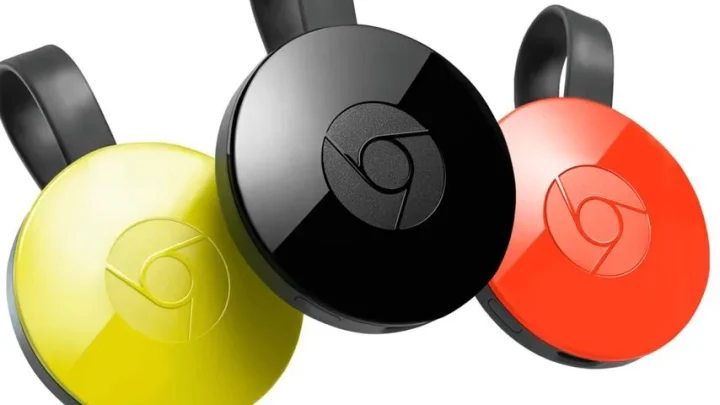
Google officially discontinued the Chromecast line in 2024 and stopped selling the last model, Chromecast with Google TV, through 2025. Its successor is the Google TV Streamer, a more powerful set-top box with a faster processor and far more storage. If you already own any Chromecast, don’t worry: existing devices keep working and continue to receive software and security updates, and they still accept casting exactly as before.
Crucially, you don’t need a Chromecast dongle at all if your TV already has Chromecast built in — which the Google TV Streamer, every Google TV / Android TV set, and a huge number of smart TVs from Sony, TCL, Hisense, and others include out of the box. In those cases the cast target simply appears in the list automatically.
Troubleshooting: when mirroring won’t connect
- TV not showing up? Confirm both devices are on the exact same Wi-Fi network — not a guest network, and not mobile data.
- Connection keeps dropping? Move closer to the router, or restart both the phone and the TV/Chromecast. Weak Wi-Fi is the usual culprit for stuttering.
- Video plays but no sound? Check the TV isn’t muted and that your phone’s media volume is up — mirroring uses the phone’s volume controls.
- App refuses to cast? A few apps block mirroring for copyright reasons (some banking and paid-streaming apps). Use that app’s own Cast button instead of full-screen mirroring.
- Still stuck? Update the Google Home app and your phone’s system software, then reboot the router.
FAQs
Can I mirror my Android phone to a TV without a Chromecast?
Yes — if your TV has Chromecast built in (common on Google TV, Android TV, and many smart TVs), you don’t need a separate dongle. If it doesn’t, you’ll need a Chromecast, a Google TV Streamer, or another Cast-compatible receiver.
Do my phone and TV need to be on the same Wi-Fi?
For standard casting and mirroring, yes. Both devices must share the same network. Some newer devices support “guest mode” casting without matching networks, but same-Wi-Fi is the reliable default.
Does screen mirroring work with an iPhone too?
Chromecast-style mirroring is built for Android. iPhones use AirPlay, which works with Apple TV and AirPlay-compatible smart TVs. iPhone streaming apps can still cast to Chromecast using each app’s own Cast button.
Will mirroring drain my battery?
Full-screen mirroring keeps the display and Wi-Fi radio working hard, so it does use more battery. Casting a single app (Method 3) uses much less, since the TV does the streaming while your phone idles.
The bottom line
Mirroring an Android phone to a TV in 2026 takes seconds once everything is on the same Wi-Fi. Use the Google Home app or your phone’s built-in Cast tile to mirror the whole screen for photos, games, and presentations — and use an app’s own Cast button for the smoothest, highest-quality streaming. Chromecast the dongle may have been retired, but Chromecast the technology is now built into more TVs than ever, which means big-screen Android mirroring is easier today than it has ever been.



Share Your Thoughts