

Disclosure: TechEngage is a participant in the Amazon Services LLC Associates Program, an affiliate advertising program designed to provide a means for sites to earn fees by linking to Amazon.com and affiliated sites. We may earn a commission when you buy through links on this page, at no extra cost to you. Our editorial picks are made independently of these partnerships.
My family’s Friday night board game tradition started during 2020 lockdowns, and six years later, we haven’t missed a single week. That weekly ritual taught me something surprising: the board game industry has gone through a genuine renaissance. The games releasing now are smarter, more engaging, and more accessible than anything we grew up with. They’ve also gotten better at keeping everyone at the table — from my 7-year-old nephew who hates losing to my mother-in-law who swears she doesn’t like “complicated games” but somehow dominates Azul every single time.
I’ve played well over 200 different board games in the last six years. Bought many, returned some, and worn out a few favorites so badly we had to buy replacements. This list reflects games that actually survived repeated family play — not just titles with high ratings on BoardGameGeek or strong Amazon reviews, though most of these have both. Every game here is included because it shows up repeatedly in family-play reports, BoardGameGeek ratings, and retailer reviews for mixed-age groups — not because TechEngage ran a lab playtest.
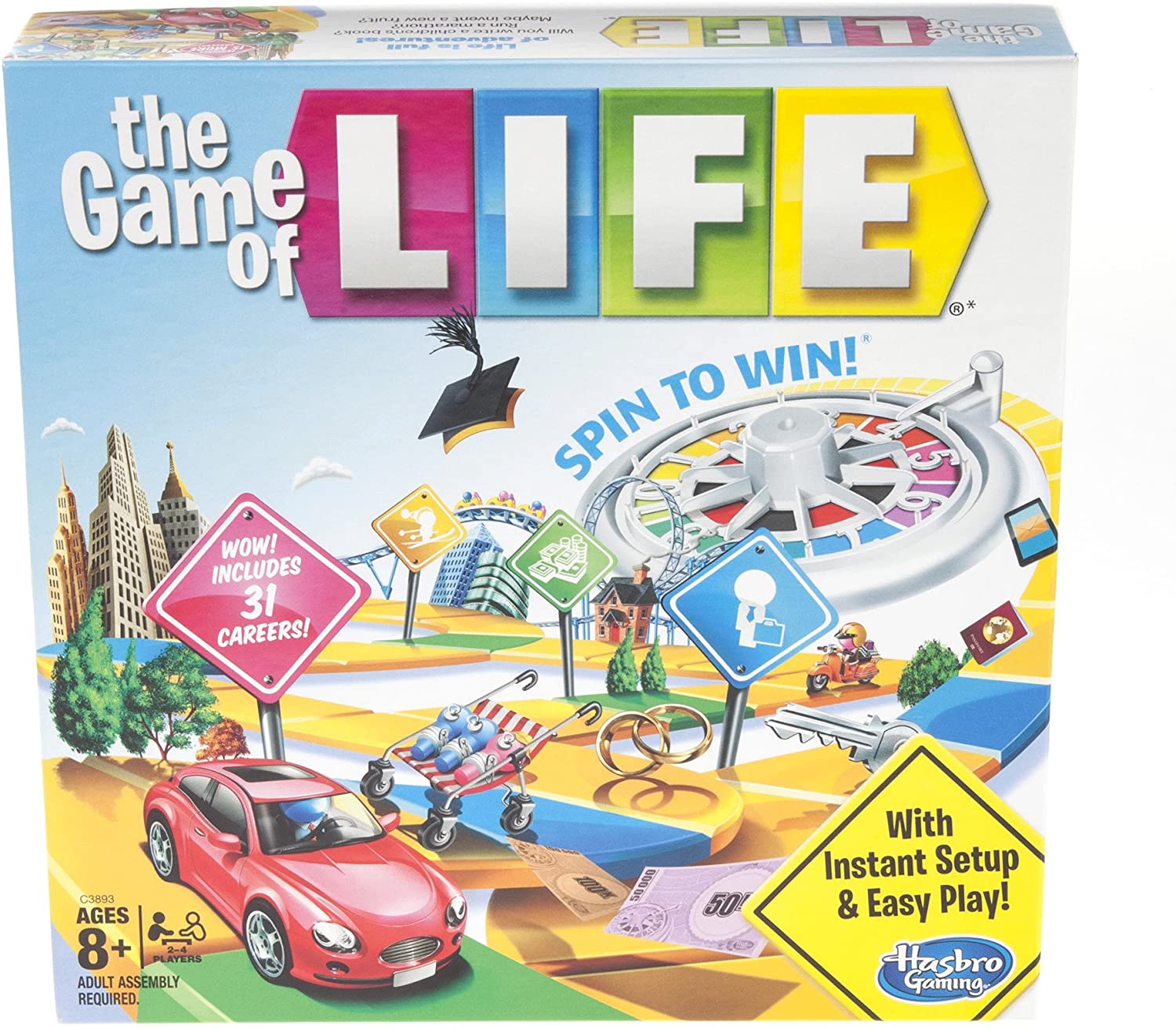
Table of Contents
Quick Comparison: All 15 Family Board Games at a Glance
| Game | Players | Ages | Time | Category | Price |
|---|---|---|---|---|---|
| Ticket to Ride | 2-5 | 8+ | 30-60 min | Strategy | $.... (Product detail is unavailable temporarily) |
| Catan | 3-4 | 10+ | 60-90 min | Strategy | $54.99 |
| Azul | 2-4 | 8+ | 30-45 min | Strategy | $.... (Product detail is unavailable temporarily) |
| Cascadia | 1-4 | 10+ | 30-45 min | Strategy | $.... (Product detail is unavailable temporarily) |
| Codenames | 4-8+ | 10+ | 15-30 min | Party | |
| Telestrations | 4-8 | 8+ | 20-30 min | Party | |
| Exploding Kittens | 2-5 | 7+ | 15 min | Party | $19.82 |
| Pandemic | 2-4 | 8+ | 45-60 min | Cooperative | $44.99 |
| Forbidden Island | 2-4 | 10+ | 30 min | Cooperative | $.... (Product detail is unavailable temporarily) |
| Sushi Go! | 2-5 | 8+ | 15 min | Quick | |
| Spot It! | 2-8 | 6+ | 10-15 min | Quick | $.... (Product detail is unavailable temporarily) |
| Wingspan | 1-5 | 10+ | 40-70 min | Strategy | $.... (Product detail is unavailable temporarily) |
| Clue | 2-6 | 8+ | 45 min | Classic | |
| The Game of Life | 2-4 | 8+ | 45-60 min | Classic | $24.17 |
| Monopoly Deal | 2-5 | 8+ | 15 min | Classic/Quick | $7.99 |
Strategy Games That Keep the Whole Family Thinking
Strategy games get families engaged on a level that simple roll-and-move games can’t match. The key is finding ones with rules simple enough for younger players but depth sufficient to keep adults invested. These five nail that balance.
1. Ticket to Ride — The Perfect Gateway Strategy Game
| Price & Details | |
|---|---|
| Brand | Days of Wonder |
| $.... (Product detail is unavailable temporarily) |
If I could only recommend one game to a family that’s never played modern board games, it would be Ticket to Ride without hesitation. The concept is dead simple: collect colored train cards and use them to claim railway routes across a map of the United States. You’re trying to connect cities listed on your secret destination tickets while blocking opponents from their routes.
What makes this game brilliant for families is the tension between greed and caution. Do you grab that long route for big points, or do you play it safe with shorter connections? My kids picked up the rules within a single round, but six years later we’re still discovering new strategic wrinkles. The game has sold over 10 million copies since its 2004 release, and Days of Wonder has released map expansions covering Europe, Asia, Africa, and more — so the replay value is enormous.
Who it’s best for: First-time strategy game families. Kids who love maps and geography. Groups of 3-5 players looking for a 45-minute engagement.
2. Catan — The Trading Game That Teaches Negotiation

| Price & Details | |
|---|---|
| Price | $54.99 |
| Rating on Amazon | 4.8 out of 5 stars |
| Brand | Catan Studio |
| Check availability on Amazon |
Catan (formerly Settlers of Catan) has been the gateway drug of modern board gaming since it launched in Germany in 1995. Over 40 million copies sold worldwide, translated into 40+ languages, and still going strong three decades later. There’s a reason for that longevity.
Players settle on an island, collect resources (wood, brick, sheep, wheat, ore), and trade with each other to build settlements, cities, and roads. The genius is in the trading. You need resources you don’t have, other players have them, and suddenly your 10-year-old is negotiating three-way deals with the sophistication of a Wall Street broker. I’ve watched kids develop genuine negotiation instincts through this game — reading opponents, timing offers, understanding leverage. Those are life skills disguised as entertainment.
The base game supports 3-4 players, though a 5-6 player expansion is available. Games run 60-90 minutes, which is the upper limit for younger players, so I’d recommend this for families with kids 10 and older. The randomized board setup means no two games play identically.
Who it’s best for: Families with pre-teens and teenagers. Groups that enjoy negotiation and social interaction. Anyone looking for a game with massive replay value and expansion options.
3. Azul — Beautiful, Tactile, and Surprisingly Cutthroat
| Price & Details | |
|---|---|
| Brand | Next Move Games |
| $.... (Product detail is unavailable temporarily) |
Azul won the prestigious Spiel des Jahres (Game of the Year) in 2018, and it earned that honor. Inspired by Portuguese azulejo tiles, players draft colored resin tiles from shared factory displays and arrange them on their personal player boards to score points through patterns and placement.
The physical components deserve special mention. The tiles have a satisfying weight and click when placed. Kids and adults both comment on how good they feel to handle — and that tactile pleasure keeps people engaged even when they’re learning the strategy. It’s one of those rare games where the first impression is “this is pretty” and the tenth impression is “this is deep.”
Fair warning: Azul gets competitive fast. Experienced players will intentionally dump unwanted tiles onto opponents, causing negative point penalties. My usually peaceful family has had some genuinely heated Azul sessions. That said, the games are short enough (30-45 minutes) that grudges rarely last past the next round.
Who it’s best for: Families who appreciate aesthetic design. Players who want a game that’s easy to learn but rewards repeated play. Two-player households — Azul shines at 2 players unlike many family games.
4. Cascadia — Relaxing Strategy With Wildlife Charm
| Price & Details | |
|---|---|
| Brand | Flatout Games / AEG |
| $.... (Product detail is unavailable temporarily) |
The 2022 Spiel des Jahres winner, Cascadia is a tile-laying game set in the Pacific Northwest. You’re building habitats and populating them with wildlife — bears, salmon, hawks, elk, and foxes — each with different scoring patterns. The gameplay is soothing: no direct conflict, no blocking, no take-that moments. You’re building your own landscape and scoring based on how well you place your animals.
This makes Cascadia the ideal game for families that hate confrontation. If someone in your household throws the board when they get blocked in Ticket to Ride (no judgment — I’ve been that person), Cascadia removes that friction entirely. Everyone builds their own nature preserve in parallel, and the scoring comparison happens at the end.
It also has an excellent solo mode, which is rare for family games. If your kids want to practice on their own or you want a quiet evening activity, the single-player variant holds up surprisingly well.
Who it’s best for: Families with competitive tension issues. Nature lovers. Solo gamers who want a game the whole family can also enjoy. Younger kids (with light guidance) who respond well to animal themes.
5. Wingspan — For Families Ready to Level Up
| Price & Details | |
|---|---|
| Brand | Stonemaier Games |
| $.... (Product detail is unavailable temporarily) |
Wingspan is the game you graduate to after Ticket to Ride and Catan start feeling predictable. It’s an engine-building game where you attract birds to your wildlife preserves, each bird card triggering chain reactions of actions as your engine grows more powerful over four rounds. With over 170 unique bird cards (each featuring real species with accurate wingspan data, habitat, and diet information), the game is genuinely educational.
The production quality from Stonemaier Games is exceptional: a dice tower shaped like a birdhouse, pastel-colored eggs, and gorgeous bird illustrations by artists Natalia Rojas and Ana Maria Martinez Jaramillo. It looks stunning on the table and draws non-gamers in through sheer visual appeal.
This is the most complex game on this list. First-game teaching sessions run 20-30 minutes, and play time is 40-70 minutes. I’d recommend it for families with older kids (12+) or families who’ve already built experience with lighter games. Once it clicks, though, it becomes a permanent collection staple.
Who it’s best for: Bird enthusiasts (seriously — birdwatchers love this game). Families with teens. Groups looking for deeper strategy without the 3-hour commitment of heavy euros.
Party Games That Get Everyone Laughing
Party games prioritize laughs and social interaction over strategy. They accommodate larger groups, play quickly, and typically require zero prior gaming experience. These three are my family’s go-to options when grandparents visit or when we have friends over with their kids.
6. Codenames — The Word Association Game That Reveals How Your Family Thinks

| Price & Details | |
|---|---|
| Rating on Amazon | 4.8 out of 5 stars |
| Brand | Czech Games Edition |
| Check availability on Amazon |
Codenames splits players into two teams. A grid of 25 words sits on the table, and each team’s spymaster gives one-word clues to guide their teammates toward the correct words while avoiding the other team’s words and the dreaded assassin card. The catch: your clue has to connect multiple words. Saying “vehicle, 3” means three of your team’s words relate to vehicles somehow.
The game is fascinating as a family activity because it reveals how differently family members think. My wife and I have been together for 15 years, and Codenames regularly exposes completely different mental associations between us. It’s a game that creates stories — “remember when Dad said ‘OCEAN’ and you guessed HORSE?” Those shared memories are worth more than any victory.
Codenames works with 4-8+ players (best at 6-8), plays in 15-30 minutes, and has a two-player cooperative variant called Codenames: Duet that’s excellent for parent-child pairs. If you enjoy word games and brain training activities, Codenames scratches that same itch in a social setting.
Who it’s best for: Large family gatherings. Holiday parties. Families who enjoy word games. Groups with wide age ranges (teens and grandparents can play together seamlessly).
7. Telestrations — Guaranteed Laughter Every Single Time

| Price & Details | |
|---|---|
| Brand | USAOPOLY |
| Check availability on Amazon |
Take the telephone game, combine it with Pictionary, and you get Telestrations. Each player gets a word, draws it, passes their sketchbook to the next player, that player guesses what the drawing is, passes it on, the next player draws that guess, and so on around the table. By the time the booklet returns to you, your original word has morphed into something hilariously unrecognizable.
I’ve never played a game of Telestrations that didn’t produce stomach-hurting laughter. The beauty is that terrible artists produce the funniest results — so there’s genuinely no advantage to being skilled at drawing. My 7-year-old nephew’s stick figure interpretations create the best chain reactions, and he knows it. The game makes everyone feel included regardless of age or ability.
The standard edition handles 4-8 players; the Party Pack extends to 12. Games take 20-30 minutes. There’s technically a scoring system, but honestly, nobody in my family has ever bothered with it. The reveal at the end of each round IS the game.
Who it’s best for: Every family, period. Holiday gatherings. People who say they “don’t like board games.” Non-competitive families who prefer laughing together over winning.
8. Exploding Kittens — Chaotic Fun in 15 Minutes Flat

| Price & Details | |
|---|---|
| Price | $19.82 |
| Rating on Amazon | 4.6 out of 5 stars |
| Brand | Exploding Kittens LLC |
| Check availability on Amazon |
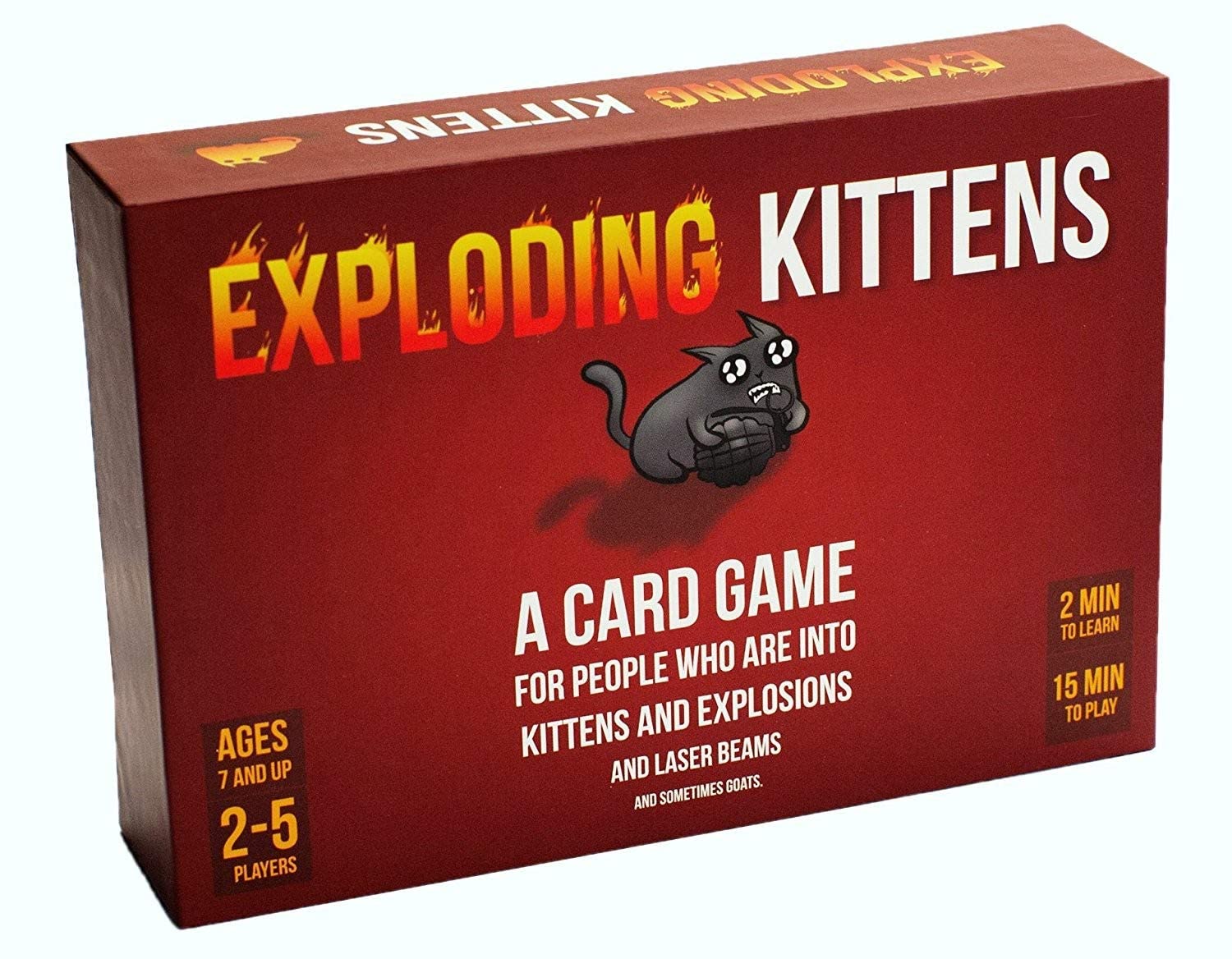
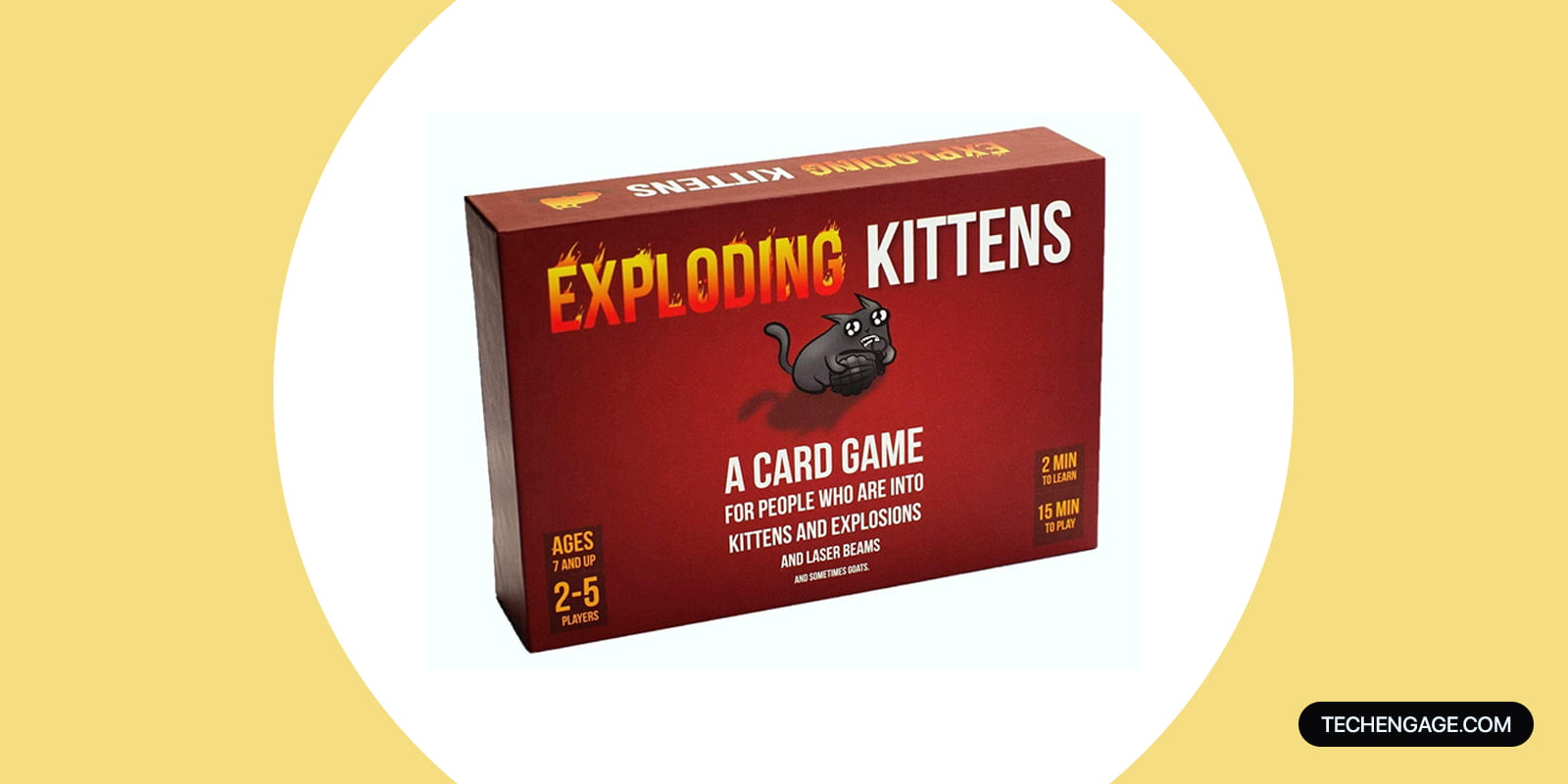
Exploding Kittens raised $8.7 million on Kickstarter back in 2015 — the most-backed project in the platform’s history at that time. It’s a Russian roulette-style card game: draw cards from a deck, and if you draw an Exploding Kitten, you’re out. Unless you have a Defuse card (featuring, among other things, laser pointers and catnip sandwiches) to neutralize it.
Other cards let you skip turns, peek at the deck, force other players to draw, or strategically relocate the Exploding Kitten card to the top of the deck — right where the next player will draw it. It’s gleefully mean-spirited in a way that kids absolutely love.
Games last about 15 minutes, which makes it perfect for squeezing in a quick round before dinner or as a warm-up before longer games. The illustrations by The Oatmeal creator Matthew Inman are bizarre and delightful. A Family Edition exists for households with younger children (ages 7+), removing the more mature content from the original.
Who it’s best for: Families with kids 7 and up. Short attention spans. Travel (the compact box fits in a bag easily). Warm-up games before longer sessions.
Cooperative Games Where Your Family Wins (or Loses) Together
Cooperative board games eliminate player-versus-player competition entirely. Instead, everyone works together against the game itself. These are phenomenal for families where competitive games cause tears, arguments, or flipped tables. They teach teamwork, communication, and collective problem-solving in ways that competitive games simply can’t.
9. Pandemic — Fight a Global Outbreak as a Team

| Price & Details | |
|---|---|
| Price | $44.99 |
| Discount | 10% |
| Brand | Z-Man Games |
| Check availability on Amazon |
In Pandemic, your family plays as a team of disease-fighting specialists racing to cure four diseases spreading across a world map. Each player has a unique role — Medic, Scientist, Researcher, Dispatcher — with special abilities that must be coordinated to win. The game pushes back hard: infections spread each turn, outbreaks chain into neighboring cities, and the Epidemic cards buried in the draw pile create sudden surges of disease.
The game wins about 30-40% of the time on standard difficulty, and that failure rate is precisely calibrated. Losing as a family is oddly bonding — you analyze what went wrong, strategize differently, and try again. My family has had some of our best game-night conversations during post-Pandemic debriefs.
Designed by Matt Leacock, Pandemic has been in continuous print since 2008 and has spawned numerous spinoffs. The core game remains the best starting point. Adjustable difficulty (add more Epidemic cards for a tougher challenge) means it grows with your family’s skill level.
Who it’s best for: Families where competitive games cause conflict. Kids learning teamwork and planning. Parents who want to play WITH their children rather than against them.
10. Forbidden Island — Cooperative Adventure for Younger Families
| Price & Details | |
|---|---|
| Brand | Gamewright |
| $.... (Product detail is unavailable temporarily) |
Made by the same designer as Pandemic but streamlined for younger players, Forbidden Island tasks your team with collecting four treasures from a sinking island before it disappears beneath the waves. Tiles flip from dry to flooded to removed entirely, creating a shrinking play space and rising tension with every turn.
Games take about 30 minutes, the rules fit on a single page, and the treasure pieces are chunky plastic gems that kids love holding. At around $15, it’s one of the Value candidate (price-dependent)-to-fun ratios in all of board gaming. I consider it the ideal first cooperative game for families with children ages 7-10 who aren’t ready for Pandemic’s complexity.
If your family outgrows Forbidden Island, the natural next step is Forbidden Desert (slightly harder, different mechanics) and then Pandemic itself. That progression path gives you years of cooperative gaming with a consistent design philosophy.
Who it’s best for: Families with younger kids (7-10). Budget-conscious buyers. First cooperative game experience. Quick sessions when time is limited.
Quick Games for Busy Families (Under 20 Minutes)
Not every family has an hour to spare. These three games deliver complete, satisfying experiences in 15 minutes or less. They’re also fantastic travel companions and work as openers or closers for longer game nights.
11. Sushi Go! — Card Drafting Made Adorable

| Price & Details | |
|---|---|
| Brand | Gamewright |
| Check availability on Amazon |
Sushi Go! teaches the card-drafting mechanic (pick one card from your hand, pass the rest) through adorable sushi-themed artwork. Each type of sushi scores differently: tempura needs pairs, sashimi needs sets of three, dumplings grow in value the more you collect, and wasabi triples your next nigiri card. Pudding is only scored at the end of the entire game — whoever has the most gets bonus points, whoever has the least loses points.
Three rounds take about 15 minutes total. The tin packaging is compact and travel-friendly. It’s also one of the cheapest quality games available — typically under $12. For families who want to try the card-drafting experience before investing in heavier games like Wingspan or 7 Wonders, Sushi Go! is the perfect test drive.
Who it’s best for: Budget-conscious families. Restaurant wait times. Travel gaming. Teaching strategic concepts to kids 8+.
12. Spot It! (Dobble) — Pattern Recognition That Kids Dominate
| Price & Details | |
|---|---|
| Brand | Zygomatic |
| $.... (Product detail is unavailable temporarily) |
Every card in Spot It! has exactly one symbol in common with every other card. Your job is to find the match faster than everyone else. That’s it. That’s the entire game. And somehow, it’s wildly entertaining.
The real joy of Spot It! is watching children routinely destroy adults. Kids’ pattern recognition speed is genuinely faster than most adults’, which creates a rare dynamic where the youngest player at the table has a legitimate competitive advantage. For families where younger kids always feel like they’re losing, Spot It! flips the script entirely.
The game fits in a small tin, supports 2-8 players, includes five different game variants for variety, and costs around $10. It’s the game I recommend most often as a stocking stuffer or birthday party gift for families with kids ages 6 and up.
Who it’s best for: Families with kids ages 4-8 (younger than listed age). Travel and on-the-go play. Gift giving. Mixed-age groups where younger kids need to feel competitive.
13. Monopoly Deal — Everything You Love About Monopoly in 15 Minutes

| Price & Details | |
|---|---|
| Price | $7.99 |
| Rating on Amazon | 4.8 out of 5 stars |
| Brand | Hasbro Gaming |
| Check availability on Amazon |
Here’s a controversial opinion: Monopoly Deal is a better game than Monopoly. The card game version strips out the board, removes the endless circling, and distills the property collection and “take that” elements into a fast, portable card game. First player to collect three complete property sets wins. Action cards let you steal properties, demand rent, and play wild cards.
Games genuinely take 15 minutes. There’s no elimination (a major Monopoly problem — nobody wants to sit out for an hour), no tedious mortgage calculations, and no arguments about house rules. It keeps everything fun about the Monopoly brand and removes everything tedious. At around $6-8, it’s the cheapest game on this entire list and arguably the Value candidate (price-dependent).
Who it’s best for: Families who love the idea of Monopoly but hate how long it takes. Budget gift giving. Travel. Quick filler games between heavier sessions.
Timeless Classics That Still Earn Their Spot
Modern board games get all the attention on enthusiast sites, but some classics remain in constant rotation for good reason. These two have been refined over decades and continue to sell millions of copies annually. If your family doesn’t own them yet, here’s why you should.
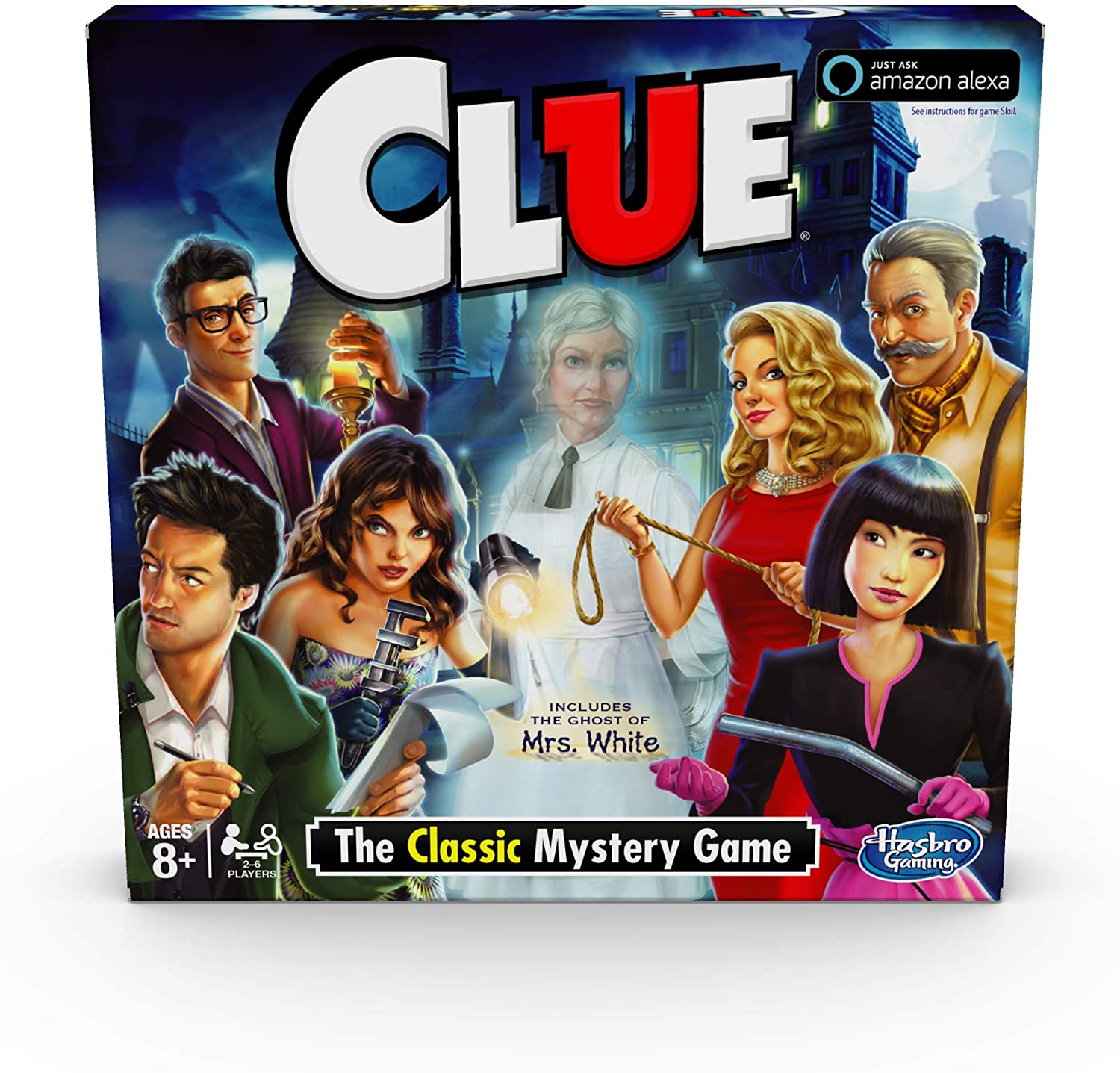
14. Clue (Cluedo) — The Deduction Classic That Still Delivers
| Price & Details | |
|---|---|
| Rating on Amazon | 4.7 out of 5 stars |
| Brand | Hasbro Gaming |
| Check availability on Amazon |
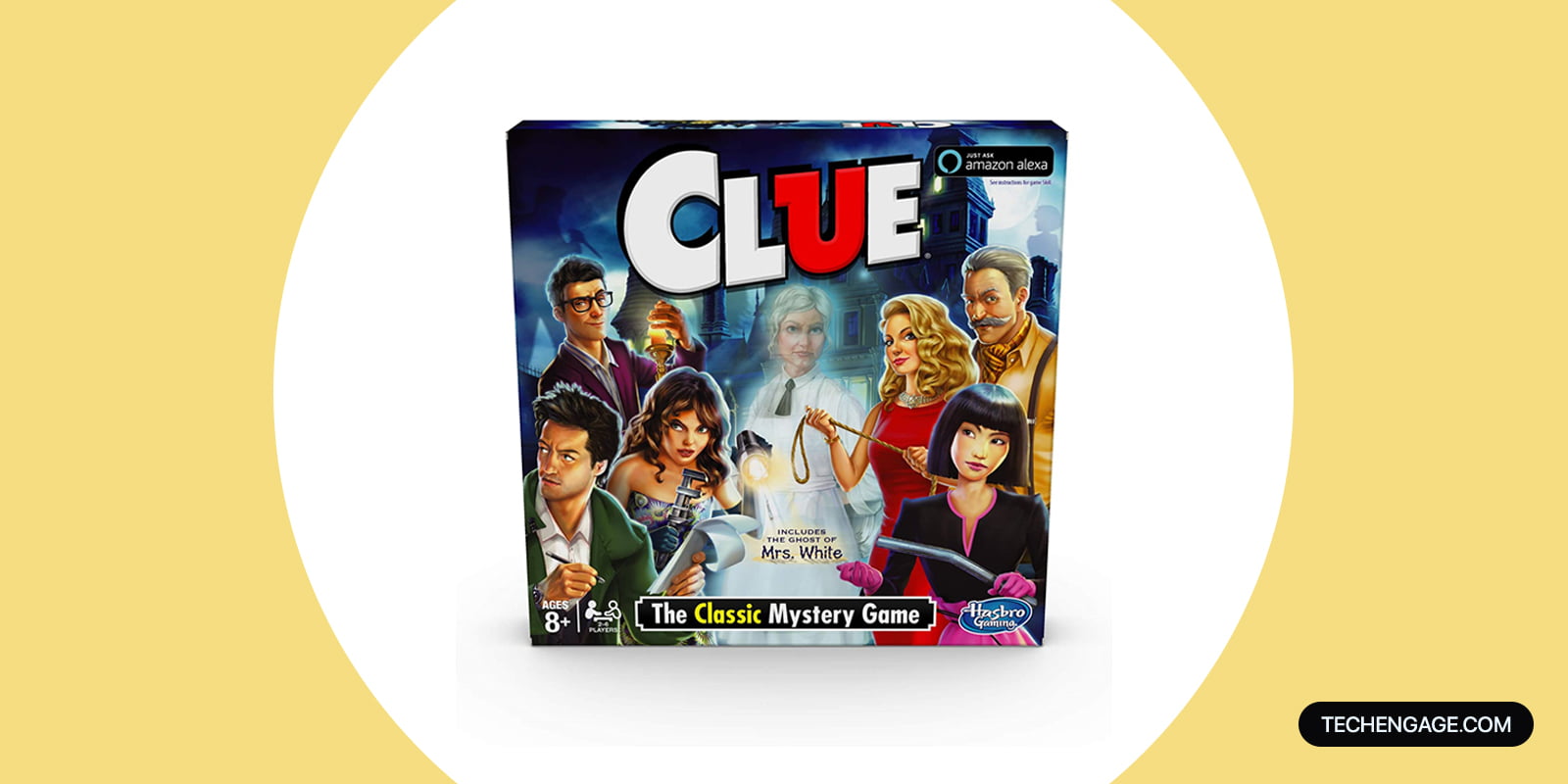
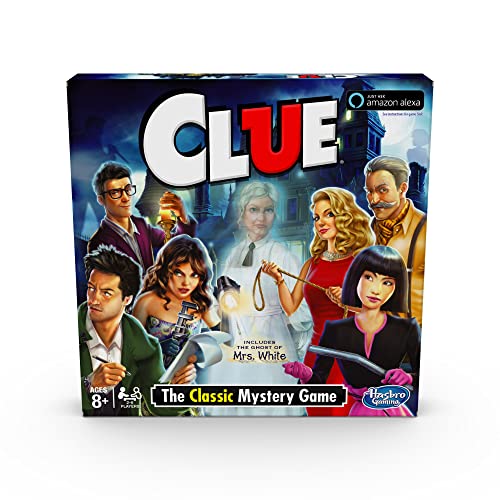
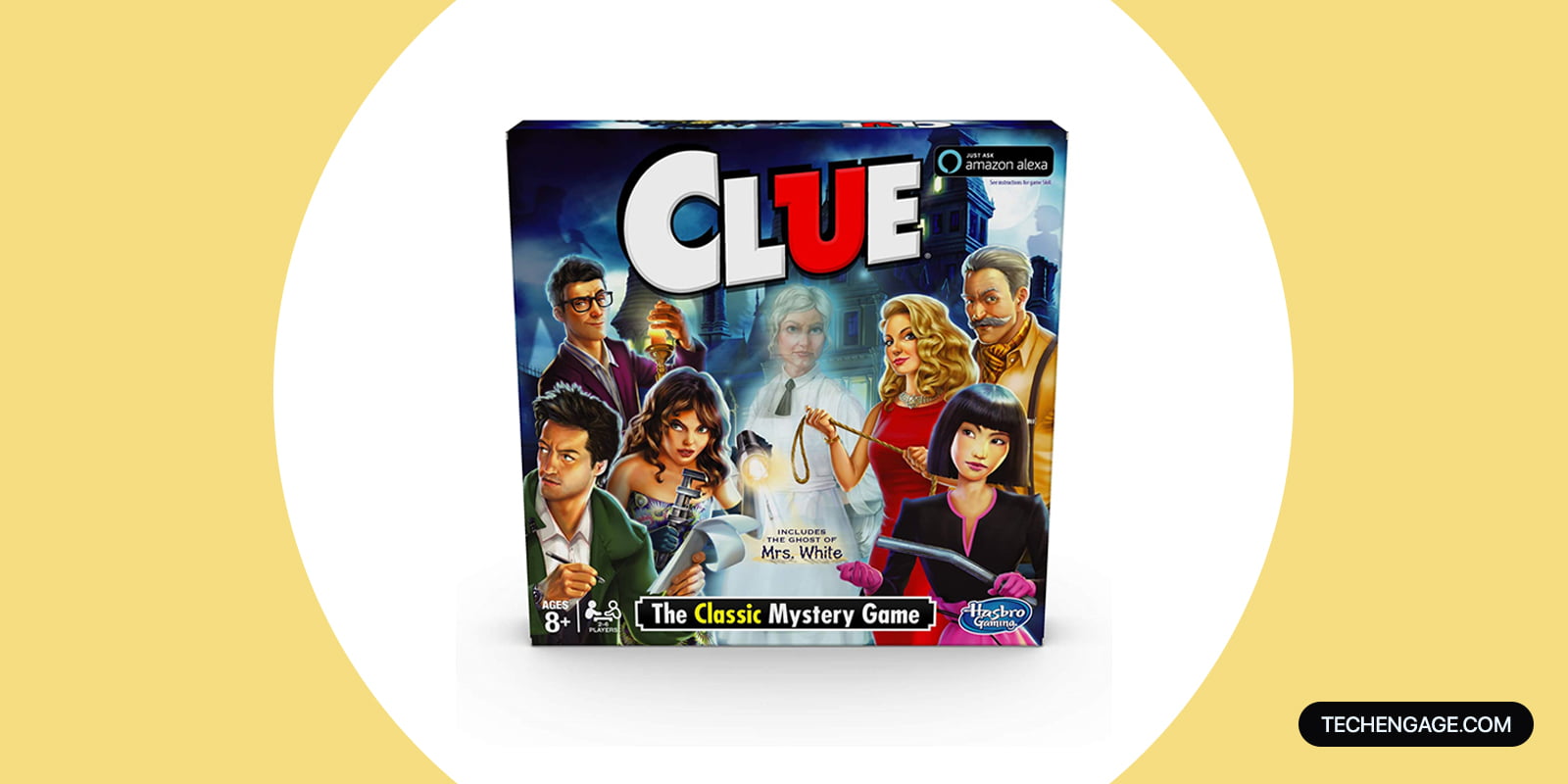
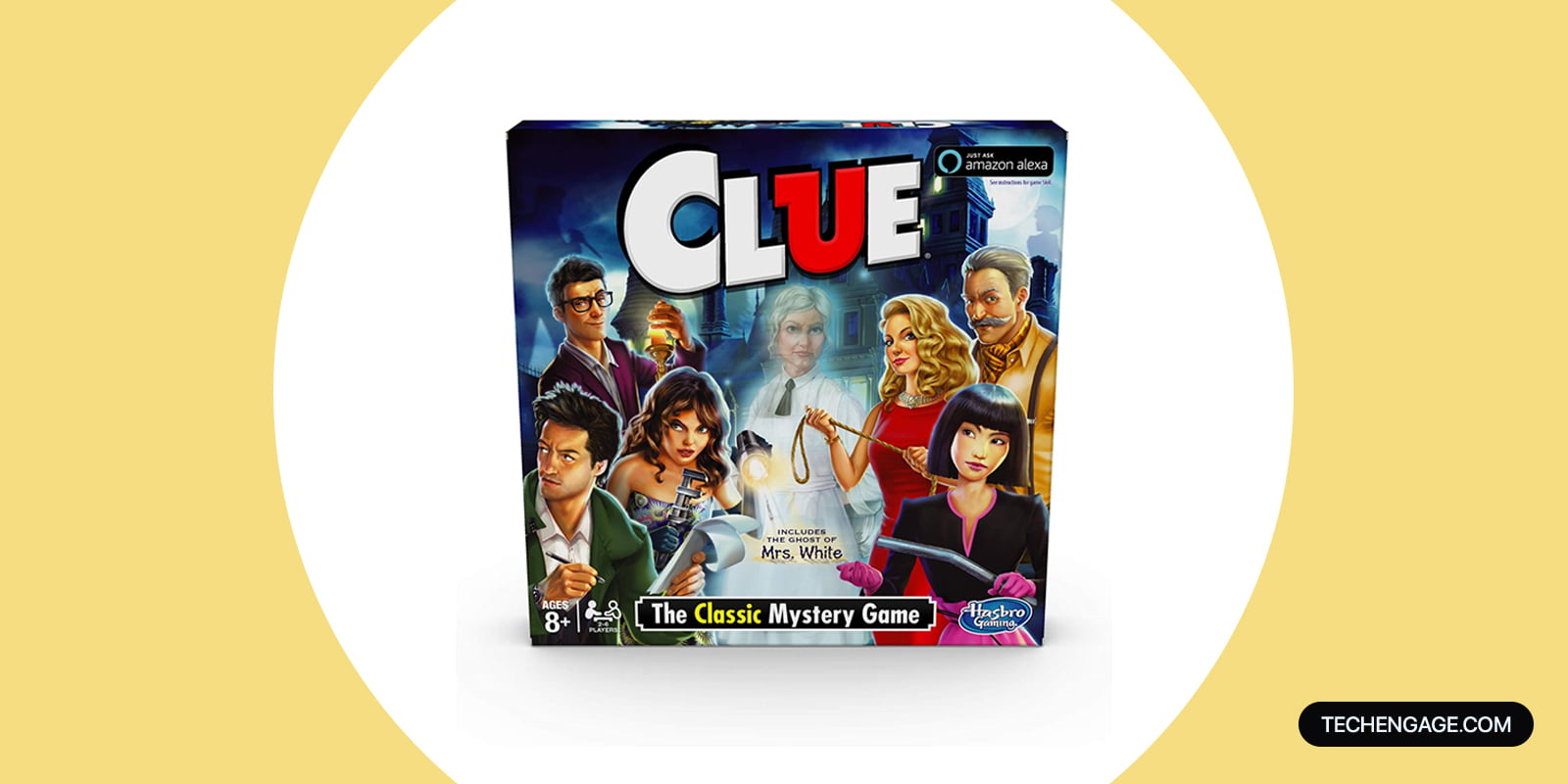
Created in 1943 by Anthony Pratt in Birmingham, England, Clue (or Cluedo outside North America) is the definitive deduction board game. Someone has been murdered in a mansion, and you need to figure out who did it, with what weapon, and in which room. You gather clues by making suggestions and observing what cards other players reveal to disprove your guesses.
Clue teaches logical elimination in a way that feels like detective work rather than math homework. Kids learn to track information, make deductions from negative evidence (knowing what ISN’T the answer narrows down what IS), and test hypotheses. Those are genuine analytical skills wrapped in a murder mystery theme that kids find irresistible.
Modern editions have updated the character roster and added variant rules (like the Alexa-compatible Ghost of Mrs. White edition), but the core gameplay remains identical to what your grandparents played. That cross-generational familiarity is its own selling point — when grandmother already knows the rules, game night starts faster.
Who it’s best for: Mystery lovers. Families wanting to develop logical reasoning skills. Multi-generational game nights where grandparents want to participate with familiar rules.
15. The Game of Life — Life Lessons Through Playful Decisions
| Price & Details | |
|---|---|
| Price | $24.17 |
| Rating on Amazon | 4.7 out of 5 stars |
| Brand | Hasbro Gaming |
| Check availability on Amazon |
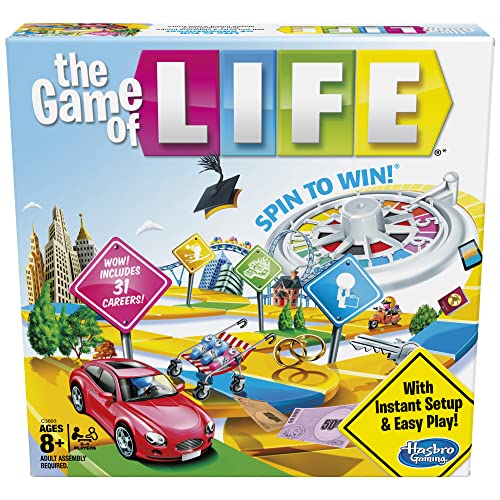
The Game of Life has been around since 1860 (originally as “The Checkered Game of Life” by Milton Bradley), making it one of the oldest continuously sold board games in America. The modern version sends players on a journey from college or career through marriage, home-buying, family, and retirement, with the wealthiest player at the end winning.
What I appreciate about Life is how naturally it opens up conversations with kids about real-world decisions. “Should I go to college and take on loans, or start earning immediately?” “Should I buy a house or rent?” “How many kids can I afford?” These questions land differently when your 9-year-old is making the choices with plastic pegs and a spinner. It’s not deep strategy — luck dominates — but the conversational opportunities are genuinely valuable for families.
Recent editions have added alternative career paths, updated the salary ranges, and modernized some of the life events. The core experience remains the same comfortable ride through life’s milestones that has kept families playing for over 160 years.
Who it’s best for: Families with kids ages 8-12 who are starting to ask “grown-up” questions. Nostalgic parents. Game nights where you want something familiar and low-pressure.
How to Choose the Right Board Game for Your Family
With 15 strong options on this list, picking the right starting point matters. Here’s a framework based on what I’ve learned from six years of weekly game nights and watching dozens of different families try new games:
Start With Your Youngest Player’s Age
The age rating on the box is usually conservative by 1-2 years, but respect it as a baseline. A game that’s too complex for the youngest player at the table drags the experience down for everyone. Start with games rated for your youngest player’s actual age, then gradually introduce games a step up as they gain confidence.
- Ages 5-7: Spot It!, Forbidden Island (with guidance)
- Ages 8-9: Ticket to Ride, Sushi Go!, Telestrations, Exploding Kittens, Clue, Game of Life, Monopoly Deal
- Ages 10-12: Catan, Azul, Cascadia, Codenames, Pandemic
- Ages 13+: Wingspan (everything else on this list works too)
Match the Game to Your Family’s Personality
- Competitive but fair-spirited: Ticket to Ride, Azul, Catan
- Cooperative / conflict-averse: Pandemic, Forbidden Island, Cascadia
- Social and loud: Codenames, Telestrations, Exploding Kittens
- Short attention spans: Sushi Go!, Spot It!, Monopoly Deal
- Nostalgia-driven: Clue, Game of Life
Think About Cost Per Play
A $40 board game that you play 50 times costs $0.80 per session of family entertainment. Compare that to a movie for four ($60+), a restaurant meal ($80+), or even a streaming subscription you barely use. Board games are among the cheapest forms of recurring family entertainment available. Buy quality games that see repeated play rather than a dozen cheap games that collect dust. If you’re interested in other low-cost family entertainment options, portable gaming consoles are another great investment for families.
Tips for Running a Successful Family Game Night
Owning great games is only half the equation. How you run game night determines whether it becomes a cherished tradition or a one-time experiment. After hundreds of family game sessions, here’s what I’ve learned works:
Set a consistent schedule. Friday nights work for our family. It doesn’t matter which day you choose — consistency builds habit. When game night becomes routine, the setup friction disappears. Everyone knows it’s happening; nobody needs convincing.
Let the youngest player pick the game first. This prevents the oldest sibling from always choosing the most complex option. Rotate the choosing privilege each week, but default to the youngest when starting out. Their enthusiasm sets the tone for everyone else.
Put phones away entirely. This one is non-negotiable in our house. Phones on the table fragment attention and signal that the game isn’t worth full engagement. A basket by the door works. If you normally rely on your phone for entertainment, consider how smart home apps can set the ambiance instead — dim the lights and play background music to make game night feel like an event.
Learn the rules before teaching. Nothing kills game-night momentum faster than someone reading the rulebook aloud for 20 minutes. Watch a 5-minute tutorial video beforehand, play a practice solo round if possible, and explain the rules in under 3 minutes with visual demonstrations. Most modern games also have companion apps with interactive tutorials.
Snacks matter more than you think. Simple finger food that won’t grease the game components — pretzels, fruit, popcorn. It transforms game night from “activity” into “event” in your kids’ minds.
The Game Night Progression Path: Building Your Collection Over Time
Don’t buy all 15 games at once. Build your collection strategically based on what your family enjoys:
Month 1 — Start with two games: One quick game (Sushi Go! or Spot It!) and one medium game (Ticket to Ride or Forbidden Island). Play them heavily for four weeks. This tells you whether your family gravitates toward competition or cooperation, speed or depth.
Month 2-3 — Add a party game: Telestrations or Codenames. These are essential for when you have guests or extended family over. They also serve as palate cleansers between heavier sessions.
Month 4-6 — Step up in complexity: If your family enjoyed Ticket to Ride, try Catan or Azul. If they preferred Forbidden Island, move to Pandemic. If they loved the speed of quick games, Exploding Kittens and Monopoly Deal add variety.
Month 7+ — Explore the deep end: Wingspan for families ready for engine-building. Cascadia for those who want relaxing strategy. By this point, you’ll know exactly what your family enjoys, and you can shop with confidence. Many families also find that video games complement their board game hobby well for nights when the full family isn’t available.
Where to Buy Board Games (And How to Save Money)
Amazon remains the most convenient option for most families, and the prices on this list reflect current Amazon pricing. But it’s not always the cheapest:
- Amazon Prime Day (July) and Black Friday (November) consistently offer 30-50% off popular board games. If you’re not in a rush, these are the best times to buy. Ticket to Ride, Catan, and Pandemic regularly drop to their lowest prices during these events.
- Target frequently runs buy-two-get-one-free sales on board games, especially during back-to-school and holiday seasons. This is the best deal available for building a collection from scratch.
- Local game stores often charge MSRP but provide expert recommendations, demo copies you can try before buying, and community game nights where you can test games with other families.
- Facebook Marketplace and thrift stores are goldmines for classic games. Clue, Game of Life, and Monopoly variants show up constantly at 50-70% below retail. Check that all components are present before buying.
Final Thoughts: Why Board Games Still Matter in 2026
We live in an era of infinite digital entertainment. Every family member has a screen in their pocket capable of delivering movies, games, social media, and messaging on demand. Against that competition, the physical board game should be obsolete.
It’s not. If anything, board game sales have grown steadily over the past decade — the global board game market crossed $20 billion in 2025, according to Grand View Research industry data. Families are actively choosing to put phones down and gather around tables because board games deliver something screens fundamentally cannot: shared physical presence, eye contact, negotiation in real time, the sound of someone groaning when they draw the wrong card, the feel of placing a tile, the collective gasp when the perfect play happens.
Start with one game from this list that matches your family’s age range and personality. Play it this weekend. If it works, add another next month. Within six months, you’ll have a Friday night tradition that your kids will remember for the rest of their lives. And honestly? You will too.





Azul is another great family game. Works well for people of all ages including the elderly. Also, consider supporting your local small business board game shops in these times. Amazon will live through COVID-19, those small businesses might not.
I like the second one i.e. clue. That i think it will be very much interesting for me.