

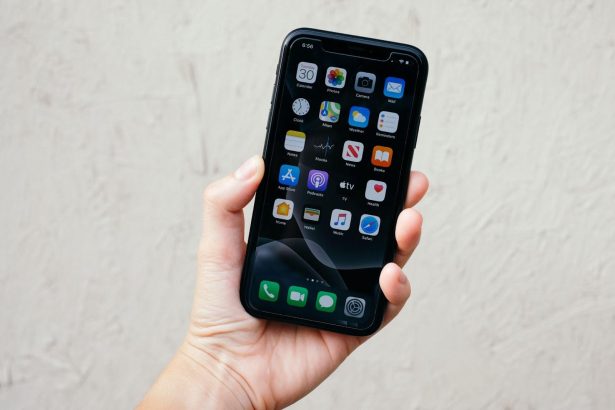
Open the app drawer on a phone in Jakarta, and it looks nothing like one in Kansas City. That fact surprises people less than it should. We tend to assume the apps dominating our home screen are universal — that everyone uses Instagram, everyone orders on Amazon, everyone has WhatsApp. But app stores tell a very different story depending on the country, the payment infrastructure, and sometimes the government regulations shaping what software even makes it onto a phone.
The global app economy crossed 257 billion downloads in 2024 according to Sensor Tower and data.ai estimates. Meta alone claimed five of the top ten worldwide download slots. TikTok held the number one position for the third consecutive year. And yet entire categories of apps that barely register in North America — super apps, regional payment wallets, localized ride-hailing platforms — command hundreds of millions of users in their home markets.
This breakdown covers the most downloaded apps globally, in the US, and across major categories, then digs into the regional apps that most English-language tech coverage ignores entirely.
Table of Contents
Top 10 most downloaded apps worldwide in 2024
Combined iOS App Store and Google Play data from Sensor Tower places TikTok at the top for the third year running. The biggest surprise on this list is Temu, which barely existed two years ago and now sits at number five globally with over 500 million downloads driven by aggressive advertising and deep discount pricing.
- TikTok — 825 million downloads
- Instagram — 817 million downloads
- Facebook — 598 million downloads
- WhatsApp — 564 million downloads
- Temu — 516 million downloads
- Telegram — 448 million downloads
- CapCut — 410 million downloads
- Snapchat — 331 million downloads
- Threads — 327 million downloads
- WhatsApp Business — 294 million downloads
Meta controls five of these ten slots: Instagram, Facebook, WhatsApp, Threads, and WhatsApp Business. That level of platform concentration is unprecedented. ByteDance holds two (TikTok and CapCut), and Telegram, Snapchat, and Temu round out the picture. Not a single Google or Apple app made the global top ten by raw download count.
Top 10 most downloaded apps in the US
Apple’s official 2024 year-end App Store ranking for the United States tells a noticeably different story from the global list. The American market skews harder toward utility apps and AI tools, reflecting both the tech-forward user base and the sheer volume of Google services preloaded onto Android devices.
- Temu
- Threads
- ChatGPT
- Google Search
- CapCut
- YouTube
- Gmail
- Google Maps
ChatGPT landing at number four is the standout US-specific data point. Globally, AI chat apps don’t crack the top ten, but American users adopted generative AI tools faster than any other market in 2024. Sensor Tower reported that consumer spending on AI apps crossed $1.1 billion last year, with a disproportionate share coming from US accounts.
TikTok, the global number one, doesn’t appear at the top of the US App Store chart. Ongoing legislative uncertainty around a potential ban dampened new downloads somewhat, though the app’s existing user base remained active. Temu took the crown instead, fueled by an estimated $3 billion in annual ad spending across Meta and Google platforms.
Social media downloads by the numbers
Social media still dominates app stores by raw volume, but the composition shifted in 2024. Threads, which Meta launched as an Instagram companion, exploded to 327 million downloads and briefly claimed the number one iOS spot globally during the first half of the year. Whether those downloads translate to sustained engagement is a separate question, as many users downloaded Threads, tried it for a week, and haven’t opened it since.
- TikTok — 825 million
- Instagram — 817 million
- Facebook — 598 million
- Telegram — 448 million
- Snapchat — 331 million
- Threads — 327 million
- X (formerly Twitter)
- Discord
X saw declining downloads compared to its 2022 and 2023 peaks, a trend that tracks with advertiser pullbacks and user migration toward alternatives like Threads and Bluesky. Discord continued growing among Gen Z users well beyond its gaming roots, evolving into a general-purpose community platform for study groups, fan communities, and small business teams.
Telegram’s strong fourth-place finish reflects its popularity in privacy-conscious markets across Eastern Europe, the Middle East, and Central Asia, where encrypted messaging carries weight beyond casual chat.
Mobile gaming still prints downloads
Casual games absolutely dominate mobile download charts. Hardcore titles like PUBG Mobile and Genshin Impact generate enormous revenue, but they don’t match the sheer install volume of free-to-play casual games that appeal to a much broader demographic. Roblox held the top gaming download spot for the second consecutive year.
- Roblox — 212 million downloads
- Block Blast! — 206 million
- Subway Surfers — 172 million
- Pizza Ready — 168 million
- Ludo King — 167 million
- Royal Match
- Candy Crush Saga
- Garena Free Fire
- PUBG Mobile
- 8 Ball Pool
Ludo King’s presence at number five is almost entirely driven by India and South Asia, where the digital version of the classic board game became a cultural phenomenon during COVID lockdowns and never lost momentum. Block Blast and Pizza Ready are hypercasual titles that most dedicated gamers have never heard of, yet they each pulled in over 160 million downloads from the mass market audience that plays during commutes and lunch breaks.
The most profitable mobile game of 2024 was Honor of Kings (known as Arena of Valor outside China), but nearly all of its revenue came from the Chinese market. Downloads and revenue follow very different patterns in mobile gaming.
Business and productivity apps
The productivity category underwent a fundamental shift in 2024. AI tools crashed the party and immediately climbed to the top. ChatGPT alone surpassed 160 million downloads between January and August, making it the fastest-growing productivity app in the history of mobile software.
- ChatGPT — 160+ million downloads (Jan-Aug 2024)
- Google Meet
- Zoom
- Microsoft Teams
- Google Gemini
- Notion
- Gmail
- Microsoft 365
- Canva
- Google Calendar
Zoom’s pandemic-era dominance has faded but not disappeared. The app still pulled roughly 35 million downloads in Q3 2024 alone, sustained by small businesses, freelancers, and educational institutions that standardized on it years ago and see no reason to switch. Microsoft Teams holds the enterprise installed base advantage since it ships bundled with Microsoft 365 subscriptions, but its download numbers look inflated by corporate device deployments rather than organic consumer adoption.
Google Gemini’s emergence in the second half of 2024 represents the AI productivity race extending beyond OpenAI. Consumer spending across all AI apps hit $1.1 billion last year, tripling from 2023, and that figure will almost certainly climb again as these tools integrate deeper into workflows.
Regional apps the rest of the world barely knows about
The global top-ten lists paint an incomplete picture. Some of the most influential apps on the planet don’t register in Western markets at all, because they were built for specific countries and evolved into something far bigger than their original purpose.
China: WeChat and the super app model. WeChat (known as Weixin domestically) reached 1.37 billion monthly active users in 2024. Calling it a messaging app misses the point entirely. WeChat handles payments, restaurant bookings, government ID verification, public transit passes, mini-program apps (essentially apps within the app), social media feeds, and video calls. The average Chinese smartphone user opens WeChat 10 to 15 times per day. Douyin, the Chinese version of TikTok, operates as a completely separate product with different content, algorithms, and regulatory requirements.
South Korea: KakaoTalk. With 47 million monthly active users in a country of 52 million people, KakaoTalk is less an app and more a piece of national infrastructure. It expanded from messaging into payments (Kakao Pay), banking (Kakao Bank), ride-hailing (Kakao Mobility), and gaming. Trying to live in South Korea without a KakaoTalk account is roughly equivalent to trying to function in the US without a phone number.
Japan and Thailand: LINE. LINE commands about 96 million monthly active users, with Japan accounting for roughly half. It also dominates in Thailand and Taiwan. Like KakaoTalk, LINE evolved from a messenger into a super app covering payments, news, healthcare services, and even manga distribution. Japanese businesses routinely use LINE official accounts for customer service instead of email.
India: PhonePe and Ludo King. India’s digital payment landscape runs on UPI (Unified Payments Interface), and PhonePe is the leading UPI app with over 500 million registered users. Google Pay India and Paytm compete for the remaining share, but PhonePe processes more UPI transactions than any other platform. On the gaming side, Ludo King’s 167 million downloads in 2024 came overwhelmingly from the Indian subcontinent, where the board game carries deep cultural familiarity.
Southeast Asia: Grab and Shopee. Grab started as a ride-hailing app in Malaysia and now operates across eight countries as a super app covering transportation, food delivery, package delivery, and financial services. Shopee, headquartered in Singapore, handles more e-commerce transactions across Southeast Asia than Amazon does. These aren’t niche players — Grab processes billions of dollars in transactions annually.
Russia and Central Asia: VK and Telegram. VK (VKontakte) functions as Russia’s primary social network, effectively replacing Facebook after Meta’s platforms were restricted. Telegram holds an outsized user share in Russia, Ukraine, Iran, and Uzbekistan relative to its global average, partly because encrypted messaging carries a different weight in those regions than it does in markets where privacy concerns are more abstract.
Latin America: Mercado Libre and Nubank. Mercado Libre is the Amazon of Latin America, dominating e-commerce across Brazil, Argentina, and Mexico with an integrated payments arm (Mercado Pago) that also serves as a digital wallet. Nubank, a Brazilian digital bank, crossed 100 million users and became one of the largest fintech platforms on the planet while remaining virtually unknown in North America.
What actually drives regional app dominance
Three forces explain most of the regional variation in app popularity.
Payment infrastructure comes first. In countries where credit card penetration is low — much of Southeast Asia, India, sub-Saharan Africa — apps that solve payments gain adoption that messaging or social apps can only dream of. WeChat Pay, PhonePe, and M-Pesa (dominant in Kenya and East Africa) succeeded because they solved a fundamental daily problem: how to pay for things without cash or plastic.
Government regulation shapes the landscape just as powerfully. China’s firewall blocks Google, Facebook, Instagram, YouTube, and WhatsApp entirely, creating a parallel app ecosystem where domestic alternatives thrive without international competition. India’s 2020 ban on TikTok (still in effect) opened space for YouTube Shorts and Instagram Reels to capture short-form video attention. Russia’s restrictions on Meta platforms elevated VK and Telegram.
Language and cultural fit matter more than global brands want to admit. KakaoTalk isn’t popular in South Korea because it has better technology than WhatsApp. It’s popular because it launched in Korean, designed features around Korean social norms (like detailed read receipts and group chat etiquette), and embedded itself into local commerce years before any Western competitor tried to enter the market. First-mover advantage in a localized context creates network effects that are nearly impossible to dislodge.
FAQs
What is the most downloaded app in the world right now?
TikTok held the number one global download position for the third consecutive year in 2024, with approximately 825 million combined iOS and Google Play downloads. Instagram trailed closely at 817 million. Both numbers come from Sensor Tower estimates covering the full calendar year.
Why do different countries use different apps?
Three main factors drive regional app differences: payment infrastructure (countries with low credit card adoption favor apps that solve digital payments), government regulation (China blocks Western platforms, India banned TikTok, Russia restricted Meta), and cultural localization (apps built for specific languages and social norms create network effects that global competitors struggle to break). South Korea’s KakaoTalk and Japan’s LINE both became dominant because they launched in the local language with features tailored to local habits before any Western alternative tried to compete.
Is WhatsApp or Messenger more popular globally?
WhatsApp is far more popular by every measure. It recorded 564 million downloads globally in 2024, while Messenger didn’t crack the top ten. WhatsApp dominates messaging across Europe, Latin America, India, and Africa. Messenger remains stronger in the US and Canada, where SMS culture delayed WhatsApp adoption. Both are owned by Meta.
What is a super app and which countries have them?
A super app combines messaging, payments, shopping, transportation, and other services into a single platform. WeChat in China is the most complete example, handling everything from text messages to government ID verification to restaurant payments. KakaoTalk in South Korea, LINE in Japan, Grab in Southeast Asia, and Mercado Libre in Latin America all qualify to varying degrees. Western markets have been slower to adopt the super app model, partly because existing apps like Venmo, Uber, and Amazon already serve individual functions well enough that consolidation offers less convenience.





Share Your Thoughts