

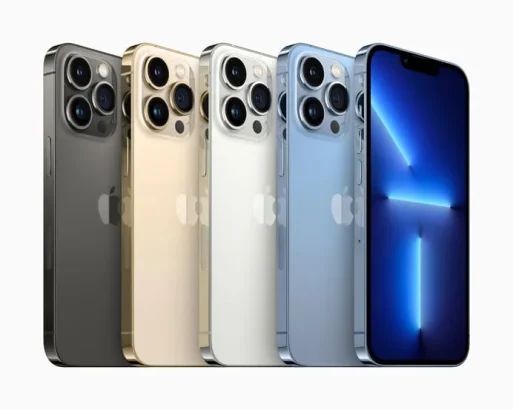
Apple unveiled the iPhone 13 series at its September 14, 2021 virtual event — four phones (13 mini, 13, 13 Pro, 13 Pro Max), all on the new A15 Bionic chip, with the Pro models getting a 120 Hz ProMotion display for the first time on iPhone. The launch was incremental on the outside (the design was barely changed from the iPhone 12) and substantial on the inside (a 1 TB Pro Max option, sensor-shift OIS across the lineup, and a meaningful battery jump). Five years on, it’s the iPhone series that quietly outlasted the rest of its generation.
The launch details below are followed by a look at the models’ successors and considerations for owners still using an iPhone 13.
Contents
iPhone 13 and 13 mini
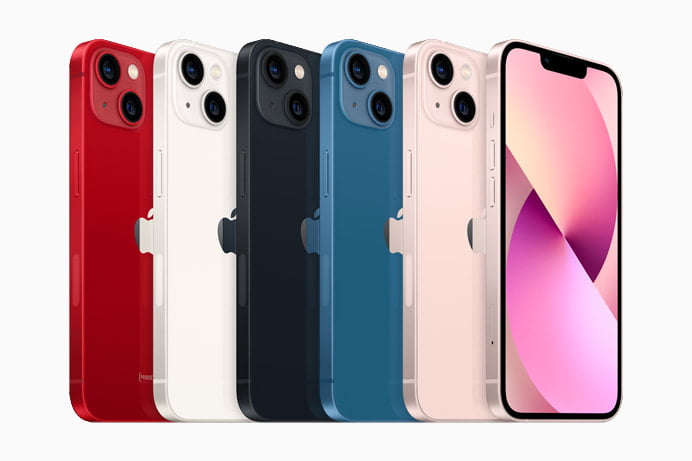
The base iPhone 13 and the smaller 13 mini kept the iPhone 12 chassis with two visible changes: a smaller notch and a diagonal rear-camera arrangement. Inside, the entry-level storage doubled from 64 GB to 128 GB, the dual-camera system gained sensor-shift optical image stabilisation (a feature previously only on the 12 Pro Max), and a redesigned internal layout fit a larger battery for 1.5 to 2.5 extra hours of use per charge.
The video features were the launch’s most noticeable upgrade for everyday users: 4K at 60 fps with rack focus, automatic focus shifting between subjects, and the new Cinematic Mode that added software depth-of-field to videos. Apple framed this as making “professional filmmaker stuff” possible from the phone — the marketing held up better than most claims of its kind.
iPhone 13 and 13 mini quick specs
| Display | 6.1″ (13) and 5.4″ (13 mini) Super Retina XDR OLED |
| OS at launch | iOS 15 |
| Latest supported OS (2026) | iOS 18 |
| Battery | +2.5 hrs vs iPhone 12, +1.5 hrs vs iPhone 12 mini |
| Chipset | A15 Bionic (5-core GPU) |
| Storage | 128 / 256 / 512 GB |
| Connectivity | 5G sub-6 (mmWave on US models) |
| Colours | Pink, Midnight, Blue, Starlight, (PRODUCT)RED — Green added in 2022 |
| Launch price | $799 (iPhone 13), $699 (iPhone 13 mini) |
iPhone 13 Pro and Pro Max
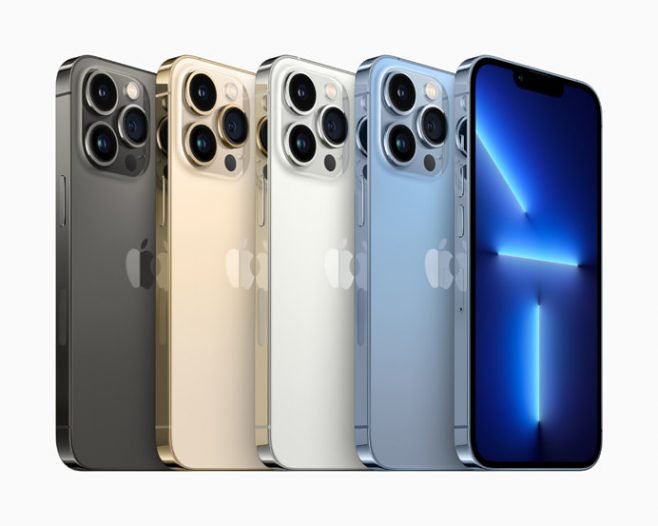
The Pro models brought the headline display upgrade: 120 Hz ProMotion came to iPhone for the first time. The variable refresh rate ranges from 10 Hz when content is static to 120 Hz when you scroll, which preserves battery while still delivering the smoothness of a high-refresh display. Combined with the redesigned internals that fit a larger battery, the iPhone 13 Pro Max became the longest-lasting iPhone Apple had shipped.
The camera system on the Pro models added a new ultra-wide with macro mode, a 3x telephoto (up from 2x on the 12 Pro), and Photographic Styles — preset image-processing profiles that change how the camera renders skin tones and warmth without baking them in. Pro models also unlocked ProRes video recording, which arrived in a software update later in the cycle.
iPhone 13 Pro and 13 Pro Max quick specs
| Display | 6.06″ (13 Pro), 6.68″ (13 Pro Max) Super Retina XDR with ProMotion 10–120 Hz |
| OS at launch | iOS 15 |
| Latest supported OS (2026) | iOS 18 |
| Battery | +1.5 hrs (Pro) / +2.5 hrs (Pro Max) vs iPhone 12 Pro / Pro Max |
| Chipset | A15 Bionic (5-core GPU) |
| Storage | 128 / 256 / 512 GB / 1 TB |
| Connectivity | 5G sub-6 (mmWave on US models) |
| Colours | Graphite, Gold, Silver, Sierra Blue — Alpine Green added in 2022 |
| Launch price | From $999 (Pro), from $1,099 (Pro Max) |
What happened next: iPhone 14, 15, 16
- iPhone 14 (2022) — kept the A15 Bionic on the base model (Apple split the chip generation between regular and Pro for the first time), introduced Dynamic Island on the Pro line, and discontinued the mini. The iPhone 14 Plus replaced it as the larger non-Pro option. Our iPhone 14 review covers what changed and what stayed the same.
- iPhone 15 (2023) — finally moved to USB-C across the entire lineup, gave the base 15 the Dynamic Island, and brought titanium frames to the Pro models with the A17 Pro chip.
- iPhone 16 (2024) — added the Camera Control button to all models, shipped with the A18 / A18 Pro chips, and rolled out Apple Intelligence — the on-device AI suite that requires the A18 chip generation, leaving every iPhone 13 owner without it.
One feature still hasn’t reached the base iPhone in 2026: ProMotion. Apple has kept the 120 Hz display as a Pro-only differentiator across four product cycles since the iPhone 13 Pro introduced it. The base iPhone 16 ships with a 60 Hz display.
How the iPhone 13 has aged in 2026
The short version: the iPhone 13 series aged better than most. Owners are still running it on iOS 18 with no major performance complaints. The longer assessment, by component:
- iOS support — all four iPhone 13 models received iOS 18 in 2024. iOS 19 (autumn 2025) included them too. iOS 20 in autumn 2026 looks likely to drop the iPhone 13 mini and possibly the iPhone 13 base; the Pro models almost certainly get one more cycle.
- Battery — original-battery iPhone 13s are now at 75–82% of their original capacity on average. A $99 battery service from Apple restores them to like-new endurance.
- Apple Intelligence — none of the iPhone 13 models support Apple Intelligence (the on-device AI features). This is the most concrete software gap and was Apple’s reason to push iPhone 16 upgrades.
- USB-C — the iPhone 13 series uses Lightning, which is now the only major iPhone generation in active use that does. EU enforcement forced USB-C on the iPhone 15 onward.
- Cellular — the iPhone 13 supports sub-6 GHz 5G everywhere (and mmWave on US carrier models). All current 5G networks remain supported.
- Resale value — used iPhone 13 Pro Max units in good condition still sell for $400–$500 in 2026. The base 13 mini holds its value disproportionately well as the last small iPhone Apple shipped.
For the practical side of keeping an iPhone 13 healthy in 2026, our guides on speeding up older iPhones and iPhone tips for iOS users both apply directly to the 13 series.
FAQ
What is the latest iOS version supported on iPhone 13?
As of 2026, all four iPhone 13 models (mini, 13, 13 Pro, 13 Pro Max) run iOS 18, released in autumn 2024, and iOS 19, released in autumn 2025. Apple has not announced iOS 20 compatibility yet, but the Pro models are likely to make the cut while the iPhone 13 mini and base 13 are at risk.
Does the iPhone 13 support Apple Intelligence?
No. Apple Intelligence — the on-device AI suite — requires the A17 Pro chip (iPhone 15 Pro) or A18 chip (iPhone 16 series and later). The iPhone 13’s A15 Bionic does not have the Neural Engine capacity Apple Intelligence requires. Cloud-based features that route to Private Cloud Compute also need the supported A17 Pro or newer hardware on the device side.
Should you buy a new iPhone 13 in 2026?
Apple stopped selling the iPhone 13 directly when the iPhone 15 launched in 2023. New units in retail are now end-of-stock at most carriers. The current Apple lineup starts at the iPhone 16e (replaced the SE), iPhone 15, iPhone 16, and iPhone 16 Pro. A used iPhone 13 from a reputable refurbisher is still a defensible purchase if budget is the constraint and Apple Intelligence is not a requirement.
Why did Apple discontinue the iPhone 13 mini?
Sales of the mini sized iPhones (12 mini, 13 mini) underperformed Apple’s expectations in both years. The iPhone 14 lineup replaced the mini with the iPhone 14 Plus, which sold better. Apple has not shipped a small iPhone since the 13 mini was discontinued, and the SE line moved to the iPhone 16e form factor in 2025 — also no longer compact.
Why doesn’t the base iPhone get ProMotion (120 Hz) yet?
Apple has consistently used ProMotion as a differentiator between Pro and non-Pro models since the iPhone 13 Pro introduced it. The iPhone 14, 15, and 16 base models all shipped with 60 Hz displays. Industry reports suggest the LTPO panels needed for variable refresh remain too expensive at the base-iPhone scale to fit Apple’s margin targets.




Share Your Thoughts