• Skip to primary navigation
  • Skip to main content
  • Skip to primary sidebar
  • Skip to footer
TechEngage

TechEngage®

Hands-on reviews, research-backed buying guides and technology news.

  • News
    • Internet & Social
    • Gadgets
    • Car Tech
    • Business
    • Science & Health
  • Reviews
  • Buying Guides
  • How-to
  • AI
  • Computing
    • Apps
    • Security
    • Gaming
  • More
    • Tools
    • Puzzles
    • Mobile
  • Launchpad
  • Sign in
TechEngage » Mobility & Car Tech

Lunewave acquires $5 million for its sensor technology

News

Avatar for Fazeel Ashraf Fazeel Ashraf Follow Fazeel Ashraf on X Published: Sep 21, 2018 · 5:21 AM ET Updated: Jul 1, 2020 · 4:40 AM ET

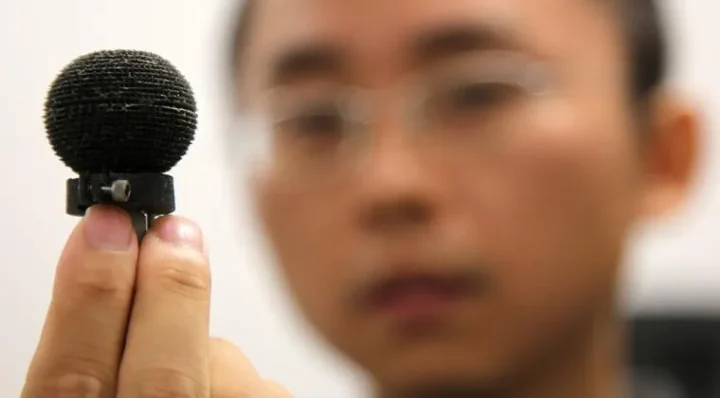
Lunewave car sensor
Lunewave has acquired $5 million dollars for their revolutionary 3D printed autonomous car sensor based on Luneburg antennas
FacebookTweetPinLinkedInPrint

Chinese internet giant Baidu and automobiles industry king BMW, along with other car hardware manufacturers, helped raise $5 million for autonomous car sensor startup Lunewave. The company’s target will be the autonomous car industry.

Lunewave’s product will be able to discover more objects in the broader field of view and from a more extended range compared to existing sensors, thanks to the Luneburg antenna’s special characteristics.

This funding will help Lunewave launch their autonomous sensor technology into the market. This unique radar technology is based on a 1940s Luneburg antenna infrastructure.

Lunewave builds its sensor technology on this old antenna theory in a unique and captivating way.

According to Lunewave’s Chief Executive John Xin, the company’s “spin the antenna” algorithm involves using 3D printers to print bigger and better antennas.

Since 3D printing technology has improved each year massively, Lunewave intends to capitalize it fully.

The company will 3D print much more powerful and robust antennas, having the capability to detect other objects at a more excellent range and with much more accuracy.

Lunewave pledges that their peripherals will outshine other car sensors currently available on the market.

The car sensor is built off Co-founder Hao Xin’s 9-year research during his time as a professor of electrical and computer engineering at University of Arizona.
His research revolved around using 3D printers to boost Luneburg antenna’s range.

Hao, after finishing his doctorate from MIT (Massachusetts Institute of Technology) in 2000, started working in the defense sector for companies like Raytheon and Rockwell Scientific.

So needless to say, Hao knows a thing or two about antennas, signals, radars, and, most of all, security.

Hao, along with his younger brother John worked tirelessly towards the project. John, with his entrepreneurial mind and Hao with his technical prowess, has created something genuinely groundbreaking.

Since day one Hao had a desire to commercialize his inventions. John said regarding his older brother,” He has a strong desire to commercialize his inventions. He wants to see it in everyday life.”

The only thing stopping the duo was a financial constraint. Since they have now acquired some pretty substantial financial backing, the team can theoretically produce over a thousand sensors in a day.

Current car sensors have a lot of limitations.

The team is primarily focusing on the autonomous car market since the current car sensors have a lot of shortcomings.

There are radar sensors that use electromagnetic pulses to detect objects, LIDAR technologies that shine lasers on a target, and calculate the reflected pulses.

Then there are camera sensors which, you guessed it, rely on cameras mapping out the scene around the car.

All of these mechanisms have raised millions of dollars in seed money, but each has its downsides.

Lunewave’s tech will provide a 360-degree field of view, which will be far superior to its competition.

Read Also: Audi enters the electric vehicle market to face off Tesla.

Reason for a better car sensor technology

Autonomous cars have made a lot of news recently due to the numerous amount of accidents they have caused. There have been a lot of reasons for this. Mainly, these car crashes have been due to cars not reacting in time to moving objects.

Hopefully, with Luneburg entering the market soon, these stats should go down significantly.

Something incorrect? Report an error in this article. Include a source if you have one; your name and email are optional.

Filed Under: Mobility & Car Tech, Tech News & Analysis Tagged With: News

Related Stories

  • Googlebook Shows How Android 17 And Gemini Intelligence Could Reshape Google’S Ecosystem

    Googlebook Shows How Android 17 and Gemini Intelligence Could Reshape Google’s Ecosystem

    AIMay 16, 2026

  • Best Wireless Carplay Adapters In 2026: 6 Picks For Wired-Carplay Cars

    Best Wireless CarPlay Adapters in 2026: 6 Picks for Wired-CarPlay Cars

    Mobility & Car TechSep 14, 2026

  • Tesla Sets October 1 Roadster Reveal In Waco, Invites Reservation Holders

    Tesla Sets October 1 Roadster Reveal in Waco, Invites Reservation Holders

    Mobility & Car TechSep 14, 2026

Stay on top of technology

Get TechEngage reviews, buying guides and news in your feed.

Follow on Google News
FacebookTweetPinLinkedInPrint
Avatar for Fazeel Ashraf

Fazeel Ashraf

Tech & Gaming Editor

Fazeel Ashraf is the Tech and Gaming Editor at TechEngage, covering global tech news, social media, gaming releases, and cybersecurity. An IT graduate of the National University of Sciences and Technology, he has written more than 230 articles across the site's news and features coverage.

Joined TechEngage September 2018First article on TechEngage September 2018

Reader Interactions

Share Your Thoughts Cancel reply

Please read our comment policy before submitting your comment. Your email address will not be used or published anywhere. You will only receive comment notifications if you opt to subscribe below.

Primary Sidebar

Google News

Get TechEngage in your feed

Reviews, news, and buying guides as they publish.

Follow on Google News

Recent Stories

  • Usb C Ethernet Adapters Techengage |
    Computing & HardwareBest USB-C Ethernet Adapters for MacBook and WindowsOct 8, 2026
  • Usb C Power Meters Techengage |
    Computing & HardwareBest USB-C Power Meters for Chargers and CablesSep 28, 2026
  • Akamai Anthropic Cloud Techengage |
    Tech News & AnalysisAkamai’s $11.6 billion Anthropic cloud deal: costs, timeline and CPU strategySep 27, 2026
  • Openai Agent Dns Incident Techengage |
    Tech News & AnalysisOpenAI pauses advanced-model research after agent bypasses network restrictionsSep 27, 2026
  • Ai Markets Feat |
    AIThree CEOs Asked to Slow Down. The President Said No and the Market Fell 3 Percent. Hassan Taher on What Actually Happened.Sep 21, 2026

More in Mobility & Car Tech

  • Featured |
    Best Wireless CarPlay Adapters in 2026: 6 Picks for Wired-CarPlay CarsSep 14, 2026
  • Tesla Roadster October 1 Reveal Waco |
    Tesla Sets October 1 Roadster Reveal in Waco, Invites Reservation HoldersSep 14, 2026
  • Best Selling Cars Featured |
    The 10 Best-Selling Cars of All Time [Infographic]Apr 7, 2026
  • Best Car Accessories Jpg |
    7 Best Car Accessories for Drivers and Passengers on AmazonApr 14, 2023
More Mobility & Car Tech stories →

Footer

Discover

  • About TechEngage
  • Company News & Updates
  • Our Team
  • Advertise
  • Send us a tip
  • Submit your company to TechEngage Launchpad Hot
  • TechEngage Brand Kit
  • Contact us
  • Tools & Calculators

Legal pages

  • Editorial Standards
  • Reviews Policy
  • Our Ethics
  • Corrections Policy
  • Affiliate Disclosure
  • Privacy Policy
  • Cookies Policy
  • Terms & Conditions
  • GDPR Compliance
  • Copyright & DMCA

Must reads

  • Best Mechanical Keyboards Under $100
  • Best USB-C Hubs
  • Best Portable SSDs
  • Best Gaming Graphics Cards (GPUs)
  • Best Long-Range Outdoor WiFi Extenders
  • Best Wireless CarPlay Adapters
  • Best Slack Alternatives
  • Best Long-Range Walkie-Talkies

Download our apps

TechEngage app coming soon on App Store

© 2026 TechEngage®. All Rights Reserved. TechEngage® is a project of TechAbout LLC.

TechEngage® is a registered trademark in the United States under Trademark Number 6823709 and in the United Kingdom under Trademark Number UK00003417167. It is also ISSN protected under ISSN 2690-3776 and has OCLC Number 1139335774.

Contact team@techengage.com · WhatsApp +1-307-381-8801

Your analytics choice
Allow Google Analytics to help us understand readership? You can use the site without it and change this choice anytime.

Privacy details