

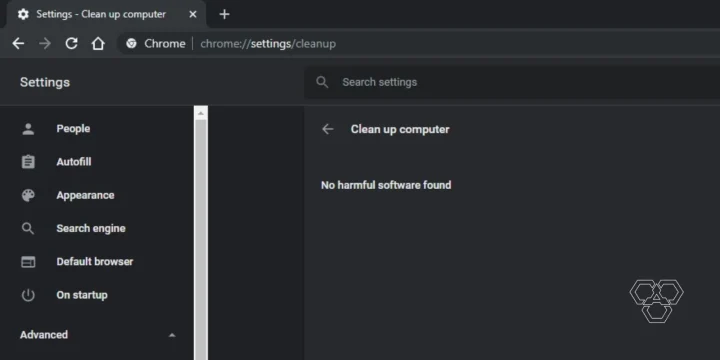
Chrome no longer includes the Chrome Cleanup Tool. Google began retiring the Windows-only tool with Chrome 111 in March 2023. The old chrome://settings/cleanup procedure is obsolete. Use browser security checks to review Chrome, remove unwanted extensions separately, and use operating-system security tools to investigate malware on the device. Google’s retirement announcement explains the change.
Verification: The Chrome settings routes and controls below were inspected in Google Chrome 152.0.7977.82 (Official Build, arm64) on macOS 26.5.2 (build 25F84). This was a navigation check, not a malware-removal test; no extensions were removed and no browser reset was performed. Windows instructions below follow Microsoft’s documentation and were not hands-on tested on a Windows build. Menu wording can differ by release or an organization’s policies.
1. Review Chrome’s Safety Check
Open chrome://settings/privacy, or choose Settings → Privacy and security. In the verified build, the Safety Check section provides Go to Safety Check when recommendations are available. Review its browser-update, password and permissions notices. Update Chrome when prompted and relaunch after saving your work.
Google’s Safety Check guidance explains what it reviews. Safety Check and Safe Browsing help with browser security and dangerous sites or downloads. They are not a full scan of every file on your computer and do not replace an operating-system malware scan.
2. Remove extensions you do not trust
Open chrome://extensions. Review each extension’s name, purpose and permissions. Use its toggle to disable it while investigating, or choose Remove to uninstall an extension you do not want. On a managed work or school browser, contact your administrator if policy prevents removal. Do not remove an extension merely because you do not recognize its technical identifier.
If unwanted pop-ups or redirects remain, review Chrome’s site permissions and installed applications. A site sending unwanted notifications is different from a malicious extension or an infected operating system. Follow Google’s unwanted software troubleshooting guide and revoke permissions from sites you no longer trust.
3. Reset browser settings only if necessary
Open chrome://settings/reset and review the reset dialog before confirming. In the inspected build, it explains that resetting changes the startup page, new-tab page, search engine and pinned tabs, disables extensions, and deletes cookies and temporary site data. Bookmarks, history and saved passwords are retained. Resetting can sign you out of websites. It is a browser repair step, not proof that the device is malware-free.
4. Scan the operating system separately
Windows 11: Open Windows Security → Virus & threat protection → Scan options. Choose Full scan → Scan now for a broader check than a quick scan. Review the results and recommended actions. Microsoft also documents an Offline scan, which restarts the PC into the recovery environment; save open work first. If another antivirus provider manages the device, use that provider’s controls. These steps are documentation-checked, not tested on a local Windows installation. See Microsoft’s Windows Security instructions.
macOS: Keep macOS and its security data updated. Apple’s built-in XProtect detects and remediates known malware; Chrome does not provide a button to run a Mac antivirus scan. If symptoms continue after removing unwanted software and reviewing browser settings, use your organization’s security support or Apple Support. See Apple’s explanation of macOS malware protection.
Linux, ChromeOS, Android and iOS: Do not apply the old Windows Cleanup instructions. Use the device vendor’s current security and recovery guidance. Desktop extension controls and Windows Security steps are not universal mobile instructions.
What to do if the problem returns
A slow computer alone does not diagnose malware. Record the symptoms, avoid downloading “cleanup tools” from pop-ups, and check whether the problem follows a particular extension, website or installed application. Persistent redirects, unexplained account changes or security alerts warrant help from the device’s administrator or security support. A clean browser settings screen is not a guarantee that every file or account is safe.



What should I do if Find button is not active?
Maybe your browser is managed by your organization. That could be one reason why you’re not able to do so.