


In this guide
Disclosure: TechEngage is a participant in the Amazon Services LLC Associates Program, an affiliate advertising program designed to provide a means for sites to earn fees by linking to Amazon.com and affiliated sites. We may earn a commission when you buy through links on this page, at no extra cost to you. Our editorial picks are made independently of these partnerships.
Writers don’t need the fastest processor or the beefiest GPU. What they need is a keyboard that doesn’t fight back after four hours, a screen that stays readable in a coffee shop window seat, and a battery that outlasts a cross-country flight. The problem is that most “best laptop” lists are built for gamers or content creators, and the priorities are completely different when your primary tool is a word processor.
The picks below are researched for writing work and reflect what actually matters for people who type thousands of words daily, whether that’s fiction, journalism, copywriting, academic papers, or screenplays. Every recommendation is compared on keyboard specs and independent typing reviews, published battery figures, weight, display comfort, and value — not a TechEngage writing-lab test.
What Makes a Laptop Good for Writing?
Before jumping into specific models, it helps to understand why certain laptops work better for writers than others. Four things separate a great writing laptop from a mediocre one.
Keyboard feel and key travel. This is the single most important factor. Writers hit keys tens of thousands of times per day. A shallow, mushy keyboard causes fatigue and slows you down. Look for at least 1.2mm of key travel (1.5mm or more is ideal) and a layout that doesn’t cram the arrow keys or shrink the right Shift key. ThinkPad and MacBook keyboards consistently rank highest in independent testing, though several others have closed the gap.
Battery life under real workloads. Manufacturer claims are measured with the screen dimmed and Wi-Fi off. In actual writing conditions (word processor open, browser with 8-12 tabs, Wi-Fi active, screen at 60-70% brightness), expect roughly 60-75% of the advertised number. A laptop rated at 18 hours will realistically deliver 11-13 hours of writing work. That’s still excellent, but a laptop rated at 8 hours might only give you 5.
Screen size and aspect ratio. Traditional 16:9 screens waste vertical space. A 16:10 or 3:2 aspect ratio shows more lines of text without scrolling, which is a noticeable quality-of-life improvement when you’re editing a 3,000-word article. Screen size is personal preference: 13-inch laptops are more portable, but 14-inch models hit the sweet spot between portability and comfortable reading distance.
Weight and portability. If you write at a desk 100% of the time, weight doesn’t matter. But most writers work from multiple locations. Anything under 3 pounds disappears in a bag. Between 3 and 4 pounds is manageable. Over 4 pounds and you’ll notice it on a long day out.
Best Laptops for Writers in 2026
These picks are organized by use case rather than ranked numerically, because the “best” laptop depends entirely on what kind of writing you do and where you do it.
Apple MacBook Air M4 — Best Overall for Most Writers

| Details | Information |
|---|---|
| Rating on Amazon | 4.8 out of 5 stars |
| Brand | Apple |
| Buy Now | Check availability on Amazon |
The MacBook Air with the M4 chip is the default recommendation for a reason. Apple squeezed a 10-core CPU and 10-core GPU into a fanless chassis that weighs 2.7 pounds and lasts roughly 14-16 hours on a writing workload. The 13.6-inch Liquid Retina display runs at 2560×1664 (a writer-friendly 3:2-ish aspect ratio), and the keyboard has a satisfying 1mm travel with stable key caps that don’t wobble.
macOS handles text rendering better than Windows in most situations. Fonts look sharper, and native apps like Pages and the built-in Notes app are genuinely useful for drafting. You also get smooth sync with iPhone and iPad through iCloud, Handoff, and Universal Clipboard, so you can start writing on your phone and pick it up on the laptop without any friction.
The base model comes with 16GB of unified memory and 256GB of storage. That’s enough for writing work, but if you keep large research libraries or media files locally, the 512GB configuration is worth the upgrade. The only real downside is the price: the M4 Air starts around $1,099, which puts it out of reach for budget-conscious writers.
Best for: Freelance writers, journalists, novelists, and anyone who values build quality and battery life above all else.
Lenovo ThinkPad X1 Carbon Gen 12 — Best Keyboard for Heavy Typists

| Details | Information |
|---|---|
| Price | $2,299.00 |
| Rating on Amazon | 4.4 out of 5 stars |
| Brand | Lenovo |
| Buy Now | Check availability on Amazon |
If you type 5,000+ words per day and keyboard quality is your top priority, the ThinkPad X1 Carbon is the answer. Lenovo’s ThinkPad keyboards have been the gold standard for decades, and the Gen 12 continues that tradition with 1.5mm of key travel, a slightly concave key cap design that guides your fingers, and a tactile bump that lets you feel each keystroke without bottoming out harshly.
The 14-inch display uses a 16:10 aspect ratio at 1920×1200 resolution (the base model) or 2880×1800 OLED (the upgrade). For writing, the 1920×1200 IPS panel is actually the better choice. It’s easier on the battery, produces less glare, and the resolution is sharp enough for text work. The OLED panel looks gorgeous but drains the battery faster and introduces a slight risk of burn-in if you leave a white document open for hours daily.
At 2.48 pounds with up to 15 hours of battery life (roughly 10-12 hours in practice), it’s light enough for daily commuting and durable enough to survive being tossed in a bag. The chassis meets MIL-STD-810H durability standards, which means it’s been tested against drops, vibration, humidity, and temperature extremes.
The catch is pricing. The X1 Carbon starts around $1,400 and climbs quickly with upgrades. Business buyers often get volume discounts through Lenovo’s corporate portals, so check if your employer or professional organization offers a deal before paying retail.
Best for: Journalists on deadline, technical writers, and anyone who has experienced wrist pain or fatigue from long typing sessions on flat keyboards.
Acer Swift Go 14 (2025) — Value candidate (price-dependent) Under $800

| Details | Information |
|---|---|
| Rating on Amazon | 3.7 out of 5 stars |
| Brand | Acer |
| Buy Now | Check availability on Amazon |
Acer doesn’t get the same brand recognition as Apple or Lenovo for writing laptops, but the Swift Go 14 quietly delivers most of what the premium options offer at nearly half the price. The 2025 model runs on Intel Core Ultra 7 processors with 16GB of RAM and a 512GB SSD. The 14-inch 2560×1600 IPS display uses a 16:10 aspect ratio, which is exactly what you want for document work.
Keyboard quality is above average for this price range. Key travel measures around 1.3mm with a defined actuation point, and the layout doesn’t sacrifice any keys for the sake of thinness. It’s not ThinkPad-level, but it’s significantly better than what you’d expect from a $700 laptop. Battery life sits around 10-12 hours under mixed use, which translates to roughly 8-9 hours of continuous writing.
At 3.09 pounds, it’s light enough for daily carries. The aluminum lid and palm rest feel solid, though the bottom panel is plastic. Build quality is respectable but not premium. You might notice slight flex in the lid if you press hard, but it’s nothing that affects daily use.
Best for: Student writers, bloggers, and freelancers who need a solid writing machine without spending over $800.
MacBook Pro 14-inch M4 — Best for Writers Who Also Edit Media

| Details | Information |
|---|---|
| Rating on Amazon | 4.8 out of 5 stars |
| Brand | Apple |
| Buy Now | Check availability on Amazon |
Most writers don’t need a MacBook Pro. But if your work involves writing alongside photo editing, podcast production, or video work, the M4 Pro chip handles those tasks without breaking a sweat. The 14.2-inch Liquid Retina XDR display with 1000 nits of sustained brightness is readable even in direct sunlight, and the ProMotion 120Hz refresh rate makes scrolling through long documents feel noticeably smoother.
The keyboard is identical to the MacBook Air. Battery life is comparable at roughly 13-15 hours for writing work, though media editing will drain it faster. The main advantage over the Air is the additional ports (HDMI, SD card slot, MagSafe charging) and the ability to drive external displays at higher resolutions if you work from a desk setup part of the time.
Starting at $1,599 for the M4 Pro configuration, it’s significantly more expensive than the Air. Unless you genuinely need the extra processing power for non-writing tasks, the Air is the better buy.
Best for: Multimedia journalists, content creators who write and edit in the same workflow, writers who connect to external monitors regularly.
HP Pavilion Plus 14 — Best Mid-Range Windows Option
| Details | Information |
|---|---|
| Rating on Amazon | 3.5 out of 5 stars |
| Brand | HP |
| Buy Now | Check availability on Amazon |
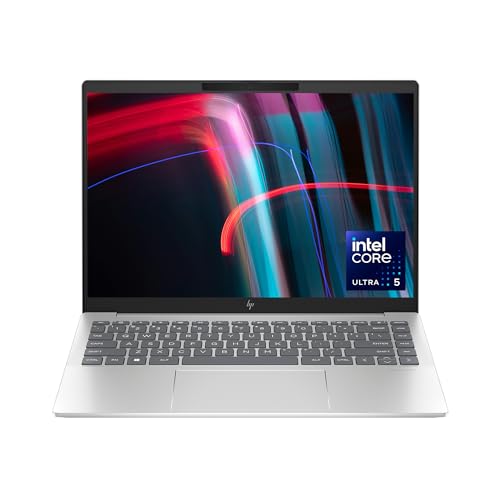
HP positioned the Pavilion Plus as a step above the regular Pavilion line without reaching into premium pricing. The result is a well-balanced 14-inch laptop with a 2880×1800 OLED display (90Hz), Intel Core Ultra 5 or Ultra 7 processors, 16GB of RAM, and a 512GB SSD. That OLED screen makes text look almost printed on paper, with perfect blacks and vivid colors that reduce the harshness of staring at a screen all day.
The keyboard is decent. Key travel is around 1.3mm, and the keys feel stable without the mushiness that plagues many mid-range laptops. The layout is standard with a full-size Enter key and properly spaced arrow keys. Battery life is the main compromise: OLED screens consume more power, so you’ll get roughly 7-8 hours of writing work. That’s enough for a full workday but not enough for a long flight.
At around $850-950 depending on configuration, it sits in a competitive space. The OLED display is the differentiator. If you spend long hours staring at text and screen quality matters to you, this is hard to beat at this price.
Best for: Writers who prioritize screen quality and spend most of their work time near an outlet.
Lenovo IdeaPad Slim 5 14 — Best Under $600
Budget laptops have improved dramatically. The IdeaPad Slim 5 14 proves you can get a capable writing machine for around $550 without feeling like you’re making serious compromises. It ships with AMD Ryzen 5 7535U or Intel Core i5-1335U processors, 16GB of RAM (some configs have 8GB, avoid those), and a 512GB SSD.
The 14-inch 1920×1200 IPS display covers 100% sRGB and gets bright enough for indoor use at around 300 nits. It’s not going to dazzle you, but text looks crisp and the 16:10 ratio gives you that extra vertical space for documents. The keyboard is unremarkable but functional, with about 1.2mm of travel and a layout that doesn’t cut any corners.
Battery life runs about 8-10 hours for light workloads, so roughly 6-7 hours of focused writing. Not class-leading, but sufficient for most writers who have access to outlets during the day. At 3.3 pounds, it’s portable without being ultralight.
The tradeoffs at this price point are build quality (it’s plastic, and it feels like plastic) and the speakers (thin and tinny). Neither of those matters much for writing work.
Best for: Students, hobbyist writers, and anyone who needs a reliable writing laptop without a big investment.
ASUS Zenbook 14 OLED (UX3405) — Best Display for Eye Comfort
| Details | Information |
|---|---|
| Price | $1,079.99 |
| Brand | ASUS |
| Buy Now | Check availability on Amazon |
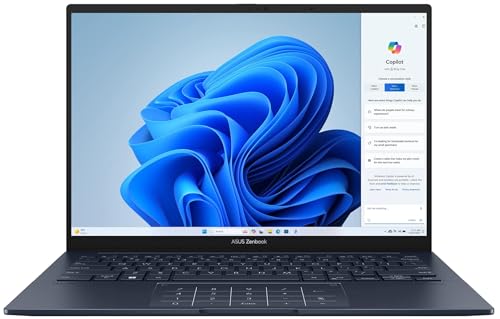
ASUS has been pushing OLED displays into progressively cheaper laptops, and the Zenbook 14 OLED is one of the best implementations. The 14-inch 2880×1800 OLED panel is TÜV Rheinland certified for low blue light emission, which matters if you write for 6-8 hours daily and experience eye strain. The screen also supports 100% DCI-P3 color, 120Hz refresh rate, and 600 nits peak brightness.
Under the hood, Intel Core Ultra 7 155H processors pair with 16GB of RAM and a 1TB SSD. That’s more power than most writers need, but it means the laptop handles multitasking effortlessly. Have Scrivener, a browser with 20 research tabs, Spotify, and a PDF viewer open simultaneously? No problem.
The keyboard uses ASUS’s ErgoSense design with 1.4mm of key travel. It’s comfortable for extended typing, though the key feel is lighter than a ThinkPad. The laptop weighs 2.82 pounds and measures 0.59 inches thin, making it one of the most portable 14-inch options available. Battery life is around 8-10 hours for productivity work.
Pricing starts around $900-1,000 depending on where you buy it. ASUS frequently runs sales that bring it closer to $800.
Best for: Writers who work long hours and experience eye fatigue, anyone who wants the best display under $1,000.
HP Chromebook Plus 14 — Best for Distraction-Free Writing
| Details | Information |
|---|---|
| Price | $429.95 |
| Rating on Amazon | 4.8 out of 5 stars |
| Brand | HP |
| Buy Now | Check availability on Amazon |
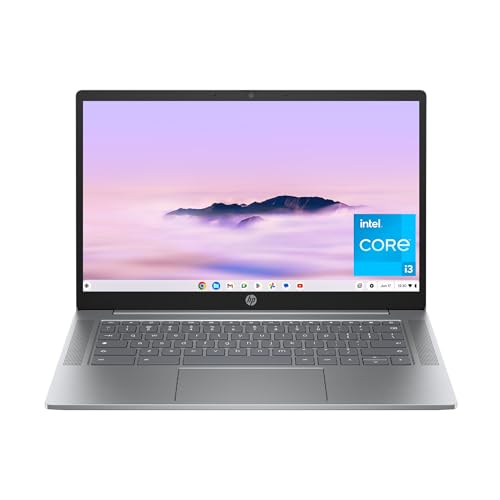
ChromeOS forces simplicity. You can’t install Steam, you can’t run Photoshop, and the constant temptation to alt-tab into a full desktop application doesn’t exist. For some writers, that limitation is actually the point. The HP Chromebook Plus 14 takes this concept and wraps it in capable hardware: a 14-inch 1920×1080 IPS display, Intel Core i3-N305 processor, 8GB of RAM, and 128GB of eMMC storage.
Google Docs is the primary writing tool on ChromeOS, and it runs flawlessly. The Chromebook Plus designation also grants access to Google’s AI-powered writing features like “Help me write” and Magic Editor for photos. For writers who live entirely in the Google ecosystem (Docs, Drive, Gmail, Calendar), there’s almost zero friction between ChromeOS and a full-fat Windows or Mac laptop.
Battery life is the real star here. ChromeOS is lightweight, and the lower-power hardware means you’ll easily get 10-12 hours of actual writing work. The keyboard is comfortable with good spacing and quiet keys, though key travel is on the shorter side at around 1.1mm.
At $350-$400, this is the cheapest option on this list that doesn’t compromise on daily usability. The big caveat: if you rely on desktop apps like Scrivener, Ulysses, Final Draft, or the full Microsoft Office suite, ChromeOS won’t work for you.
Best for: Writers who use Google Docs exclusively, students on a budget, and anyone who wants fewer distractions while working.
Dell XPS 13 (2025) — Best Ultraportable for Travel Writers
| Details | Information |
|---|---|
| Brand | Dell |
| Buy Now | Check availability on Amazon |
Dell redesigned the XPS 13 from the ground up in 2024, and the 2025 refresh builds on that with Intel Core Ultra 7 processors and improved thermals. At 2.6 pounds and 0.6 inches thin, it’s the lightest traditional laptop on this list. The 13.4-inch display runs at 1920×1200 (FHD+) or 2880×1800 (OLED) depending on configuration.
The keyboard is where opinions split. Dell switched to a zero-lattice design that eliminates the gaps between keys. Some typists love the smooth look and feel; others find it harder to locate keys by touch, especially in the first few days. Key travel is about 1mm, which is on the shallow side. If you’re a touch typist who never looks at the keyboard, give yourself a week to adjust before judging it.
Battery life is around 11-13 hours for the FHD+ model (roughly 8-9 hours in practice). The OLED model drops to around 7-8 hours. Port selection is limited to two Thunderbolt 4 USB-C ports, so you’ll probably want a small hub if you need USB-A or HDMI.
Starting around $1,199, it’s premium-priced. But for writers who travel frequently and need the lightest, most compact laptop that still feels like a proper work machine, the XPS 13 delivers.
Best for: Travel writers, digital nomads, and writers who prioritize portability above everything else.
Microsoft Surface Laptop 7 — Best 2-in-1 Flexibility
| Details | Information |
|---|---|
| Price | $1,299.00 |
| Rating on Amazon | 3.7 out of 5 stars |
| Brand | Microsoft |
| Buy Now | Check availability on Amazon |
The Surface Laptop 7 runs on Qualcomm Snapdragon X Plus or X Elite processors, which deliver exceptional battery life (15-17 hours rated, roughly 11-13 hours in real writing use) while staying cool and silent. The fanless design means zero noise while you work, which matters more than you’d think when you’re writing in a quiet room.
The 13.8-inch or 15-inch PixelSense touchscreen with a 3:2 aspect ratio is built for document work. That taller display means you see more lines of text without scrolling. Microsoft’s own apps are obviously optimized perfectly: Word, OneNote, and the Edge browser all feel snappy and responsive. Third-party app compatibility through ARM emulation has improved significantly, and most writing tools (Scrivener, Obsidian, Typora) now run natively or emulate without issues.
The keyboard has a satisfying 1.3mm of key travel and the fabric-covered palm rest is comfortable during long sessions. It also supports the Surface Pen for handwritten notes and annotations, which is genuinely useful for writers who sketch outlines or markup printed drafts digitally.
Starting at $999 for the 13.8-inch model, it’s positioned between the MacBook Air and the ThinkPad. The main risk is the ARM processor: while app compatibility has improved massively, a few niche writing tools may still have issues.
Best for: Writers who want pen input for annotations, anyone who prefers the Surface ecosystem, and writers who value a silent work environment.
Lenovo ThinkPad E14 Gen 6 — Budget candidate (price-dependent) ThinkPad
| Details | Information |
|---|---|
| Price | $899.99 |
| Brand | Lenovo |
| Buy Now | Check availability on Amazon |
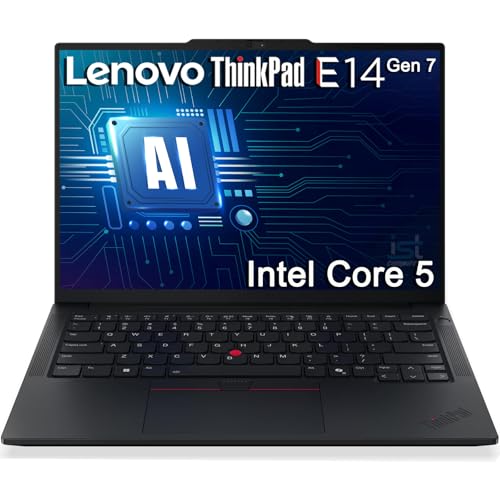
The full ThinkPad keyboard experience at a significantly lower price than the X1 Carbon. The E14 Gen 6 uses the same fundamental keyboard design that makes ThinkPads legendary for typists: concave key caps, 1.5mm travel, quiet but tactile feedback, and a red TrackPoint nub in the center of the keyboard. If you’ve used a ThinkPad before and loved the keyboard, the E14 delivers the same experience.
Where it compromises versus the X1 Carbon is weight (3.31 pounds versus 2.48), build quality (less premium materials), and display options (the base model has a mediocre 1920×1080 TN panel, so make sure you select the 1920×1200 IPS upgrade). With an Intel Core i5-1335U, 16GB of RAM, and a 512GB SSD, it handles writing workloads without any lag.
Battery life is around 8-10 hours rated, which translates to about 6-7 hours of continuous writing. That’s enough for a workday but not for unplugged all-day sessions. At $650-800, it costs half as much as the X1 Carbon while preserving the one feature writers care about most: the keyboard.
Best for: Writers who want ThinkPad keyboard quality without paying ThinkPad X1 prices.
Framework Laptop 13 — Best for Writers Who Want Repairability
Framework takes a fundamentally different approach to laptop design. Every component is modular and user-replaceable: RAM, SSD, battery, screen, keyboard, ports, and even the mainboard. If the keyboard wears out after three years of heavy typing, you replace the keyboard module for $99 instead of buying a new laptop. For writers who plan to keep their machine for 5+ years, the long-term cost math is compelling.
The keyboard itself is surprisingly good for a company that’s primarily known for hardware modularity. Key travel is 1.5mm with a crisp, well-defined actuation point. The 13.5-inch 2256×1504 display uses a 3:2 aspect ratio, which is the best ratio for document work. The matte screen reduces glare in bright environments, which is a thoughtful choice for a laptop marketed partly toward writers and knowledge workers.
Current models ship with AMD Ryzen 7 7840U or Intel Core Ultra processors, 16GB of RAM (user-upgradable), and your choice of SSD. At 2.87 pounds with around 9-10 hours of battery life, it’s competitive with mainstream ultrabooks. Pricing starts around $849 for a DIY kit or $1,049 pre-built.
Best for: Environmentally conscious writers, anyone who keeps laptops for 5+ years, and writers who want to customize their port layout.
iPad Air M3 with Magic Keyboard — Best Non-Traditional Writing Setup
This isn’t technically a laptop, but enough writers use this setup daily that it deserves mention. The iPad Air M3 with the Magic Keyboard Folio creates a 10.86-inch (11-inch model) or 13-inch writing station that weighs around 2.3 pounds total. iPadOS supports full versions of Google Docs, Microsoft Word, and several excellent writing apps like iA Writer and Ulysses.
The Magic Keyboard has 1mm of key travel and a scissor mechanism that feels remarkably close to a laptop keyboard. It’s not going to satisfy ThinkPad enthusiasts, but for casual typing and medium-length writing sessions, it works well. The trackpad is small but functional.
Battery life is exceptional at 10-12 hours of active use. The cellular option (available on the 13-inch model) means you can write from anywhere with a data connection without tethering to your phone. The Apple Pencil support adds value for writers who handwrite outlines or annotate documents.
The iPad Air M3 starts at $599 (11-inch) or $799 (13-inch), plus $249-$299 for the Magic Keyboard. The total cost is comparable to a mid-range laptop, but you get a fundamentally different and more portable experience. The main limitation is file management: iPadOS makes it harder to organize research files, work with multiple windows side by side, and use niche writing software that doesn’t have an iOS version.
Best for: Writers who want maximum portability, creative writers who use Apple Pencil for planning, and anyone who already owns an iPad and wants to try it as a primary writing device.
How to Choose the Right Laptop for Your Writing Style
Different types of writing create different hardware demands. A novelist working in Scrivener with 200 research notes open has different needs than a blogger drafting posts in Google Docs with a few browser tabs. Here’s a quick breakdown by writing persona:
Fiction writers and novelists benefit from distraction-free environments and comfortable keyboards for marathon sessions. The ThinkPad X1 Carbon or ThinkPad E14 are natural fits. If you use Scrivener (which compiles manuscripts, syncs with external editors, and handles research libraries), avoid Chromebooks since Scrivener doesn’t have a web version.
Journalists and reporters need portability first, battery life second, and a keyboard that keeps up with fast note-taking. The MacBook Air M4 or Dell XPS 13 handle the travel-heavy lifestyle, while the Surface Laptop 7 with pen input works well for reporters who sketch diagrams or annotate interviews.
Academic writers and researchers tend to keep dozens of PDF tabs open simultaneously while writing in LaTeX or Word. The extra RAM and processing power of the MacBook Pro or ASUS Zenbook 14 helps here. A 14-inch or 15-inch screen is preferable for referencing sources alongside the manuscript.
Bloggers and content writers who work primarily in browser-based tools (Google Docs, WordPress, Notion) can get away with less powerful hardware. The HP Chromebook Plus 14 or the Lenovo IdeaPad Slim 5 handle these workloads perfectly at a fraction of premium prices.
Screenwriters using Final Draft or Highland 2 need macOS or Windows (not ChromeOS). The MacBook Air M4 runs Highland 2 natively, and the ThinkPad X1 Carbon handles Final Draft smoothly. Both have keyboards good enough for dialogue-heavy scripts.
Keyboard Comparison: How the Top Picks Stack Up
Since keyboard quality is the most important factor for writers, here’s how the main contenders compare on the specific metrics that affect typing comfort:
| Laptop | Key Travel | Layout Quality | Typing Feel | Backlit |
|---|---|---|---|---|
| ThinkPad X1 Carbon | 1.5mm | Excellent | Firm, tactile | Yes |
| ThinkPad E14 | 1.5mm | Excellent | Firm, tactile | Yes |
| Framework 13 | 1.5mm | Very good | Crisp, defined | Yes |
| ASUS Zenbook 14 | 1.4mm | Very good | Light, smooth | Yes |
| Acer Swift Go 14 | 1.3mm | Good | Moderate | Yes |
| Surface Laptop 7 | 1.3mm | Very good | Soft, quiet | Yes |
| HP Pavilion Plus 14 | 1.3mm | Good | Moderate | Yes |
| MacBook Air M4 | 1.0mm | Excellent | Snappy, stable | Yes |
| Dell XPS 13 | 1.0mm | Good* | Shallow, firm | Yes |
| HP Chromebook Plus | 1.1mm | Good | Soft, quiet | Yes |
Screen Aspect Ratios: Why 16:10 and 3:2 Matter for Writers
This is something most laptop reviews gloss over, but it makes a real difference in daily writing work. A standard 16:9 (1920×1080) display shows about 42 lines of text in Google Docs at default zoom. A 16:10 (1920×1200) display shows about 48 lines. A 3:2 (2256×1504) display shows about 54 lines. Those extra lines mean less scrolling, better context while editing, and a more natural “page” feel on screen.
Every laptop on this list uses either 16:10 or 3:2 aspect ratios. 16:9 models are excluded because the difference in daily comfort is too significant for a writer to ignore. If you’re comparing a laptop not on this list, check the screen aspect ratio before buying.
Writing Software Compatibility by Platform
Your choice of writing software might dictate your operating system. Here’s a quick compatibility overview for the most popular writing tools:
Available everywhere (macOS, Windows, ChromeOS, iPadOS): Google Docs, Microsoft Word (web version), Notion, Obsidian (no ChromeOS), iA Writer (no ChromeOS).
macOS and Windows only: Scrivener, Final Draft, yWriter, Manuskript.
macOS and iPadOS only: Ulysses, Highland 2, Bear.
Windows only: yWriter (older versions), some LaTeX distributions with specific plugins.
If you use Scrivener or Final Draft as your primary tool, you need Windows or macOS. That rules out Chromebooks. If you work exclusively in Google Docs or Notion, a Chromebook is perfectly viable and saves hundreds of dollars.
Battery Life Expectations: Rated vs. Real-World
Manufacturers test battery life with the screen dimmed to 150 nits, Wi-Fi connected but idle, and a single looping video or light web browsing. That’s nothing like actual writing work. Here’s what you can realistically expect from each pick during a typical writing session (word processor, browser with 8-10 tabs, Wi-Fi on, brightness at 65%):
| Laptop | Rated Battery | Writing Workload (Est.) |
|---|---|---|
| MacBook Air M4 | 18 hours | 14-16 hours |
| Surface Laptop 7 | 17 hours | 11-13 hours |
| ThinkPad X1 Carbon | 15 hours | 10-12 hours |
| MacBook Pro 14 M4 | 17 hours | 13-15 hours |
| HP Chromebook Plus | 13 hours | 10-12 hours |
| Dell XPS 13 (FHD+) | 13 hours | 8-9 hours |
| Acer Swift Go 14 | 12 hours | 8-9 hours |
| ASUS Zenbook 14 | 11 hours | 8-10 hours |
| Framework 13 | 10 hours | 7-8 hours |
| ThinkPad E14 | 10 hours | 6-7 hours |
| HP Pavilion Plus 14 | 10 hours | 7-8 hours |
| IdeaPad Slim 5 | 10 hours | 6-7 hours |
Ergonomics and Long-Term Comfort
Writers develop repetitive strain injuries at higher rates than most professions. The laptop you choose is only part of the equation, but it’s a significant part. A few things to consider beyond the laptop itself:
A laptop stand that raises the screen to eye level, paired with an external keyboard, is the single best ergonomic upgrade for any writer who works from home. It costs $20-40 and prevents the neck-forward posture that causes chronic pain. At a desk, the ThinkPad X1 Carbon and MacBook Air both work well in this setup because they have good external display support.
If you write in coffee shops or on the road and can’t use a laptop stand, screen height matters more. Larger screens (14-15 inches) position the top of the display higher, which slightly reduces how far you need to tilt your head down. The Surface Laptop 7 15-inch model is particularly good for this because the 3:2 aspect ratio makes the screen physically taller than a 15-inch 16:9 display.
For writers with existing wrist issues, keyboard angle is important. ThinkPads have a slight negative tilt that positions your wrists naturally, while most other laptops sit flat or tilt slightly upward (which is worse for wrist strain). An external ergonomic keyboard solves this entirely, but then you’re carrying extra gear.
Frequently Asked Questions
How much RAM does a writer actually need?
16GB is the sweet spot for writing work in 2026. It handles a word processor, 15-20 browser tabs, a music app, and a PDF viewer simultaneously without slowdowns. 8GB works for basic writing in Google Docs with fewer tabs, but you’ll notice lag if you’re a heavy multitasker. 32GB is overkill for pure writing, only worth it if you also edit photos or video.
Can you use a Chromebook for serious writing work?
Yes, if your workflow lives in the browser. Google Docs, Notion, and Microsoft Word’s web version all work perfectly on ChromeOS. You also get access to Android apps for tools like iA Writer. The limitation is desktop software: Scrivener, Final Draft, Ulysses, and full Microsoft Office don’t run on Chromebooks. If you depend on any of those, you need Windows or macOS.
Is Mac or Windows better for writing?
Neither has a clear advantage for the act of writing itself. macOS offers slightly better text rendering (fonts look sharper), tighter integration with iPhone and iPad, and access to Mac-exclusive apps like Ulysses and Highland 2. Windows gives you more hardware variety at every price point, better compatibility with corporate IT environments, and access to more niche tools. Choose based on which ecosystem you’re already invested in and which writing software you prefer.
What keyboard specs matter most for a writing laptop?
Key travel (distance the key physically moves when pressed) is the most important measurable spec. Aim for 1.2mm or higher. Above that, look for stable key caps that don’t wobble laterally, a standard layout with full-size Shift and Enter keys, and quiet operation if you write in shared spaces. The best way to evaluate a keyboard is to type on it for 10 minutes in a store before buying.
What screen size is best for writing?
14 inches hits the best balance between portability and usable screen area for most writers. You can see a full page of text at comfortable zoom levels without squinting. 13-inch screens are more portable but can feel cramped during long editing sessions. 15-16 inch screens show more content but add weight that makes them less convenient for mobile work. Prioritize aspect ratio (16:10 or 3:2) over raw size.
How much storage (SSD) do writers need?
256GB is the minimum for a Windows laptop (the OS alone uses 30-40GB). 512GB is comfortable for most writers and leaves room for research files, manuscripts, and applications. 1TB is only necessary if you store large media libraries, extensive research archives, or work with audio and video alongside writing. Cloud storage (Google Drive, Dropbox, iCloud) can extend any of these effectively.



I appreciate that they mentioned the specific requirements for writers. It shows that they understand our needs. Thanks for the recommendations!
I’m really impressed with the features of these laptops. The battery life and performance are perfect for writers and journalists.
Great article! I’ve been searching for a laptop for my writing job and these recommendations are really helpful.
The key features of each laptop are well-described, making it easier to see which one would be the best fit for my needs as a journalist. Great article!
I love how this article breaks down the specific requirements for writers and journalists when it comes to choosing a laptop. Very helpful!
I love how they included different options for different budgets. Very considerate!
I appreciate that the article mentions the importance of a compact and easy-to-carry design for writers. Portability is key for me when it comes to a laptop.
I’ve been searching for a laptop that meets my needs as a writer, and this list is perfect. Thanks for the recommendations!