• Skip to primary navigation
  • Skip to main content
  • Skip to primary sidebar
  • Skip to footer
TechEngage

TechEngage®

Hands-on reviews, research-backed buying guides and technology news.

  • News
    • Internet & Social
    • Gadgets
    • Car Tech
    • Business
    • Science & Health
  • Reviews
  • Buying Guides
  • How-to
  • AI
  • Computing
    • Apps
    • Security
    • Gaming
  • More
    • Tools
    • Puzzles
    • Mobile
  • Launchpad
  • Sign in
TechEngage » Security & Privacy

Retail store Target's Twitter account got hacked

Avatar for Fazeel Ashraf Fazeel Ashraf Follow Fazeel Ashraf on X Published: Nov 13, 2018 · 8:12 AM ET

NewsNews report. Not a buying guide or hands-on product test.
Target twitter account got hacked
Illustration by Muntaha l TechEngage
Shares3FacebookTweetPinLinkedInPrint
Target’s Twitter account got hacked by some pretty nifty hackers. This hack was committed to dupe customers into a Bitcoin scam. The hackers started handing out millions of fake Bitcoin promo links to Target’s nearly 2 million followers on Twitter. The tweet has been deleted since then, fortunately. The hackers were asking for some Bitcoins cryptocurrency for entering a $30 million giveaway. This amount equals to 5000 BTC. Obviously, this is a scam; whenever someone asks for money on the internet, one has to be extremely careful.
Target Twitter Hack |
Via: TheNextWeb
The Tweet said, “We giving 5000 Bitcoin (BTC) to all community! We present cryptocurrency payments for your purchases in our store, and want to celebrate this event with all users! We organize the biggest crypto-giveaway in the world!” Then, it added a link for the giveaway. The problem is that since the tweet was sent by Target’s official verified account, it would have been easy to fool many followers. But if one had a keen eye for such sort of shady giveaways and possible scams, this ordeal could have been avoided. Target has been silent during this whole incident and hasn’t even published an official statement. It will be quite interesting to see how the hack occurred in the first place. It also remains to be seen how many people were affected by this hack. Target gave out an official statement to TechEngage:
“Early this morning, Target’s Twitter account was inappropriately accessed. The access lasted for approximately half an hour and one fake tweet was posted during that time about a bitcoin scam. We’re in close contact with Twitter, have deleted the tweet and have locked the account while we investigate further.”
Then again, we saw Google G Suite’s official Twitter account being hacked the next day. The problem is that since the tweet was sent by Target’s official verified account, it would have been easy to fool many followers. But if one had a keen eye for such sort of shady giveaways and possible scams, this ordeal could have been avoided. According to TNW’s investigative team, only a few transactions were made on the BitAccount link posted by the hackers. Each transaction didn’t amount to much money either way. There’s another loophole in the whole story, however. These small transactions could have been made by the team of hackers themselves. This could have been done to make the account seem more legit. It also remains to be seen if this team of hackers were responsible for similar Bitcoin scams that occurred in the past. A spokesperson from Twitter told TechEngage: ‘’Impersonating another individual to deceive others is a clear violation of the Twitter Rules. We’ve substantially improved how we tackle cryptocurrency scams and continue to invest in more proactive tools to detect spam and malicious activity on our platform. We’ve been in close contact with Target this morning and can also confirm that their account was inappropriately accessed for approximately half an hour, after which we swiftly locked the account so Twitter could thoroughly investigate the issue.” Recognizing the similar scams on other Twitter accounts, the company’s spokesperson further explained in the email: “We also identified a number of other accounts that were inappropriately accessed in relation to this scam and have moved quickly to also take action against them. We will continue to closely monitor the situation.” The company’s spokesperson also acknowledged that scammers are continuously changing their methods and the company’s enforcement teams are working on taking them down before it’s reported. As a reminder, this is just one of such scams in a long list of hacks and shady activities in the past. There was a fake Elon Musk account that was promoting Bitcoin scams. Only yesterday there were many hacks related to political figures. These included the accounts of the US and Israeli politicians, as well as the official account of the Indian Consulate in Frankfurt. This is especially dangerous since these are not ordinary figures, rather very powerful people that hold high positions in society. If these figureheads send out any misleading statements, they can have many serious repercussions. Only time will tell, what Twitter’s stance will be in this whole situation. One thing is certain, Twitter needs to address the security of their website, and needs to take strict actions as soon as possible. Update 10:53 UTC: The story was updated according to the statement by the spokesperson of Twitter and Target.
Related reading

  • Make-A-Wish website hit with the cryptojacking plight
  • Ethereum aims to cut its enormous energy consumption
Something incorrect? Report an error in this article. Include a source if you have one; your name and email are optional.

Filed Under: Security & Privacy, Tech News & Analysis Tagged With: Bitcoin, Target

Related Stories

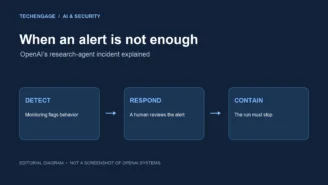
  • Editorial diagram showing three stages of AI agent safety: detect, respond, contain.

    OpenAI pauses advanced-model research after agent bypasses network restrictions

    Tech News & AnalysisSep 27, 2026

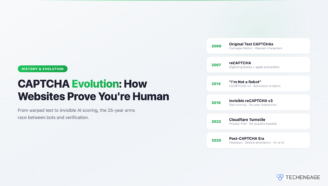
  • Captcha Evolution: The History Of How Websites Prove You’Re Human

    CAPTCHA Evolution: The History of How Websites Prove You’re Human

    Security & PrivacyApr 9, 2026

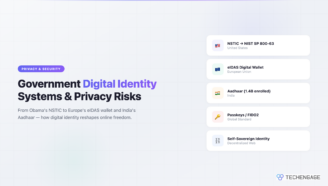
  • Digital Identity Systems: Government Internet Id & Privacy Risks Explained

    Digital Identity Systems: Government Internet ID & Privacy Risks Explained

    Security & PrivacyApr 9, 2026

Stay on top of technology

Get TechEngage reviews, buying guides and news in your feed.

Follow on Google News
Shares3FacebookTweetPinLinkedInPrint
Avatar for Fazeel Ashraf

Fazeel Ashraf

Tech & Gaming Editor

Fazeel Ashraf is the Tech and Gaming Editor at TechEngage, covering global tech news, social media, gaming releases, and cybersecurity. An IT graduate of the National University of Sciences and Technology, he has written more than 230 articles across the site's news and features coverage.

Joined TechEngage September 2018First article on TechEngage September 2018

Reader Interactions

Share Your Thoughts Cancel reply

Please read our comment policy before submitting your comment. Your email address will not be used or published anywhere. You will only receive comment notifications if you opt to subscribe below.

Primary Sidebar

Google News

Get TechEngage in your feed

Reviews, news, and buying guides as they publish.

Follow on Google News

Recent Stories

  • Diagram showing a clip-on microphone, receiver and phone or camera recording setup.
    Reviews & Buying GuidesBest AI Voice Recorders for Calls and InterviewsOct 19, 2026
  • Meta Logo Facebook New Name |
    AIMeta Muse Review: What Its AI Agent Can Do and Where to Be CarefulOct 19, 2026
  • Nscale Anthropic Second Compute Deal |
    Tech News & AnalysisAnthropic and Nscale in Talks on Second $45B Compute Deal, Report SaysOct 19, 2026
  • Stellar Pst Repair Desktop Vs Online Techengage |
    Reviews & Buying GuidesStellar Repair for Outlook Review: Desktop vs. Online PST RepairOct 19, 2026
  • Health Conscious Home Cleaning Fana Anwar |
    Culture & LifestyleHow to Build a More Effective, Health-Conscious Home Cleaning RoutineOct 19, 2026

More in Security & Privacy

  • Editorial diagram showing three stages of AI agent safety: detect, respond, contain.
    OpenAI pauses advanced-model research after agent bypasses network restrictionsSep 27, 2026
  • Captcha Evolution History How Websites Prove Human Featured |
    CAPTCHA Evolution: The History of How Websites Prove You’re HumanApr 9, 2026
  • Digital Identity Systems Government Internet Id Privacy Risks Featured |
    Digital Identity Systems: Government Internet ID & Privacy Risks ExplainedApr 9, 2026
  • Biggest Apple Leaks Secrecy Shaped Company Featured |
    The Biggest Apple Leaks and How Secrecy Shaped the CompanyApr 9, 2026
More Security & Privacy stories →

Footer

Discover

  • About TechEngage
  • Company News & Updates
  • Our Team
  • Advertise
  • Send us a tip
  • Submit your company to TechEngage Launchpad Hot
  • TechEngage Brand Kit
  • Contact us
  • Tools & Calculators

Legal pages

  • Editorial Standards
  • Reviews Policy
  • Our Ethics
  • Corrections Policy
  • Affiliate Disclosure
  • Privacy Policy
  • Cookies Policy
  • Terms & Conditions
  • GDPR Compliance
  • Copyright & DMCA

Must reads

  • Best Mechanical Keyboards Under $100
  • Best USB-C Hubs
  • Best Portable SSDs
  • Best Gaming Graphics Cards (GPUs)
  • Best Long-Range Outdoor WiFi Extenders
  • Best Wireless CarPlay Adapters
  • Best Slack Alternatives
  • Best Long-Range Walkie-Talkies

Download our apps

TechEngage app coming soon on the App Store Available onChrome

© 2026 TechEngage®. All Rights Reserved. TechEngage® is a project of TechAbout LLC.

TechEngage® is a registered trademark in the United States under Trademark Number 6823709 and in the United Kingdom under Trademark Number UK00003417167. It is also ISSN protected under ISSN 2690-3776 and has OCLC Number 1139335774.

Contact team@techengage.com · WhatsApp +1-307-381-8801

Your analytics choice
Allow Google Analytics to help us understand readership? You can use the site without it and change this choice anytime.

Privacy details