• Skip to primary navigation
  • Skip to main content
  • Skip to primary sidebar
  • Skip to footer
TechEngage

TechEngage®

Technology Reviews, Guides & Analysis

  • Cryptocurrency
  • Science
    • Energy
    • Environment
    • Health
    • Space
  • Apps
  • More
    • Opinion
    • Noteworthy
    • Culture
    • Events
    • Deals
    • Startups
      • Startup Submissions
  • Videos
  • Tools
TechEngage » Phones

Nokia Lumia Series: The Complete History of the Phones That Almost Changed Everything

Avatar for Jazib Zaman Jazib Zaman Follow Jazib Zaman on Twitter Updated: April 5, 2026

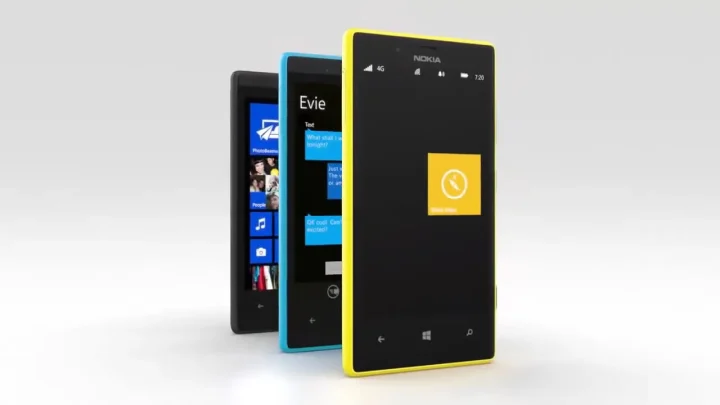
Lumia series
FacebookTweetPinLinkedInPrintEmail

My first smartphone was a Nokia Lumia 520. It cost me roughly $99 in 2013, ran Windows Phone 8, and had those gorgeous live tiles that still look better than anything Android or iOS has shipped since. I genuinely loved that phone. The ceramic-feel polycarbonate body, the buttery smooth animations on hardware that had no business running that smoothly, the HERE Maps that worked offline years before Google figured that out. And then, slowly, the apps stopped coming. Instagram never arrived. Banking apps disappeared. Snapchat was a third-party knockoff that barely worked. By 2015, I switched to Android, and a part of me has never stopped wondering what could have been.

The Nokia Lumia series represents one of the most fascinating “what if” stories in technology history. A legendary hardware manufacturer partnered with the world’s largest software company, produced genuinely innovative phones, and still lost. The Lumia story involves corporate politics, brilliant engineering, strategic miscalculations, and a mobile operating system that was arguably ahead of its time — killed not by bad design but by ecosystem failure.

This is the complete story of the Nokia Lumia series: every generation, the standout models, why the platform ultimately failed, and what its legacy means for smartphones today.

Table of Contents

The Nokia-Microsoft Partnership That Started It All

To understand the Lumia series, you need context. By 2010, Nokia was in serious trouble. The company had dominated mobile phones for over a decade — at its peak in 2007, Nokia held 49.4% of the global smartphone market according to Gartner research data. But the iPhone (launched in 2007) and Android (launched in 2008) were eating Nokia’s market share at an alarming rate. Nokia’s own Symbian operating system, once the world’s most popular smartphone platform, was aging badly and couldn’t compete with the touch-first interfaces of iOS and Android.

In February 2011, Nokia CEO Stephen Elop made the decision that would define the company’s next five years: a strategic partnership with Microsoft to adopt Windows Phone as Nokia’s primary smartphone platform. The “burning platform” memo — Elop’s internal communication comparing Nokia’s situation to a man standing on a burning oil platform — became one of the most analyzed corporate documents in tech history. Nokia would abandon its homegrown MeeGo project (which had produced the critically acclaimed but commercially limited Nokia N9) and bet everything on Windows Phone.

The first fruits of that partnership arrived in October 2011: the Nokia Lumia 800 and Lumia 710.

First Generation: Windows Phone 7 (2011-2012)

The first generation of Lumia phones ran Windows Phone 7.5 (“Mango”) and later Windows Phone 7.8. These were Nokia’s opening statement in the Windows Phone ecosystem — and despite hardware limitations that look almost quaint today, they established the design language and engineering philosophy that would carry through the entire series.

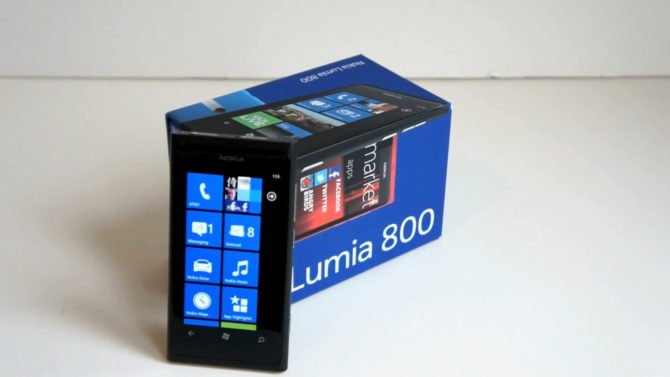
Nokia Lumia 800 — The Phone That Launched the Series

Nokia Lumia 800 In Cyan Blue Showing The Polycarbonate Unibody Design That Defined The Lumia Series
The Lumia 800’s polycarbonate unibody design borrowed directly from the Nokia N9 and established the visual identity of the entire Lumia line

Released in November 2011, the Lumia 800 was essentially the Nokia N9 hardware redesigned for Windows Phone. It featured a stunning 3.7-inch curved AMOLED display with Gorilla Glass, an 8 MP Carl Zeiss camera, a Snapdragon S2 processor with 512 MB RAM, and 16 GB of internal storage. The unibody polycarbonate shell — available in cyan, magenta, and black — was a design masterpiece. Nokia’s engineers machined each body from a single block of polycarbonate, creating a seamless, curved device that felt premium despite being plastic.

The Lumia 800 was critically well-received for its hardware. Reviews praised the build quality, the vibrant AMOLED display, and the camera quality. But the Windows Phone 7.5 ecosystem was sparse. Missing apps were already a talking point in reviews, and the phone launched without USB mass storage support and had a relatively modest 1450 mAh battery that struggled to last a full day.

Sales were respectable but not transformative. Nokia shipped approximately 2 million Lumia devices in Q1 2012 — decent numbers, but nowhere near the volume needed to challenge Samsung’s Galaxy lineup or Apple’s iPhone.

Nokia Lumia 900 — The American Push

Nokia Lumia 900 Smartphone In Black Showcasing The Larger 4.3-Inch Display And Lte Connectivity
The Lumia 900 was Nokia’s first serious push into the US market, launching on AT&T with heavy marketing support

The Lumia 900 (April 2012) was Nokia’s flagship push into the crucial American market through an exclusive AT&T partnership. It scaled up to a 4.3-inch ClearBlack AMOLED display, added LTE connectivity (essential for US carrier networks), and paired an 8 MP Carl Zeiss rear camera with a 1 MP front camera. AT&T priced it aggressively at $99 on contract and invested heavily in marketing.

The 900 launched well. AT&T stores reported strong initial sales, and reviews were generally positive. But then Microsoft announced Windows Phone 8 just weeks later — and confirmed that no Windows Phone 7.x device could be upgraded. The Lumia 900, Nokia’s $99 flagship, was obsolete within months of launch. Buyers who’d just committed to two-year contracts discovered their brand-new phone would never run the next version of the operating system. The backlash was severe and taught Nokia a painful lesson about platform dependency.

Other First-Generation Models

Nokia Lumia 510 Budget Windows Phone With 4-Inch Display And Colorful Shell Options
Budget Lumia models like the 510 brought Windows Phone to emerging markets at aggressive price points

The Lumia 710 served as a more affordable alternative with a 5 MP camera, removable back covers, and the same Snapdragon S2 internals. The Lumia 610 pushed the price floor even lower, targeting emerging markets with just 256 MB RAM and 8 GB storage. The Lumia 510 and 505 continued this budget push, running Windows Phone 7.8 (a limited update that brought some WP8 visual features to older hardware). These budget models were commercially important — they established Nokia’s presence in price-sensitive markets across India, Southeast Asia, and Latin America.

Second Generation: Windows Phone 8 (2012-2014)

Windows Phone 8, built on the Windows NT kernel (replacing the Windows CE base of WP7), was a genuine leap forward. It brought multi-core processor support, higher screen resolutions, expandable storage via microSD, NFC, and a more capable app platform. Nokia responded with its most ambitious and diverse Lumia lineup yet — ranging from the ultra-budget Lumia 520 to the groundbreaking Lumia 1020.

Nokia Lumia 920 — The Flagship That Proved Nokia Could Innovate

Nokia Lumia 920 Flagship Phone With Pureview Camera Technology And Wireless Charging Support
The Lumia 920 packed wireless charging, OIS camera technology, and a super-sensitive touchscreen into a tank-like body

The Lumia 920 (November 2012) was Nokia’s most important phone since the N95. It debuted three technologies that were genuinely ahead of the competition:

  • PureView optical image stabilization — A floating lens element that compensated for hand shake, producing dramatically better low-light photos than any competing smartphone. Nokia demonstrated this with comparison shots against the iPhone 5 and Galaxy S III that were genuinely impressive.
  • Integrated wireless charging — Built into the phone body, no case required. In 2012, this was groundbreaking. Apple wouldn’t add wireless charging to the iPhone until 2017.
  • Super-sensitive touchscreen — Usable with gloves, fingernails, or any conductive object. In cold climates (Nokia’s Nordic home market), this was a genuine differentiator.

The 920 ran a 1.5 GHz dual-core Snapdragon S4 processor with 1 GB RAM and a 4.5-inch IPS LCD display at 1280×768 pixels. The 8.7 MP PureView camera with Carl Zeiss optics and OIS was, at the time, arguably the best smartphone camera available in challenging lighting conditions.

The catch? Weight. At 185 grams, the Lumia 920 was noticeably heavier than the iPhone 5 (112g) and Galaxy S III (133g). Nokia fans joked about its tank-like durability, and the phone earned a reputation for surviving falls that would shatter competitors. But the weight was a genuine turn-off for shoppers who handled it in stores. For more on how smartphone cameras have evolved since this era, we’ve covered the ongoing camera technology progression separately.

Nokia Lumia 520 — The Best-Selling Windows Phone Ever Made

Nokia Lumia 520 The Best-Selling Windows Phone Of All Time In Multiple Color Options
The Lumia 520 became the best-selling Windows Phone ever by making the platform accessible at under $100

If one phone defined the Lumia series commercially, it was the Lumia 520. Released in April 2013 at roughly $99 (and frequently discounted to $49-69), it packed a dual-core 1 GHz processor, 512 MB RAM, a 4-inch IPS display, and a 5 MP camera into a compact, colorful shell with swappable back covers.

The Lumia 520 was, objectively, a budget phone with budget specifications. But Windows Phone 8 ran remarkably well on minimal hardware — far more smoothly than Android did on equivalent specs. This was Windows Phone’s genuine technical advantage: the OS was so well-optimized that a $99 Lumia 520 felt faster and smoother in daily use than Android phones costing twice as much.

The result was staggering sales. The Lumia 520 became the single best-selling Windows Phone device in history, accounting for roughly 30% of all Windows Phone activations globally at its peak. In markets like India, Brazil, and Mexico, the Lumia 520 (and its successor, the 525) gave millions of people their first smartphone experience. By some estimates, over 12 million Lumia 520 units were sold worldwide.

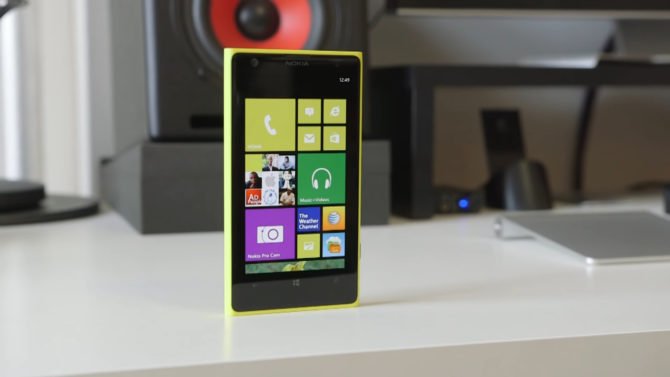
Nokia Lumia 1020 — The 41-Megapixel Camera Phone

Nokia Lumia 1020 With Its Groundbreaking 41-Megapixel Pureview Camera Sensor And Camera Grip Accessory
The Lumia 1020’s 41 MP PureView sensor was years ahead of any competitor and remains a landmark in mobile photography history

The Lumia 1020 (July 2013) was Nokia at its most audacious. It mounted a 41-megapixel PureView sensor — derived from the Nokia 808 PureView’s technology — into a phone body, paired with Carl Zeiss optics, optical image stabilization, a xenon flash (not LED — actual xenon, like a real camera), and oversampling technology that combined pixel data to produce cleaner, more detailed images than any smartphone on the market.

The camera was genuinely revolutionary. In 2013, when the iPhone 5s had an 8 MP camera and the Galaxy S4 had 13 MP, Nokia shipped 41 megapixels with lossless zoom, RAW capture support, and manual exposure controls. The 1020 captured two images simultaneously: a full 41 MP version for cropping and editing, and a 5 MP oversampled version optimized for sharing. Professional photographers reviewed the device seriously — something no other smartphone had achieved at that point.

But the 1020 was hampered by the Snapdragon S4 processor (already a generation behind in mid-2013), just 2 GB of RAM, and a camera app that took 3-4 seconds to process each photo. The phone also carried a significant camera hump on the back that made it wobble on flat surfaces. An optional camera grip accessory added a physical shutter button and extra battery but made the phone bulkier still.

The Lumia 1020 sold modestly — the AT&T exclusivity in the US limited its reach, and the $299 on-contract price was steep. But its influence on the industry was enormous. Samsung’s later focus on computational photography, Google’s Pixel camera strategy, and the modern trend of 108 MP and 200 MP sensors all trace lineage back to Nokia’s proof-of-concept that mobile cameras could rival dedicated shooters.

Nokia Lumia 1520 — The First Windows Phone Phablet

Nokia Lumia 1520 Phablet With 6-Inch Full Hd Display And Quad-Core Snapdragon 800 Processor
The Lumia 1520 was the first Windows Phone to feature a Full HD display and a quad-core processor

The Lumia 1520 (November 2013) pushed Windows Phone into phablet territory with a massive 6-inch Full HD (1920×1080) IPS display — the first Windows Phone at 1080p resolution. Under the hood, a Snapdragon 800 quad-core processor with 2 GB RAM made it the most powerful Windows Phone to date. The 20 MP PureView camera with OIS delivered excellent photos, and the 3400 mAh battery provided impressive endurance.

For power users who wanted the most capable Windows Phone hardware available, the 1520 was the answer. The large display was excellent for Office document editing, web browsing, and media consumption. Windows Phone 8 also added a third column of live tiles on the 1520’s wider screen, making better use of the extra real estate.

Other Notable Second-Generation Models

Nokia Lumia 925 With Premium Aluminum Frame Design And Pureview Camera
The Lumia 925 introduced an aluminum frame, giving the Lumia line its first truly premium-feeling build

The second generation included several other noteworthy devices:

  • Lumia 925 — Nokia’s first Lumia with an aluminum frame rather than pure polycarbonate. Thinner and lighter than the 920, with the same PureView camera. Many considered it the best-looking Lumia ever made.
  • Lumia 928 — A Verizon-exclusive variant of the 925 with a xenon flash and OLED display. Excellent camera performance in a carrier-specific package.
  • Lumia 820 — A mid-range option with swappable shells, wireless charging capability (via optional shells), and NFC support. Solid value.
  • Lumia 720 — Combined a slim, curved unibody design with a 6.7 MP Carl Zeiss camera. Popular in emerging markets as a mid-range option.
  • Lumia 620 — A budget phone with a clever dual-shot color shell design (translucent over solid color), giving it a distinctive two-tone appearance.
  • Lumia 525 — An upgraded 520 with 1 GB RAM (up from 512 MB), fixing the original’s biggest limitation and extending its market life.

Third Generation: Windows Phone 8.1 and the Microsoft Acquisition (2014-2015)

In April 2014, Microsoft completed its acquisition of Nokia’s Devices and Services division for $7.2 billion. The deal gave Microsoft direct control over Lumia hardware design and manufacturing, but it also meant the “Nokia” brand would gradually disappear from new phones, replaced by “Microsoft Lumia” branding starting in late 2014.

Windows Phone 8.1, released alongside the acquisition, was the most feature-complete version of the platform. It introduced Cortana (Microsoft’s voice assistant), an Action Center for notifications (finally!), a customizable start screen background, and improvements to the app platform. For the first time, Windows Phone felt feature-competitive with Android and iOS in core functionality.

Nokia Lumia 930 — The Final Nokia-Branded Flagship

Nokia Lumia 930 With 5-Inch Full Hd Oled Display And 20 Mp Pureview Camera
The Lumia 930 was the last flagship to carry the Nokia name before Microsoft rebranded the Lumia line

The Lumia 930 (July 2014) was the international version of the Verizon-exclusive Lumia Icon (929) and served as the last flagship to bear the Nokia name. It packed a 5-inch Full HD OLED display, Snapdragon 800 processor, 2 GB RAM, 20 MP PureView camera with OIS, wireless charging, and a 2420 mAh battery into an aluminum-and-polycarbonate body.

In a vacuum, the Lumia 930 was an excellent phone. The OLED display was vibrant, the camera was among the best available, and Windows Phone 8.1 with Cortana was a pleasure to use. But by mid-2014, the app gap had become a chasm. Major apps like Snapchat, Google’s suite (YouTube, Maps, Gmail), popular banking apps, and countless others were either absent, abandoned, or running years-old versions without updates. No amount of hardware excellence could compensate for an ecosystem that developers had stopped supporting. For anyone nostalgic about mobile platforms, the story parallels challenges faced by experimental form factors like foldable phones trying to gain developer support today.

Nokia Lumia 630/635 — Budget Windows Phone 8.1

Nokia Lumia 630 Budget Smartphone With Colorful Swappable Shells And Windows Phone 8.1
The Lumia 630 brought Windows Phone 8.1 and Cortana to the budget segment with its trademark colorful design

The Lumia 630 and 635 carried the budget torch into Windows Phone 8.1 territory. The 630 was notable as the first Lumia with on-screen navigation buttons (replacing the capacitive keys that Windows Phone had required since launch) and the first to offer a dual-SIM variant. The 635 added LTE connectivity. Both ran a quad-core Snapdragon 400 processor — a significant upgrade from the dual-core chips in earlier budget Lumias.

These were the last budget Lumias to achieve meaningful sales volume. They sold well in Europe and emerging markets, but the writing was on the wall. Android phones at the same price point were gaining fast, and their app ecosystems were incomparably richer.

The Microsoft Lumia Era and Windows 10 Mobile (2015-2017)

After the acquisition, Microsoft rebranded the line as “Microsoft Lumia” and released several models including the Lumia 640, 640 XL, 950, and 950 XL. The Lumia 950 and 950 XL (October 2015) were the first phones to run Windows 10 Mobile, featuring USB-C, iris scanner authentication, and “Continuum” — a feature that let you connect the phone to a monitor and use it as a desktop PC with a keyboard and mouse.

Continuum was visionary. In 2015, Samsung DeX didn’t exist yet. The concept of your phone becoming your desktop was genuinely novel. But the execution was limited by the phone’s ARM processor (full x86 Windows apps couldn’t run), and developers showed little interest in optimizing for a platform with declining market share.

Windows 10 Mobile never gained traction. Microsoft’s own apps were often better on iOS and Android than on their own platform — a telling sign. In October 2017, Microsoft’s then-CEO of experiences Joe Belfiore confirmed on social media that Windows 10 Mobile would no longer receive new features or hardware. The Lumia line was effectively dead.

Why the Nokia Lumia Series Failed: Five Real Reasons

The Lumia failure wasn’t caused by bad hardware. Nokia built genuinely excellent phones throughout the series. The failure was strategic, ecosystem-driven, and compounded by timing. Here’s what actually went wrong:

1. The App Gap Became Unrecoverable

This was the single biggest killer. By 2014, the Windows Phone Store had roughly 300,000 apps compared to over 1.2 million on Google Play and 1.2 million on the App Store. But raw numbers don’t tell the full story — it was the quality and freshness of those apps that mattered. Major developers either never built Windows Phone versions or abandoned them. Instagram arrived on Windows Phone in late 2013 — years after iOS and Android — as a beta that remained in beta until the platform died. Google actively refused to develop for Windows Phone, creating a bizarre situation where YouTube, Gmail, and Google Maps had no official Windows Phone apps.

Without apps, users couldn’t switch to Windows Phone. Without users, developers wouldn’t build apps. The chicken-and-egg problem proved impossible to solve.

2. Nokia Abandoned MeeGo Too Early

The Nokia N9, running MeeGo, launched in September 2011 — months after the Microsoft partnership was announced. It received universal critical praise for its gesture-based interface, elegant design, and Linux-based OS. Many industry observers believed that if Nokia had invested in MeeGo with the same resources it gave Windows Phone, the outcome could have been different. The N9’s interface concepts — swipe gestures, notification previews, seamless multitasking — appeared in iOS and Android years later.

3. The Windows Phone 7 to 8 Transition Destroyed Trust

When Microsoft announced that no Windows Phone 7 device would upgrade to Windows Phone 8, it created an immediate credibility crisis. Buyers who had just purchased Lumia 800s and 900s on two-year contracts were stranded on a dead-end platform. Early adopters — the very people an emerging platform needs most — felt burned. Many never came back.

4. Carrier Exclusivity Fragmented Sales

Nokia repeatedly launched flagship Lumias as carrier exclusives — the Lumia 900 and 1020 on AT&T, the Lumia 928 and Icon on Verizon. This meant that interested buyers on other carriers simply couldn’t purchase Nokia’s best phones. In a market where Android flagships and iPhones were available everywhere, fragmenting your already-small user base across exclusive carrier deals was self-defeating.

5. Microsoft’s Own Ambivalence

Microsoft’s commitment to Windows Phone wavered throughout the platform’s life. The company developed better versions of Office, Outlook, and OneDrive for iOS and Android than for its own mobile platform. Under CEO Satya Nadella (who took over from Steve Ballmer in February 2014), Microsoft’s strategic focus shifted decisively toward cloud services and cross-platform software. Mobile hardware became a distraction rather than a priority. In July 2015, Microsoft wrote down $7.6 billion related to the Nokia acquisition — essentially acknowledging the deal’s failure.

Complete Nokia Lumia Series: Every Model at a Glance

For collectors, enthusiasts, and anyone wanting to see the full scope of the Lumia lineup, here’s every Nokia-branded Lumia phone organized by generation:

First Generation (Windows Phone 7, 2011-2012)

ModelReleaseDisplayCameraKey Feature
Lumia 800Nov 20113.7″ AMOLED8 MP Carl ZeissFirst Lumia, unibody polycarbonate
Lumia 710Nov 20113.7″ TFT5 MPRemovable back covers
Lumia 610Feb 20123.7″ TFT5 MPUltra-budget, 256 MB RAM
Lumia 900Apr 20124.3″ AMOLED8 MP Carl ZeissLTE, US market push
Lumia 510Oct 20124.0″ TFT5 MPEmerging market budget model
Lumia 505Dec 20123.7″ TFT8 MPMexico exclusive

Second Generation (Windows Phone 8, 2012-2014)

ModelReleaseDisplayCameraKey Feature
Lumia 920Nov 20124.5″ IPS8.7 MP PureView OISWireless charging, glove touch
Lumia 820Nov 20124.3″ AMOLED8 MPSwappable shells, NFC
Lumia 810Nov 20124.3″ AMOLED8 MPT-Mobile exclusive
Lumia 822Nov 20124.3″ IPS8 MPVerizon exclusive
Lumia 620Jan 20133.8″ IPS5 MPDual-shot color shells
Lumia 520Apr 20134.0″ IPS5 MPBest-selling Windows Phone ever
Lumia 720Apr 20134.3″ IPS6.7 MP Carl ZeissSlim curved unibody design
Lumia 925Jun 20134.5″ AMOLED8.7 MP PureView OISFirst aluminum-frame Lumia
Lumia 928May 20134.5″ OLED8.7 MP PureView OISXenon flash, Verizon exclusive
Lumia 625Jul 20134.7″ IPS5 MPLargest budget Lumia display
Lumia 1020Jul 20134.5″ AMOLED41 MP PureViewRevolutionary camera phone
Lumia 1320Dec 20136.0″ IPS5 MPBudget phablet
Lumia 1520Nov 20136.0″ IPS FHD20 MP PureView OISFirst 1080p Windows Phone
Lumia 525Dec 20134.0″ IPS5 MPUpgraded 520 with 1 GB RAM
Lumia Icon/929Feb 20145.0″ OLED FHD20 MP PureView OISVerizon flagship, Snapdragon 800

Third Generation (Windows Phone 8.1, 2014)

ModelReleaseDisplayCameraKey Feature
Lumia 630/635Apr 20144.5″ IPS5 MPFirst on-screen buttons, Cortana
Lumia 930Jul 20145.0″ OLED FHD20 MP PureView OISLast Nokia-branded flagship
Lumia 530Aug 20144.0″ IPS5 MPUltra-budget successor to 520
Lumia 830Sep 20145.0″ IPS10 MP PureView OIS“Affordable flagship” concept
Lumia 735/730Sep 20144.7″ OLED6.7 MP“Selfie phone” with 5 MP front

The Lumia Legacy: What Nokia’s Windows Phones Got Right

Despite the platform’s failure, the Lumia series introduced or popularized several features and design concepts that became industry standards:

  • Wireless charging integration — Nokia built Qi wireless charging directly into phone bodies starting with the Lumia 920, years before Apple and Samsung made it standard.
  • PureView camera technology — Oversampling, OIS, large sensors, and xenon flash in phones. Nokia’s camera engineering team (many of whom later joined Apple and Google) pushed mobile photography forward by years.
  • Colorful polycarbonate design — The Lumia’s vibrant cyan, magenta, yellow, and green phones influenced an entire generation of colorful tech products. Apple’s iPhone 5c and Google’s Pixel color options owe a debt to Nokia’s palette.
  • Offline maps — HERE Maps with full offline support, turn-by-turn navigation, and public transit data was superior to Google Maps for years. Nokia eventually sold the HERE mapping business to a consortium of German automakers for $3.1 billion.
  • Super-sensitive touchscreens — Glove-compatible touchscreens that Nokia pioneered are now common in phones designed for cold-climate markets.
  • Nokia’s durability reputation — While the “indestructible Nokia” meme primarily references pre-smartphone Nokias like the 3310, Lumia phones genuinely inherited that toughness. YouTube drop tests regularly showed Lumias surviving falls that cracked iPhones and Galaxy devices.

What Happened After: Nokia’s Brand Today

After the Lumia line ended, the Nokia brand in smartphones didn’t disappear entirely — it evolved through several corporate transitions:

  • HMD Global (2016-present) — Finnish company HMD Global licensed the Nokia brand for smartphones and began releasing Android-based Nokia phones in 2017. Models like the Nokia 6, Nokia 7 Plus, and Nokia 8 attempted to revive the brand with stock Android and promised timely updates. The phones were solid mid-range options but never recaptured Nokia’s former market dominance.
  • Nokia rebrand (2023) — Nokia Corporation itself underwent its first rebrand in 60 years, shifting focus entirely to network infrastructure, enterprise technology, and 5G equipment. The consumer phone business remained with HMD Global.
  • HMD’s own brand (2024-2025) — HMD Global began launching phones under its own “HMD” brand alongside Nokia-branded devices, signaling a gradual transition away from the Nokia licensing arrangement.

Nokia Corporation itself is thriving as of 2026 — just not in phones. The company is a major player in 5G network infrastructure, competing with Ericsson and Huawei for telecom contracts globally. Nokia’s Bell Labs research division continues to produce groundbreaking work in networking, optics, and AI. The company’s stock has performed well as telecom infrastructure spending has accelerated worldwide. For those tracking tech industry shifts, the pivot mirrors broader trends in how today’s smartphone landscape has consolidated around fewer dominant players.

Are Nokia Lumia Phones Collectible in 2026?

Interestingly, yes. The Lumia series has developed a modest but genuine collector market, particularly for standout models:

  • Lumia 1020 — Mint-condition units in original packaging fetch $150-300 on eBay, driven by photography enthusiasts and Nokia collectors. The camera grip accessory is especially sought after.
  • Lumia 800 — The original Lumia has sentimental value for early adopters. Clean cyan units are the most desirable color variant.
  • Lumia 920 — Yellow and cyan models are collected for their iconic design. The phone’s weight makes it a surprisingly effective paperweight (a joke that Lumia 920 owners know is only half a joke).
  • Lumia 520 — Not valuable individually, but its historical significance as the best-selling Windows Phone gives it museum-piece status.

None of these phones are practically usable in 2026. Windows Phone apps are almost entirely non-functional (Microsoft’s own app store for Windows Phone closed), and modern web services have largely moved beyond the platform’s capabilities. But as artifacts of a fascinating alternative history in mobile computing, they hold genuine interest. If you’ve got an old smartphone lying around, there are still creative ways to repurpose old devices as media players, security cameras, or dedicated music stations.

Final Thoughts: The Phone Series That Deserved a Better Fate

Looking back at the Lumia series from 2026, what strikes me most isn’t the failure — it’s how close Nokia and Microsoft came to making it work. Windows Phone’s UI was genuinely delightful. The live tiles interface was information-dense, visually distinctive, and functionally superior to the static icon grids that iOS still uses today. Nokia’s hardware engineering was world-class, producing cameras, build quality, and design innovations that competitors took years to match.

The tragedy of the Lumia is that smartphones aren’t sold on hardware quality alone. They’re sold on ecosystems — apps, services, developer support, and network effects that compound over time. By the time Nokia committed to Windows Phone, Android and iOS had accumulated enough app ecosystem gravity that no amount of superior hardware could overcome the app gap. Nokia brought a knife to a platform war.

I still miss those live tiles sometimes. My Lumia 520 eventually became a dedicated Spotify player until that app stopped updating too. Now it sits in a drawer, its cyan polycarbonate body still scratch-free after a decade, a monument to a smartphone platform that was beautiful, innovative, and ultimately doomed by forces larger than any single phone could overcome.

The Nokia Lumia series lasted from 2011 to 2016 — five years that produced some of the most innovative smartphones ever made. If you owned one, you know exactly what I mean. If you didn’t, I hope this retrospective gives you a sense of what the rest of us experienced: a glimpse of a different mobile future that almost happened.

Published: September 24, 2023 Updated: April 5, 2026

Filed Under: Phones Tagged With: Nokia Lumia series, Roundups

Related Stories

  • Samsung Galaxy Note 7 Review

    Samsung Galaxy Note 7 Review

  • Samsung Galaxy S7 Review

    Samsung Galaxy S7 Review

  • A Preview Of The Iphone 7

    A Preview of The iPhone 7

FacebookTweetPinLinkedInPrintEmail
Avatar for Jazib Zaman

Jazib Zaman

Founder & Editor-in-Chief

Jazib Zaman is the founder and Editor-in-Chief of TechEngage, where he has covered consumer technology, software, and digital trends since 2016. With a background in computer science and a sharp eye for emerging platforms, Jazib specializes in roundup guides, cryptocurrency coverage, and software reviews. He has tested hundreds of apps and services and believes technology should be accessible to everyone.

Joined November 2018

Reader Interactions

Share Your Thoughts Cancel reply

Please read our comment policy before submitting your comment. Your email address will not be used or published anywhere. You will only receive comment notifications if you opt to subscribe below.

Primary Sidebar

TechEngage-Apple-News TechEngage-Google-News

Recent Stories

  • The Complete History of the Internet: From ARPANET to AI (Visual Timeline)
  • The 10 Best-Selling Cars of All Time [Infographic]
  • Best Gaming Graphics Cards (GPUs): 8 Picks From Budget to Enthusiast
  • Best Long-Range Outdoor WiFi Extenders: 8 Tested Picks for Reliable Coverage
  • Best AM Radios for Long-Distance Reception: 10 Tested Picks

Footer

Discover

  • About TechEngage
  • Newsroom
  • Our Team
  • Advertise
  • Send us a tip
  • Startup Submission Questionnaire
  • Brand Kit
  • Contact us

Legal pages

  • Reviews Guarantee & Methodology
  • Community Guidelines
  • Corrections Policy and Practice
  • Cookies Policy
  • Our Ethics
  • Disclaimer
  • GDPR Compliance
  • Privacy Policy
  • Terms and Conditions

Must reads

  • Best AirPods alternatives on Amazon
  • Best PC monitors for gaming on Amazon
  • Best family board games
  • Best video doorbells without subscription
  • Best handheld video game consoles
  • Best all-season tires for snow
  • Best mobile Wi-Fi hotspots
  • Best treadmills on Amazon

Download our apps

TechEngage app coming soon on App Store

© 2026 TechEngage®. All Rights Reserved. TechEngage® is a project of TechAbout LLC.

TechEngage® is a registered trademark in the United States under Trademark Number 6823709 and in the United Kingdom under Trademark Number UK00003417167. It is also ISSN protected under ISSN 2690-3776 and has OCLC Number 1139335774.