

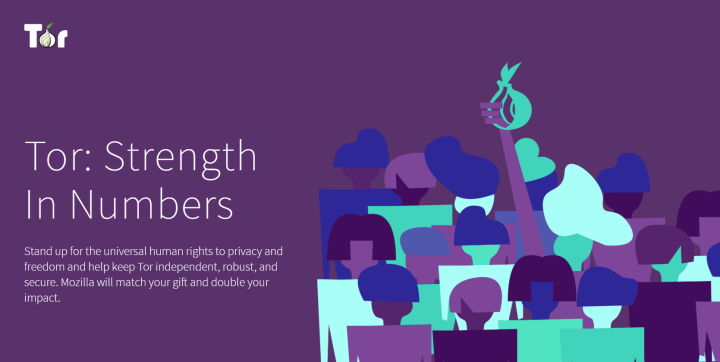
A campaign was run last year which helped Tor reach $400,000 in donations. This was achieved because of Mozilla’s constant support. This sum might not be much for a small startup, as it equals a small seed round, but it meant the world for Tor.Tor had to crowdfund its operations since governments were becoming more greedy, and afraid of providing privacy to its citizens. Tor could no longer rely on such governments to cover its expenses. The nonprofit began crowdfunding campaigns in 2015. The company had received .3 million, which was the highest amount of money raised by Tor, but 86% of this cost was due to government grants. Tor managed to raise just $0.8 million in 2014. In contrast, 2015 was the best year for Tor in terms of money. Tor’s President and Research Director Roger Dingledine stated the company still has a long to way go. Dingledine believes in order to improve the figures even further, the company has “more work to do.”
Between 11/24/2015 to 1/15/2016 Tor raised $205,874 from the public. 5265 people contributed to the campaign. 2018 has been another big year for Tor as it released the alpha version of its browser for Android devices in September. In the same month, Tor released its most stable browser update called Tor Browser 8.0. Tor also pushed to integrate its browser into Firefox.Also Read: Ghostery released a new version of its mobile browser
In today’s day and age, it is extremely essential to protect oneself online. Russian hackers, spam accounts, advertisement trackers and security agencies are just some of the forces of evil that users need to be vary of.Moreover, since the Chairman of the Federal Communications Commission (FCC) Ajit Pai decided to cut net neutrality, users’ privacy and freedom are in even more danger. With net neutrality buried, internet providers can charge gigantic fees and throttle internet speeds, if a user is using one of its competitor’s product. Tor works by hiding users’ identities from network surveillance. It does this by routing incoming data to other servers. The data after having passed through many servers get encrypted and returned to the user. This is known as onion routing. As the data passes through many servers before returning to a user, it might slow down the speed at which content is delivered to a user. Tor Foundation’s fundraising director wrote in a blog post, “The Tor Project has a bold mission: to take a stand against invasive and restrictive online practices and bring privacy and freedom to internet users around the world. But we can’t do it alone. ” She further wrote,” Countries like Egypt and Venezuela have tightened restrictions on free expression and accessing the open web; companies like Google and Amazon are mishandling people’s data and growing the surveillance economy, and some nations are even shutting off the internet completely to quell possible dissidence.”




Share Your Thoughts