• Skip to primary navigation
  • Skip to main content
  • Skip to primary sidebar
  • Skip to footer
TechEngage

TechEngage®

Hands-on reviews, research-backed buying guides and technology news.

  • News
    • Internet & Social
    • Gadgets
    • Car Tech
    • Business
    • Science & Health
  • Reviews
  • Buying Guides
  • How-to
  • AI
  • Computing
    • Apps
    • Security
    • Gaming
  • More
    • Tools
    • Puzzles
    • Mobile
  • Launchpad
  • Sign in
TechEngage » Science & Health Tech

People don’t like robots that are better than them

Avatar for Jessica Baron, PhD Jessica Baron, PhD Connect with Jessica Baron, PhD on LinkedIn Published: Mar 24, 2019 · 2:59 PM ET

NewsNews report. Not a buying guide or hands-on product test.

A photo of a child shaking hand with a robot
Photo by Andy Kelly on Unsplash
Shares261FacebookTweetPinLinkedInPrint
Robots are designed to be faster than humans. We build them, in part, to make our lives easier and improve efficiency in industries from manufacturing to health care. But new research led by Cornell University and soon to appear in the Proceedings of the 14th ACM/IEEE International Conference on Human-Robot Interaction shows that morale suffers when humans work next to hyper-efficient machines. The team of behavioral economists and roboticists set out to explore how humans behaved and reacted when competing against robots. In the study, human participants were pitted against a robot in a contest to count the number of times the letter G appeared in a string of characters and then place a block in a bin each time it occurred. It’s not exactly a task worthy of the factory floor, but it required visual acuity, recognition, and motor skills. The test also gave an advantage who the participant that was most efficient in the long series of tests. Winning was based not only on the speed at which the task could be completed, but a “lottery” based on the time scores of each competitor: “If their scores were the same, the human had a 50 percent chance of winning the prize, and that likelihood rose or fell depending which participant was doing better.” The humans were kept aware of this percentage as a nearby screen constantly displayed the chances of winning at each turn. But it was not the results of the speed test that the researchers were after; it was data based on a questionnaire the human participants filled out after each round asking them to rate the robot’s competence, their own competence, and the robot’s “likability.” In the press release, the researchers report that “as the robot performed better, people rated its competence higher, its likability lower, and their own competence lower.” Cash prizes were involved in the competition as well, adding another layer of intrigue. But despite the potential reward, humans tended to not only find themselves less competent but also expend less effort on tasks when the robots were outperforming them. Unsurprisingly, they liked the robots less in this case as well. The new study backs up decades of research by behavioral economists on loss aversion which suggested that people don’t try as hard at tasks when it’s obvious that their competitors are outperforming them. And while the research was done on a low-stakes task involving a game, there are lessons here for human-machine interaction in the future, especially in the workplace. Team member Guy Hoffman, assistant professor at Cornell’s Sibley School of Mechanical and Aerospace Engineering, said:
“While it may be tempting to design such robots for optimal productivity, engineers and managers need to take into consideration how the robots’ performance may affect the human workers’ effort and attitudes toward the robot and even toward themselves. Our research is the first that specifically sheds light on these effects.”
So while robots might be able to perform tasks more efficiently in the workplace, if humans are going to be working side-by-side with them in the future, managers will need to be mindful of how their human employees are affected by robot co-workers. If robots are seen as more competent and less likable – and if these attitudes lead to a dip in morale – there’s at least some chance that overall productivity will suffer.

Related reading

  • We’ll have bots and drones for the delivery of our pizzas soon!
  • World's first robot hotel getting rid of over half of its useless robots
  • Robots might now be able to feel pain
  • Is printing bad for the environment?
Something incorrect? Report an error in this article. Include a source if you have one; your name and email are optional.

Filed Under: Science & Health Tech, Tech News & Analysis Tagged With: Human, News, Productivity, Robots

Related Stories

  • Googlebook Shows How Android 17 And Gemini Intelligence Could Reshape Google’S Ecosystem

    Googlebook Shows How Android 17 and Gemini Intelligence Could Reshape Google’s Ecosystem

    AIMay 16, 2026

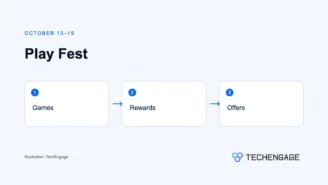
  • Play Fest illustration showing games, rewards and offers for October 13–19.

    Google Play Fest starts October 13: rewards and eligibility

    Tech News & AnalysisOct 10, 2026

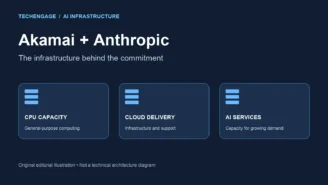
  • Editorial illustration of CPU capacity, cloud delivery and AI services for the Akamai and Anthropic agreement.

    Akamai’s $11.6 billion Anthropic cloud deal: costs, timeline and CPU strategy

    Tech News & AnalysisSep 27, 2026

Stay on top of technology

Get TechEngage reviews, buying guides and news in your feed.

Follow on Google News
Shares261FacebookTweetPinLinkedInPrint
Avatar for Jessica Baron, PhD

Jessica Baron, PhD

Science & Health Tech Correspondent

Dr. Jessica Baron is a Science and Health Tech Correspondent at TechEngage. She holds a PhD in History and Philosophy of Science from the University of Notre Dame and has written for outlets including Forbes, HuffPost, and The Daily Beast. She covers health technology, cybersecurity, robotics, and artificial intelligence, bringing an academic and ethical perspective to her reporting.

Joined TechEngage December 2018First article on TechEngage January 2019

Reader Interactions

Share Your Thoughts Cancel reply

Please read our comment policy before submitting your comment. Your email address will not be used or published anywhere. You will only receive comment notifications if you opt to subscribe below.

Primary Sidebar

Google News

Get TechEngage in your feed

Reviews, news, and buying guides as they publish.

Follow on Google News

Recent Stories

  • Windows Screen Recording Guide |
    Apps & SoftwareHow to Screen Record on Windows 11 With AudioOct 10, 2026
  • Chrome Tabs Reloading Techengage |
    Apps & SoftwareHow to Stop Chrome Tabs From ReloadingOct 10, 2026
  • Techengage Windows 11 File Backup |
    Computing & HardwareHow to Back Up Windows 11 Files to an External DriveOct 10, 2026
  • Techengage Ssd Enclosures |
    Computing & Hardware3 Best SSD Enclosures for USB-C and USB4Oct 10, 2026
  • Techengage Office Copilot Frontier |
    AIMicrosoft brings Office editing to Copilot, Frontier firstOct 10, 2026

More in Science & Health Tech

  • Word Image 107084 1 |
    Can Weather APIs Help in Keeping the Environment Healthy?Dec 20, 2023
  • Nuclear Power |
    Nuclear Power: A Rise in the EnvironmentSep 30, 2023
  • Psd 0Bd2Aa68 Jpg |
    Apple is Using More Recycled Products than Ever BeforeApr 22, 2022
  • Hd 98240176 Jpg |
    James Webb Space Telescope’s Newest Selfie is a RevolutionMar 21, 2022
More Science & Health Tech stories →

Footer

Discover

  • About TechEngage
  • Company News & Updates
  • Our Team
  • Advertise
  • Send us a tip
  • Submit your company to TechEngage Launchpad Hot
  • TechEngage Brand Kit
  • Contact us
  • Tools & Calculators

Legal pages

  • Editorial Standards
  • Reviews Policy
  • Our Ethics
  • Corrections Policy
  • Affiliate Disclosure
  • Privacy Policy
  • Cookies Policy
  • Terms & Conditions
  • GDPR Compliance
  • Copyright & DMCA

Must reads

  • Best Mechanical Keyboards Under $100
  • Best USB-C Hubs
  • Best Portable SSDs
  • Best Gaming Graphics Cards (GPUs)
  • Best Long-Range Outdoor WiFi Extenders
  • Best Wireless CarPlay Adapters
  • Best Slack Alternatives
  • Best Long-Range Walkie-Talkies

Download our apps

TechEngage app coming soon on the App Store Available onChrome

© 2026 TechEngage®. All Rights Reserved. TechEngage® is a project of TechAbout LLC.

TechEngage® is a registered trademark in the United States under Trademark Number 6823709 and in the United Kingdom under Trademark Number UK00003417167. It is also ISSN protected under ISSN 2690-3776 and has OCLC Number 1139335774.

Contact team@techengage.com · WhatsApp +1-307-381-8801

Your analytics choice
Allow Google Analytics to help us understand readership? You can use the site without it and change this choice anytime.

Privacy details