• Skip to primary navigation
  • Skip to main content
  • Skip to primary sidebar
  • Skip to footer
TechEngage

TechEngage®

Technology Reviews, Guides & Analysis

  • News
  • AI
  • Mobile
  • Apps
  • Security
  • Reviews
  • More
    • Internet & Social
    • Computing
    • Gadgets
    • Gaming
    • Car Tech
    • Business
    • Science & Health
TechEngage » Science & Health Tech

Time spent in front of screens hinders child development

Avatar for Fazeel Ashraf Fazeel Ashraf Follow Fazeel Ashraf on Twitter Updated: April 2, 2021

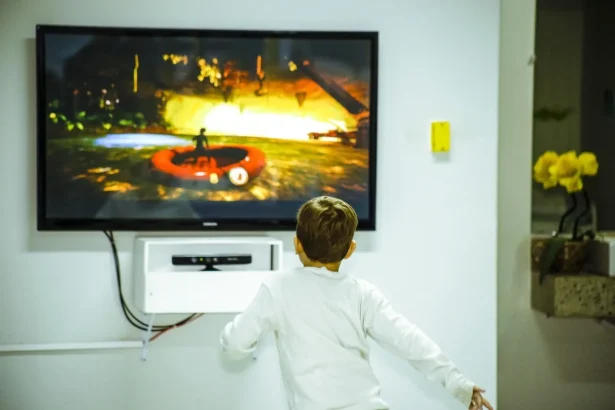
A kid watching TV
Photo by Vidal Balielo Jr. from Pexels
FacebookTweetPinLinkedInPrint
Researchers found that children aged 2-5 years old who spent more time in front of screens fared worse in child development screening tests in a new study that shouldn’t surprise anyone. The reason for their poor performance is quite simple. The more time children spend in front of screens, the less time they spend talking, being active, or playing – the activities that help them develop their basic social skills. The study, conducted by psychologists from the University of Calgary and published Monday in the journal JAMA Pediatrics, examined the effect of screen time at three specific time intervals during a child’s growth. The researchers recruited 3,388 mothers for the study and evaluated their children’s performance at 24, 36, and 60 months. Caregivers reported average screen time and also filled out standard questionnaires on motor and communication skills. The results were pretty straightforward: “Greater screen time at 24 months was associated with poorer performance on developmental screening tests at 36 months, and similarly, greater screen time at 36 months was associated with lower scores on developmental screening tests at 60 months.” The results were unidirectional, as kids with more screen time usually had lower scores, but kids with lower scores didn’t necessarily have more screen time. Researchers explained that kids who spend more time in front of screens miss out on practicing vital interpersonal, communication, and motor skills. For example, when kids are watching TV, they sit down, so their motor skills aren’t being properly put to the test. Kids who are sedentary often have delays in motor skill development. Kids can also develop antisocial tendencies when they spend less time interacting with their caregivers, both verbally and nonverbally. The communication that the children miss out on is extremely crucial for optimal growth and development.

So the question remains, how much screen time is bad?
Some researchers argue that it’s important to judge the quality of screen time and not the quantity, but this research doesn’t go into that discussion. But other researchers have noted that screen time doesn’t have to be detrimental to development, especially when used to interact with other people (such as through video chats). Young children should spend their time interacting with the environment and being mobile, and luckily, screen time can be controlled. The American Academy of Pediatrics recommends that a child’s earlier years be spent on activities to help them develop their basic physical, social, and emotional skills. The study shows that some children were spending an average of two to three hours a day staring at a screen time, but it doesn’t specify whether this number is excessive or normal. The researchers believed that it was just one of their study’s limiting factors and something they will analyze in future research.

Related reading

  • Can Weather APIs Help in Keeping the Environment Healthy?
  • Tooth Sensors Are a Thing Now

Filed Under: Science & Health Tech Tagged With: Phone, PhoneUsage, ScreenTime

Related Stories

  • Drones Are Changing The World In 9 Ways

    Drones are Changing the World in 9 Ways

  • We’ll Have Bots And Drones For The Delivery Of Our Pizzas Soon!

    We’ll have bots and drones for the delivery of our pizzas soon!

  • When Ai Meets Healthcare; Robots For Autism

    When AI meets healthcare; Robots for Autism

FacebookTweetPinLinkedInPrint
Avatar for Fazeel Ashraf

Fazeel Ashraf

Tech & Gaming Editor

Fazeel Ashraf is the Tech and Gaming Editor at TechEngage, covering everything from global tech news and social media shifts to gaming releases and cybersecurity threats. An IT graduate from the National University of Science and Technology, Fazeel brings analytical depth to over 230 articles. Off the clock, he plays classic rock on his electric guitar and watches horror films.

Joined November 2018

Reader Interactions

Share Your Thoughts Cancel reply

Please read our comment policy before submitting your comment. Your email address will not be used or published anywhere. You will only receive comment notifications if you opt to subscribe below.

Primary Sidebar

TechEngage on Google News

Recent Stories

  • Spelling Bee Hints Today: Clues and Answer for June 8, 2026
  • Octordle Hints Today: Clues and Answer for June 8, 2026
  • Contexto Hints Today: Clues and Answer for June 8, 2026
  • Waffle Hints Today: Clues and Answer for June 8, 2026
  • Hurdle Hints Today: Clues and Answer for June 8, 2026

Footer

Discover

  • About TechEngage
  • Newsroom
  • Our Team
  • Advertise
  • Send us a tip
  • Startup Submission Questionnaire
  • Brand Kit
  • Contact us

Legal pages

  • Reviews Guarantee & Methodology
  • Community Guidelines
  • Corrections Policy and Practice
  • Cookies Policy
  • Our Ethics
  • Disclaimer
  • GDPR Compliance
  • Privacy Policy
  • Terms and Conditions

Must reads

  • Best AirPods alternatives on Amazon
  • Best PC monitors for gaming on Amazon
  • Best family board games
  • Best video doorbells without subscription
  • Best handheld video game consoles
  • Best all-season tires for snow
  • Best mobile Wi-Fi hotspots
  • Best treadmills on Amazon

Download our apps

TechEngage app coming soon on App Store

© 2026 TechEngage®. All Rights Reserved. TechEngage® is a project of TechAbout LLC.

TechEngage® is a registered trademark in the United States under Trademark Number 6823709 and in the United Kingdom under Trademark Number UK00003417167. It is also ISSN protected under ISSN 2690-3776 and has OCLC Number 1139335774.