


That plain white background in Google Docs gets old fast. Whether you’re building a resume that needs to stand out, creating classroom materials with a softer tone, or just tired of staring at a blank white screen for hours, changing the page color takes about 10 seconds. The feature is buried inside the Page Setup menu, which is probably why so many people miss it entirely.
This guide covers every method across desktop, Android, iPhone, and iPad, including a few tricks Google doesn’t advertise, like using custom hex codes, setting a permanent default color, and working around the “one color for all pages” limitation.
Change Page Color on Desktop (Web Browser)
The web version of Google Docs gives the most control over page color, including custom hex codes and a built-in eyedropper tool. This works in Chrome, Firefox, Safari, and Edge.
Step 1: Open any document in Google Docs, or create a new one at doc.new.
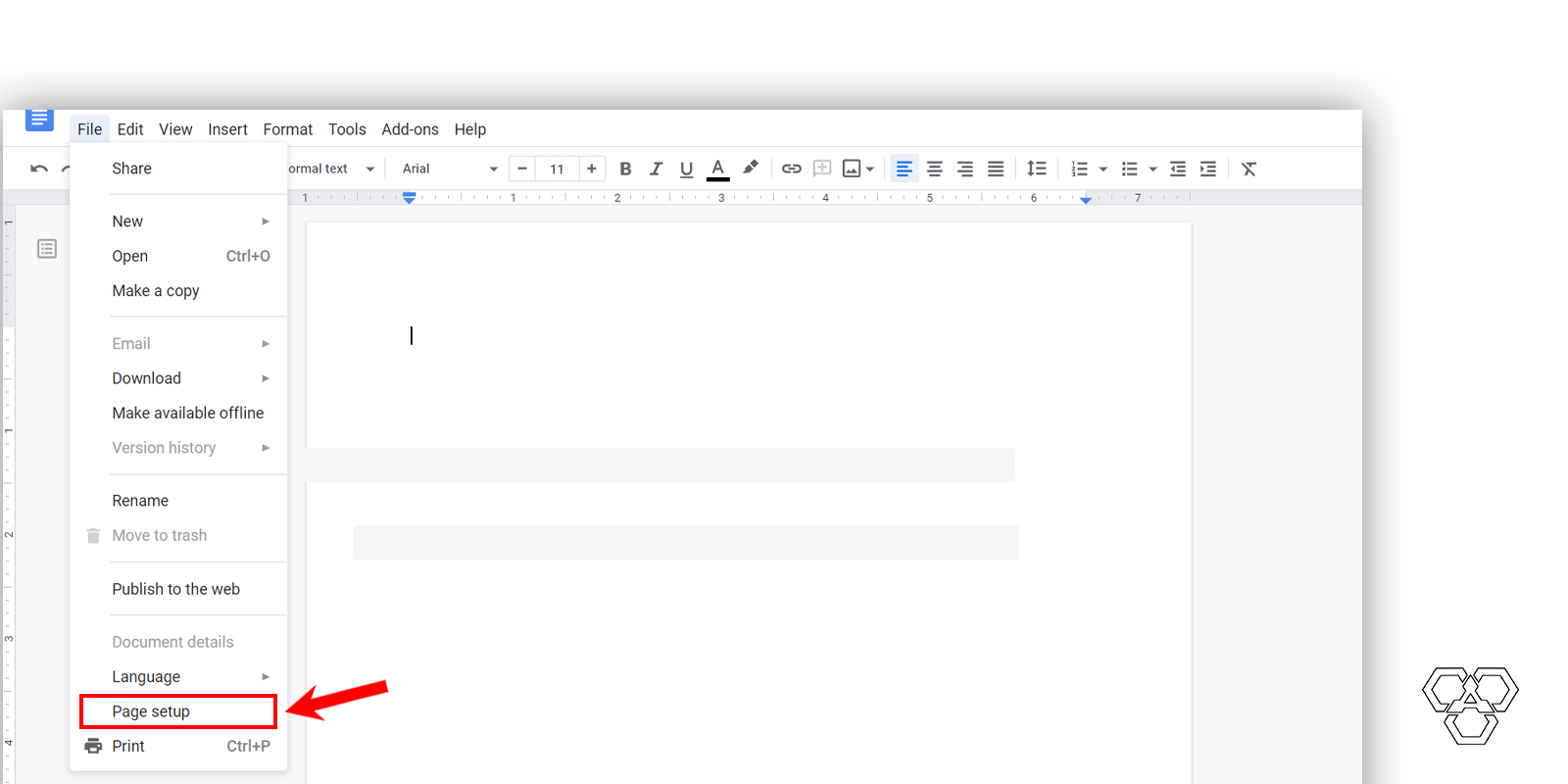
Step 2: Click File in the top menu bar, then select Page setup near the bottom of the dropdown.
Step 3: In the Page setup dialog box, click the Page color dropdown (it shows “white” by default). A color palette appears with preset options.
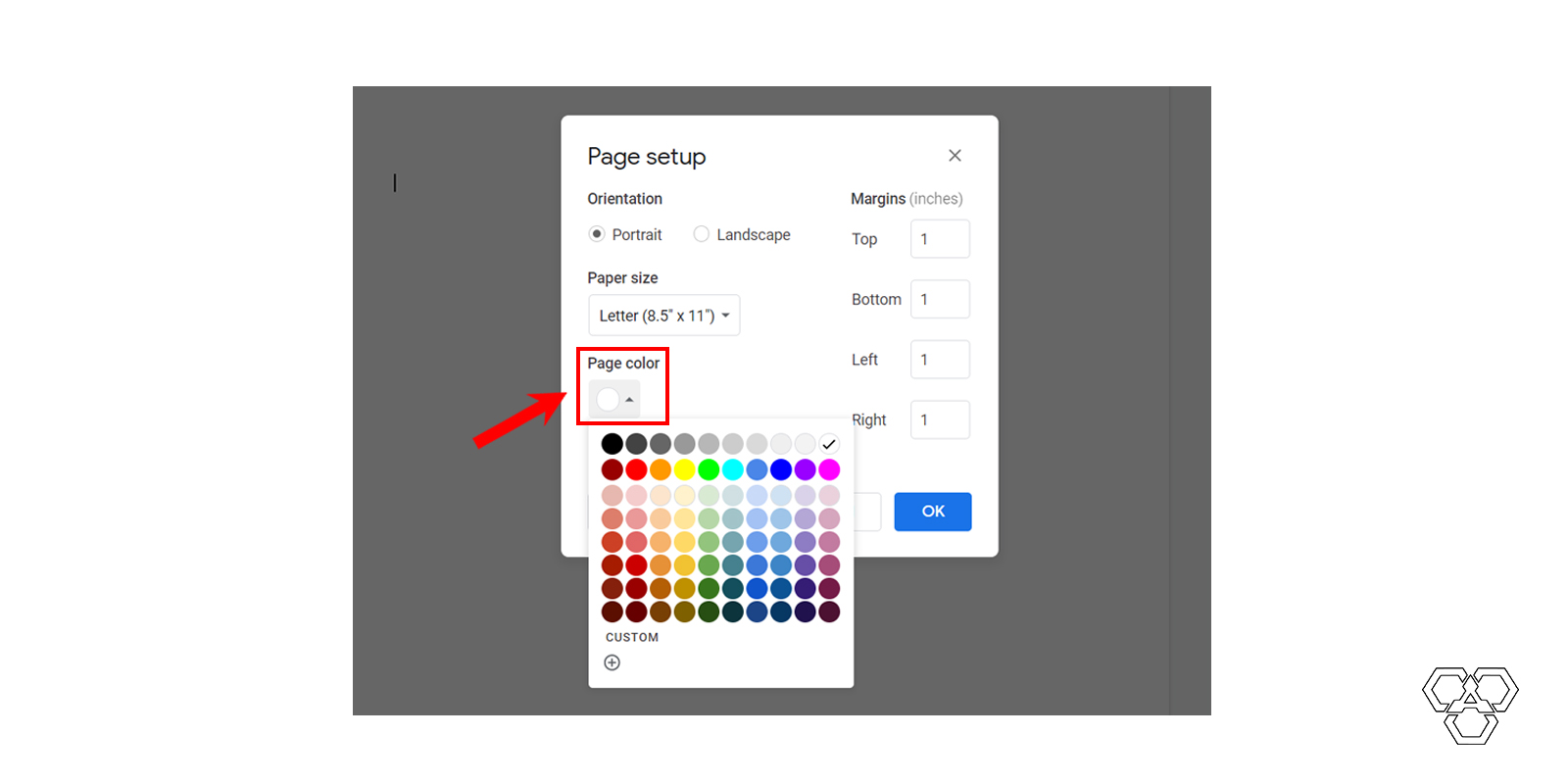
Step 4: Pick a color from the grid, or click the + button under “Custom” to enter a specific hex code. The custom color picker also includes a gradient selector and a hue slider for fine-tuning.
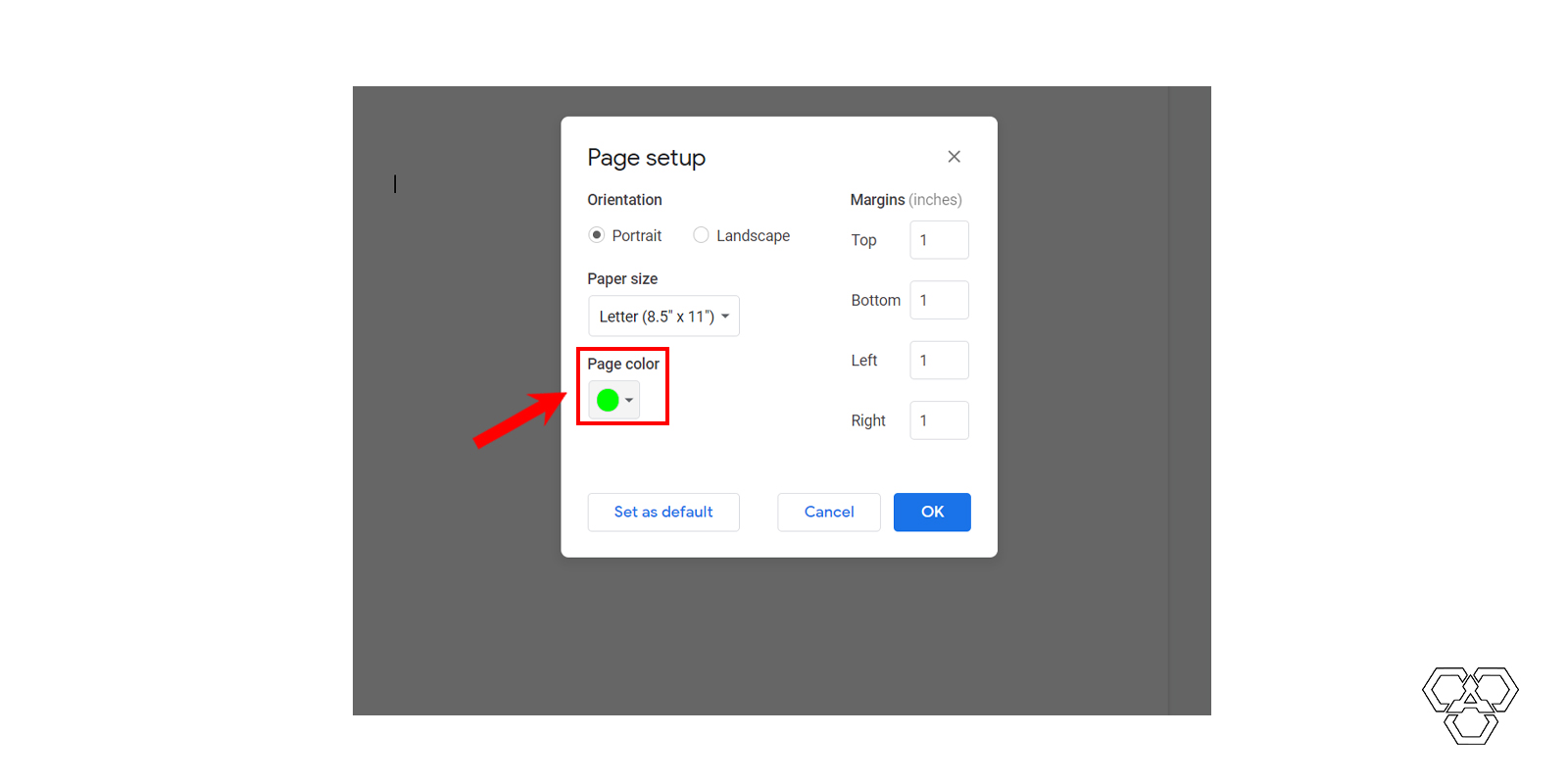
Step 5: Click OK to apply. The entire document background changes immediately.
A few colors worth trying: #FFF8E7 (warm ivory, easy on the eyes for long writing sessions), #F0F4F8 (soft blue-gray, clean and modern), or #1A1A2E (dark navy, pairs well with white or light yellow text for a night-mode feel).
Change Page Color on Android
The Google Docs Android app supports page color changes, though the color options are more limited than the desktop version. There is no hex code input on mobile.
Step 1: Open the Google Docs app and tap on your document.
Step 2: Tap the three-dot menu (⋮) in the top-right corner.
Step 3: Select Page setup from the menu.
Step 4: Tap Page color and choose from the available preset colors.
Step 5: Tap the back arrow to save. The change syncs across all devices automatically.
If you need a specific hex color that isn’t in the mobile presets, open the same document in a browser on your phone (request the desktop site in Chrome) and use the full Page setup dialog there.
Change Page Color on iPhone and iPad
The iOS and iPadOS versions of Google Docs follow a nearly identical process to Android, with the same limitation on custom colors.
Step 1: Open your document in the Google Docs app.
Step 2: Tap the three-dot menu (⋯) in the upper right.
Step 3: Tap Page setup, then Page color.
Step 4: Pick a color from the grid and tap outside the menu to close it.
One thing Apple users should know: if the color you set on desktop looks slightly different on your iPhone or iPad, that’s a display calibration difference between devices, not a Google Docs bug. The hex value is identical across all platforms.
Set a Default Page Color for All New Documents
If you want every new Google Doc to open with your chosen background color instead of white, there is a “Set as default” option most people overlook.
Go to File → Page setup, choose your page color, and before clicking OK, click the Set as default button at the bottom-left of the dialog box. From that point forward, every new blank document you create will use that color automatically.
This setting is account-level, so it applies regardless of which computer or browser you use, as long as you’re signed into the same Google account. It does not, however, sync to the mobile app. Documents created on Android or iOS will still default to white unless you change them individually.
How to Reset Page Color Back to White
To remove a background color and return to the default white, go to File → Page setup → Page color and select white from the color grid (top-left corner). Click OK. If you previously set a custom default, click “Set as default” again after selecting white to restore the original behavior.
Change the Color of a Single Page (Workaround)
Google Docs applies page color to every page in the document. There is no built-in way to make page 1 blue and page 2 green. This is probably the most common complaint about the feature, and Google still hasn’t addressed it.
There are two practical workarounds:
Method 1 — Paragraph shading: Select all text on the page you want colored. Go to Format → Paragraph styles → Borders and shading. Under “Background color,” pick your desired shade and click Apply. This fills the text area with color but leaves thin white margins on the sides. It’s not a true full-page color, but it’s close enough for most use cases like resumes or cover letters.
Method 2 — Separate documents: Split your content into multiple Google Docs files, each with its own page color, and combine them later when exporting to PDF. This gives you full control over per-page coloring but is obviously more work to manage.
Page Color vs. Dark Mode: What’s the Difference?
This trips people up more than you’d expect. Google Docs has a dark theme (under View → Theme or your system’s dark mode setting) that changes the editor background to dark gray. But this is a display-only change. It does not affect the actual document. If you print or export a document while using dark theme, the pages come out white (or whatever page color you actually set in Page setup).
Conversely, if you set a dark page color through Page setup, that color is embedded in the document itself. It will show up in PDFs, printouts, and for anyone you share the document with. They’re two completely separate things, and mixing them up can lead to unexpected results when printing.
Does the Background Color Print?
Yes. Unlike some word processors that treat background color as screen-only, Google Docs includes the page color in printed output and PDF exports. If you set a dark background, your printer will use significantly more ink covering every page with that color.
If you want a colored background for on-screen viewing but white pages for printing, you’ll need to temporarily change the page color back to white before printing, then change it back after. There’s no toggle to exclude background color from print output.
Page Color in Pageless Mode
Google Docs has a “Pageless” format (under File → Page setup → Pageless) that removes page breaks entirely and creates an infinitely scrolling canvas. In pageless mode, you can still change the background color through the same Page setup menu. The color fills the entire continuous background instead of individual page rectangles.
One benefit of pageless mode with a custom color: there are no visible page boundaries, so the colored background looks cleaner and more uniform. This works well for collaborative brainstorming documents or long-form writing where page breaks are irrelevant.
Best Page Colors for Readability
Pure white (#FFFFFF) backgrounds cause more eye strain than most people realize, especially during long writing sessions. Research on reading ergonomics consistently shows that slightly tinted backgrounds reduce fatigue without sacrificing readability.
Colors that work well with standard black text:
- Warm ivory (#FFF8E7): Mimics the look of paper. Subtle enough that you barely notice it, but your eyes will thank you after a few hours.
- Light gray (#F5F5F5): Reduces the harsh contrast of black-on-white without introducing any color bias. Good for technical writing.
- Pale blue (#EBF5FB): Studies suggest blue-tinted backgrounds can help with focus and concentration. Worth trying for lengthy research documents.
- Soft green (#E8F8F5): Another low-fatigue option. Particularly popular among writers who spend 4+ hours daily in Google Docs.
Avoid bright saturated colors (red, orange, neon green) as full-page backgrounds. They make body text nearly impossible to read and will look unprofessional in shared documents.
Frequently Asked Questions
Can I change the page color of just one page in Google Docs?
Not directly. Google Docs applies the page color to every page in the document. The closest workaround is using paragraph shading (Format → Paragraph styles → Borders and shading) to fill a specific page’s text area with color. Alternatively, split your content into separate documents with different page colors and combine them when exporting to PDF.
Does the background color show up when I print?
Yes. Google Docs prints the page color on every page. If you’ve set a dark background, expect higher ink usage. There’s no option to exclude background color from printouts. Change it back to white before printing if you only want the color on screen.
Can I use a custom hex color code on the mobile app?
No. The Google Docs mobile app on Android, iPhone, and iPad only offers preset color options. For custom hex codes, open the document in a mobile browser and request the desktop version of the site, then use File → Page setup from there.
Is dark mode the same as changing the page color?
No. Dark mode is a display setting that only affects how the editor looks on your screen. It doesn’t change the actual document. If you print or share the document, dark mode has no effect. Page color, set through File → Page setup, is embedded in the document and visible to everyone who opens it, including in printed copies and PDFs.
How do I make all new documents use a custom page color?
Open File → Page setup, select your color, and click “Set as default” before clicking OK. Every new blank document will use that color. This setting is tied to your Google account and works across browsers, but doesn’t carry over to the mobile app.
How do I remove the page color and go back to white?
Go to File → Page setup → Page color, select white from the top-left of the color grid, and click OK. If you set a custom default earlier, click “Set as default” again after selecting white to reset it.





Share Your Thoughts