
• Skip to primary navigation
  • Skip to main content
  • Skip to primary sidebar
  • Skip to footer
TechEngage

TechEngage®

Hands-on reviews, research-backed buying guides and technology news.

  • News
  • AI
  • Mobile
  • Apps
  • Reviews
  • More
    • Security
    • Internet & Social
    • Computing
    • Gadgets
    • Gaming
    • Car Tech
    • Business
    • Science & Health
TechEngage » Science & Health Tech

Telemedicine can increase patient satisfaction

Avatar for Jessica Baron, PhD Jessica Baron, PhD Connect with Jessica Baron, PhD on LinkedIn Published: Jan 6, 2019 · 7:04 AM ET Updated: Jul 25, 2020 · 3:09 PM ET

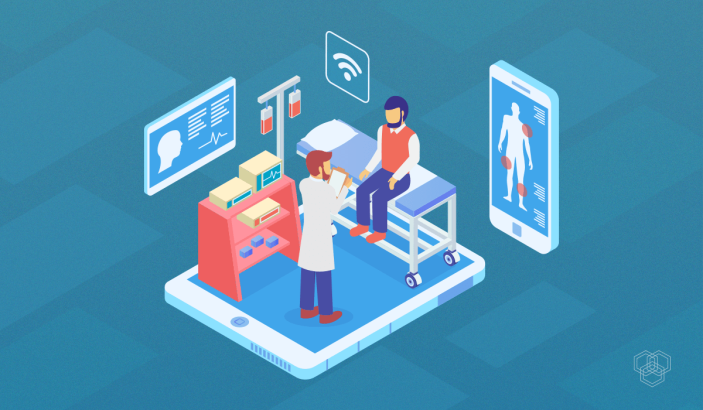
illustration shows doctor and patient
Shares2FacebookTweetPinLinkedInPrint

Telemedicine will play an integral role in the future of medical care, especially for non-life-threatening conditions. Talking to a medical practitioner via e-mail, online messaging, or a video call allows patients to stay in their homes when they’re sick. This makes the encounter cheaper, more convenient and helps prevent the spread of infectious diseases like the flu.

Telemedicine has existed for over 40 years in rural areas of the US, and that’s about how long the American Telemedicine Association has been collecting data on it. (Of course, decades ago the only technology available for telemedicine was the telephone.) Now there are multiple ways to communicate and provide or receive healthcare, from video chats to health information delivered via patient portals.

One of the most powerful arguments in favor of telemedicine is that it provides care to people in areas and populations that are underserved by licensed medical practitioners. Even though we’ve long known that underserved people have worse health outcomes, the US still cannot train enough doctors and nurses to serve these populations. In fact, we still face a critical shortage of primary care physicians in the near future.

Enter telemedicine as one part of the solution.

Do consumers benefit from telemedicine?

The question has always been whether or not patients will feel like they are getting good care in a digital world. A new study from the University of West Virginia provides some evidence that patients report increased satisfaction with their medical care when they participate in telemedicine.

The study is small and will need further data to back it up. The 30 patients who participated live in the Appalachia region of the Eastern US and were recovering from vascular surgery.  Cardiovascular disease is quite common in this region, although there are very few specialists.

The focus of the study was to assess the extent to which the incisions healed without complications. Researches split patients into two groups. Sixteen patients received tablets programmed with a telemedicine app called Enform. This allowed them to connect with the nurses managing their care. They also received thermometers, blood pressure cuffs, scales, and pulse oximeters to take their own readings and report them via the app. The 14 remaining participants received standard follow-up treatment with no equipment.

Patients participating in telemedicine via the app were expected to weigh themselves and report the results from all of the health equipment daily on the Enform app. They were also required to complete wellness and symptom tracking quizzes asking them about their pain levels, their satisfaction with their care, and their mental health. The care team got regular updates on their information along with photos of the incisions made during surgery in order to check up on the healing wound.

Any abnormalities were immediately reported to the patients’ healthcare workers so they could intervene. They were also expected to answer patients’ questions, call in prescriptions, schedule follow-up appointments, and modify care plans within the app.

30 days later, researchers compared the two groups of patients. They wanted to know if the use of the app reduced the rate of wound infections, hospital readmissions, and increased patient well-being.

While infection and readmission rates were the same in both groups, the researchers reported in their press release that:

“…patients in the telemedicine group scored better on measures of their physical function, mental health and role limitations due to physical health problems. In addition, the vast majority of patients who used the app found it intuitive to use. Using a five-point scale to measure ease of use, 91 percent of patients gave it a score of 4 or 5. A similar percentage of patients said the app enriched the quality of care they received.”

Patients using telemedicine in this study also assessed their quality-of-life higher than the control group.

The average telemedicine study participant lived between 60-77 miles from their nearest cardiovascular specialist, so it’s not surprising that quick and reliable at-home care raised patient satisfaction.

While the study was small, it gives us some insight into how telemedicine can work for underserved patients in the future. More studies are being conducted around the world to measure the efficacy of different digital interventions.

It remains to be seen if all patients will be as satisfied and if it will indeed save as much money as some researchers expect, but for now, it appears that it’s a technology worth investing in.


Related reading

  • Can telehealth be convenient and compassionate?
  • Digital Health; The Good, The Bad

Filed Under: Science & Health Tech Tagged With: Digital health, Health Tech, Telemedicine

Related Stories

  • Can Weather Apis Help In Keeping The Environment Healthy?

    Can Weather APIs Help in Keeping the Environment Healthy?

    Science & Health TechDec 20, 2023

  • Anxiety Disorders — Most Common Mental Health Problem

    Anxiety disorders — most common mental health problem

    Science & Health TechOct 13, 2023

  • Nuclear Power: A Rise In The Environment

    Nuclear Power: A Rise in the Environment

    Science & Health TechSep 30, 2023

Stay on top of technology

Get TechEngage reviews, buying guides and news in your feed.

Follow on Google News
Shares2FacebookTweetPinLinkedInPrint
Avatar for Jessica Baron, PhD

Jessica Baron, PhD

Science & Health Tech Correspondent

Dr. Jessica Baron is a Science and Health Tech Correspondent at TechEngage. She holds a PhD in History and Philosophy of Science from the University of Notre Dame and has written for outlets including Forbes, HuffPost, and The Daily Beast. She covers health technology, cybersecurity, robotics, and artificial intelligence, bringing an academic and ethical perspective to her reporting.

Joined TechEngage December 2018First article on TechEngage January 2019

Reader Interactions

Share Your Thoughts Cancel reply

Please read our comment policy before submitting your comment. Your email address will not be used or published anywhere. You will only receive comment notifications if you opt to subscribe below.

Primary Sidebar

Follow us on Google News

Recent Stories

  • Ai Markets Feat |
    AIThree CEOs Asked to Slow Down. The President Said No and the Market Fell 3 Percent. Hassan Taher on What Actually Happened.Sep 21, 2026
  • Iphone 18 Pro Availability Sept 18 |
    Tech News & AnalysisiPhone 18 Pro and Pro Max Available Today in 65+ CountriesSep 18, 2026
  • Best Portable Monitors 2026 |
    Reviews & Buying GuidesBest Portable Monitors in 2026: 8 Picks for Travel, Work, and PlaySep 18, 2026
  • Samsung One Ui 9 Android 17 Rollout |
    Tech News & AnalysisSamsung Starts One UI 9 (Android 17) Rollout on Galaxy S26 SeriesSep 17, 2026
  • Best Wireless Mice 2026 |
    Reviews & Buying GuidesBest Wireless Mice in 2026: 8 Picks for Work, Travel, and PlaySep 17, 2026

More in Science & Health Tech

  • Word Image 107084 1 |
    Science & Health TechCan Weather APIs Help in Keeping the Environment Healthy?Dec 20, 2023
  • Chaozzy Linunsplash Scaled Jpg |
    Science & Health TechAnxiety disorders — most common mental health problemOct 13, 2023
  • Nuclear Power |
    Science & Health TechNuclear Power: A Rise in the EnvironmentSep 30, 2023
  • American Public Power Association Unsplash Scaled Jpg |
    Science & Health TechRenewable energy: Benefits, types, and the futureSep 29, 2023
More Science & Health Tech stories →

Footer

Discover

  • About TechEngage
  • Company News & Updates
  • Our Team
  • Advertise
  • Send us a tip
  • Startup Submissions
  • TechEngage Brand Kit
  • Contact us
  • Tools

Legal pages

  • Editorial Standards
  • Reviews Policy
  • Our Ethics
  • Corrections Policy
  • Affiliate Disclosure
  • Privacy Policy
  • Cookies Policy
  • Terms & Conditions
  • GDPR Compliance
  • Copyright & DMCA

Must reads

  • Best Mechanical Keyboards Under $100
  • Best USB-C Hubs
  • Best Portable SSDs
  • Best Gaming Graphics Cards (GPUs)
  • Best Long-Range Outdoor WiFi Extenders
  • Best Wireless CarPlay Adapters
  • Best Slack Alternatives
  • Best Long-Range Walkie-Talkies

About TechEngage

TechEngage® is an independent technology publication covering tech news, reviews and buying guides since 2003.

Founded
2003
Publisher
TechAbout LLC
ISSN
2690-3776
Google NewsRSS feed

© 2026 TechEngage®. All Rights Reserved. TechEngage® is a project of TechAbout LLC.

TechEngage® is a registered trademark in the United States under Trademark Number 6823709 and in the United Kingdom under Trademark Number UK00003417167. It is also ISSN protected under ISSN 2690-3776 and has OCLC Number 1139335774.

Contact [email protected] · WhatsApp +1-307-381-8801