


Estonia built the world’s first digital nation, then opened it to foreigners. More than a decade into the e-Residency programme, here is what it genuinely offers a digital entrepreneur in 2026 — costs, taxes, limits and all.
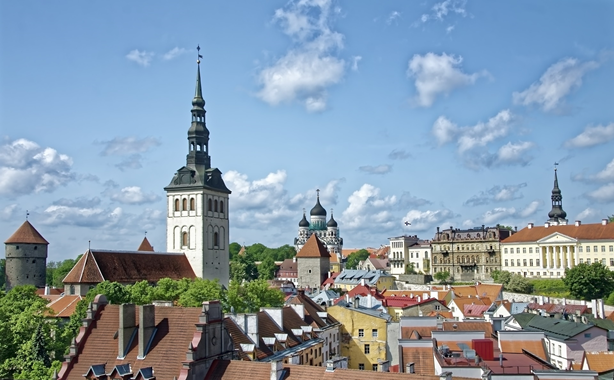
Say “Estonia” and most people picture a medieval capital, a Baltic winter, and one of the least densely populated countries in Europe. Founders picture something else entirely: a place where you can register an EU company from a laptop in São Paulo or Karachi, sign contracts with a government-issued digital ID, and file your annual return in the time it takes to make coffee.
That reputation is earned, but it is also frequently oversold. Estonia is a superb administrative base for certain kinds of businesses and a poor one for others, and the difference matters a great deal to your tax bill. Here is the honest version.
What makes Estonia different: the state runs like software
Estonia’s digital transformation started in the late 1990s, when the government committed to putting every school online. Internet access was later treated as a social right and pushed into rural areas as infrastructure rather than a luxury. Children learn to code young, and a generation grew up assuming that dealing with the state means opening an app.
The result is a country where the overwhelming majority of public services are available online and authenticated with a single digital identity: taxes, health records, vehicle registration, company filings, even national elections. Underneath it sits X-Road, the data-exchange layer that lets government registries talk to each other securely — which is why Estonians are not asked for the same information twice.
For an entrepreneur, the practical consequence is simple: the administrative overhead of running a company is close to zero. There is no paper, no notary queue, no in-person appointment for routine filings.
e-Residency in 2026: what it is, and what it is not
Launched in 2014 as the world’s first digital residency for non-residents, e-Residency has since issued digital identities to well over 100,000 people from more than 170 countries, who have used them to found tens of thousands of Estonian companies.
What you actually get
- A government-issued digital ID card and reader that let you authenticate and sign documents with legally binding digital signatures across the EU
- The ability to register an Estonian private limited company (an OÜ) fully online
- Remote access to Estonian business banking and EU fintech accounts
- Online tax declarations and annual reports for that company
- An EU-registered legal entity, which makes selling to European customers and signing with European partners much simpler
What it is emphatically not
- Not a visa or residence permit. It gives you no right to live, work or even enter Estonia.
- Not tax residency. This is the misunderstanding that gets people into trouble. If you live in Germany or Pakistan and run an Estonian company, your personal tax obligations remain where you live — and if you manage the company from there, your home country may well treat the company as tax-resident locally too.
- Not a way to escape tax. Estonia’s system defers corporate tax; it does not erase your obligations elsewhere. Treat e-Residency as an administrative upgrade, not a tax strategy, and take local advice before you incorporate.
- Not citizenship, and it carries none of the social rights Estonians have.
What it costs in 2026
Estonia is transparent about pricing, which makes budgeting straightforward:
- e-Residency application state fee: €150, rising to a flat €165 from 1 January 2027. Collecting the card outside Tallinn adds roughly €30–50 depending on the pickup point.
- Card validity: five years, with no annual maintenance fee.
- Company registration: a state fee of €265 paid to the Estonian Commercial Register.
- Legal address and contact person: mandatory if you have no Estonian address. Service providers typically charge around €300 or more per year, often bundled with accounting.
- Accounting: from roughly €50 a month for a simple company; more once you are VAT-registered or handling payroll.
A realistic first-year budget for a solo founder starting from scratch is therefore in the region of €600–€1,000, depending on which service package you choose, then a few hundred euros a year in recurring costs after that. Cheap by EU standards — but not free, and worth comparing against simply registering where you live.
The tax model that actually attracts founders
Estonia’s genuinely distinctive feature is not its rate but its timing. Corporate profits are taxed when they are distributed, not when they are earned:
- 0% on retained and reinvested profits. Money you leave in the company to fund growth is not taxed at the corporate level.
- 22% on distributed dividends. A previously legislated rise to 24% for 2026 was cancelled, so the flat 22% rate stands.
- VAT is 24%, with registration required once you pass the domestic turnover threshold.
- A 2% surcharge on board member fees applies from January 2026 — a small but real change if you pay yourself through board remuneration.
For a bootstrapped software or services company that plans to reinvest for several years, deferring corporate tax entirely is a meaningful cash-flow advantage. For a founder who wants to draw everything out as income each year, the advantage largely evaporates — you pay 22% on distribution plus whatever your own country levies on the receipt.
Banking is the real friction point
Nobody warns new e-residents about this loudly enough. Traditional Estonian banks apply strict anti-money-laundering rules and generally want to see a genuine economic connection to Estonia — local customers, local suppliers, a local employee — before opening an account for a non-resident-run company. Many applicants are declined.
In practice, most e-residents run their company banking through EU-licensed fintech providers that support Estonian entities and onboard remotely. That works perfectly well for invoicing, payments and payroll, but it is worth knowing before you incorporate: plan your banking route first, and check that your chosen provider serves your nationality and industry. Some sectors — crypto, gambling, high-risk consulting — will struggle with both banks and fintechs.
Who Estonia suits — and who it does not
A strong fit
- Location-independent consultants, developers, designers and agencies serving EU clients
- SaaS and digital-product businesses that want an EU entity for compliance and payments
- Bootstrapped founders reinvesting profits rather than paying themselves large dividends
- Small e-commerce operations selling into the EU that need a European base to handle VAT properly
- Founders from countries where local incorporation is slow, expensive or bureaucratically painful
A poor fit
- Anyone whose main aim is lowering their personal tax bill — that is not what this does
- Businesses with staff, premises or physical operations concentrated in one other country, where local substance rules will apply anyway
- Regulated activities that need a local licence
- Companies that need heavy in-person banking relationships or local credit
Beyond e-Residency: the nomad and startup routes
If you actually want to spend time in Estonia rather than just file there, two other programmes matter. The Digital Nomad Visa allows remote workers earning above roughly €4,500 gross per month to live in Estonia for up to a year. The Startup Visa supports founders relocating to build a company on the ground, with access to the local ecosystem and talent.
Watch the 183-day line carefully: stay under it and you generally remain a non-resident for Estonian income tax; cross it and you become tax-resident, with Estonian tax due on your worldwide income at 22%.
The ecosystem behind the marketing
Estonia’s credibility does not rest on branding alone. A country of roughly 1.3 million people produced Skype, Wise, Bolt and Playtech, and it consistently ranks among Europe’s leaders in startups and unicorns per capita. Tallinn has a dense, unusually well-connected founder community, and the alumni of those companies now fund and mentor the next wave — the flywheel that most small countries never manage to start.
How to get started, step by step
- Check the tax logic first. Ask an accountant in your country of residence whether an Estonian company actually helps your situation, and whether management-and-control rules would make it locally taxable.
- Line up banking. Confirm that a provider will onboard your nationality and business type before you spend anything.
- Apply for e-Residency online, pay the state fee, and pass the background check.
- Collect your ID card in person at your chosen pickup point — an Estonian embassy or designated collection centre.
- Choose a service provider for your legal address, contact person and accounting.
- Register your OÜ online and pay the register’s state fee. Registration is typically completed in a day or so.
- Set up accounting and VAT, and calendar your annual report deadline.
FAQs
Does e-Residency let me live in Estonia or travel in the EU?
No. It is a digital identity for doing business, not an immigration status. It confers no right of entry, residence or work. For that you need the Digital Nomad Visa, the Startup Visa or a standard residence permit.
Will I pay less tax with an Estonian company?
Possibly, if you reinvest profits rather than distribute them — that is where the 0% retained-profit rule bites. But you still owe personal tax where you live, and your home country may tax the company itself if it is effectively managed from there. Get local advice before assuming a saving.
How long does the whole process take?
The e-Residency application review typically runs a few weeks, and the wait is usually for the card to reach your chosen pickup point. Once you hold the card, registering the company itself is a same-day online task.
Do I need to visit Estonia at all?
You must collect the ID card in person, but that can be done at an Estonian embassy or designated pickup location abroad rather than in Estonia. Everything after that is remote.
What are the ongoing obligations?
Maintain a legal address and contact person, keep proper books, file monthly declarations where applicable, submit an annual report, and renew the ID card every five years. Miss the annual report repeatedly and the register can strike the company off.
The bottom line
Estonia’s real achievement is not a low tax rate — plenty of places offer that. It is proving that a country can treat borders as a design problem and open its economy to founders who will never live there. If you want a clean, cheap, low-friction EU company that you can run entirely from a laptop, and your tax position genuinely supports it, Estonia remains the strongest option in Europe. Just go in understanding what it does not do, and talk to an accountant before you pay the first fee.





Share Your Thoughts