• Skip to primary navigation
  • Skip to main content
  • Skip to primary sidebar
  • Skip to footer
TechEngage

TechEngage®

Hands-on reviews, research-backed buying guides and technology news.

  • News
    • Internet & Social
    • Gadgets
    • Car Tech
    • Business
    • Science & Health
  • Reviews
  • Buying Guides
  • How-to
  • AI
  • Computing
    • Apps
    • Security
    • Gaming
  • More
    • Tools
    • Puzzles
    • Mobile
  • Launchpad
  • Sign in
TechEngage » Security & Privacy

3 ways to test if you are vulnerable to hackers

Avatar for Ali Raza Ali Raza Published: Jul 26, 2019 · 7:19 AM ET Updated: Jan 7, 2021 · 11:04 AM ET

An illustration representing a hacker
Design by Bisma / TechEngage
FacebookTweetPinLinkedInPrint

Online security has become just as important as in real life. A real-life robbery can leave us injured and robbed of some resources. While an online attack may not hurt you physically, it can deprive you of many of your assets. Businesses are more vulnerable to online threats. It is necessary to keep testing your security to check how weak you are against hackers. Here I have shared three ways to ensure your devices’ security whether you use them for personal or professional use.

Check what information you are giving out

There is almost no privacy left online. All your mobiles and computers are always connected to the internet. The internet is a passage for hackers to access your devices and everything you have stored in them. We can’t just stop using the internet – it’s a necessity after all. But we can try to remain as private as possible. When you connect to a website, they know your Internet Protocol (IP) Address, which device you are using, and the area you live in. The latest updates have further exploited our privacy in the name of service.

For example, Google knows your location all the time. It also knows when you move. When you install an app, we give it permission to access and use every part of the device – try reading their terms and condition sometimes. All that has been said, it’s just the tip of the iceberg. Though services like Google and Facebook may not exploit their rights, someone else can use these services to his advantage.

Also read: How to delete Google location and activity history automatically

Set your devices to keep your information private that you are not comfortable sharing. There are many tools that allow you to see the information you are sharing with the online world. One of those tools includes “AuditMyPC.” This tool performs a penetration test to show you who can access how much of your data and how.

Test how reliable your Anti-virus is

Anti-viruses have the definition of almost every type of virus. They monitor our entire system, and if they see a function doing something more than it’s supposed to, or something that a virus would do; they quickly alert the user and block that software. Anti-viruses also keep themselves up to date with every new definition and every new type of virus. Big Anti-virus companies like Avast, Norton, and BitDefender have a team of researchers that find and study every new virus and update their Anti-virus accordingly.

Also read: Tips to Protect your PC from Malware and Hackers

At least, this is how Anti-viruses are supposed to work. Free versions are almost useless. Premium Anti-viruses do their job, but they are also not perfect. Sometimes, they fail to identify a threat, and sometimes they are not fast enough. You should conduct a test to see if your Anti-virus is reliable or not. You can do this with the help of the EICAR test files. These are Anti-virus test files that are not harmful in any way. You just have to download these files and if your Anti-virus can’t detect them, means it isn’t working.

Hire a professional for Pen testing

You can do all this testing yourself, and it will get you correct results, but won’t be as effective as a professional’s experience. Hackers are pros of their field; they can figure out a way to breach any wall. You should acquire the services of a professional for pen testing, especially if your business depends on it. It is recommended also to keep yourself educated about such threats.
Something incorrect? Report an error in this article. Include a source if you have one; your name and email are optional.

Filed Under: Security & Privacy Tagged With: EthicalHackers, Hackers, hacking, How-To, Privacy, Security

Related Stories

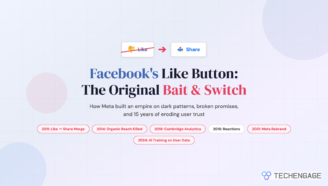
  • Facebook’S Like Button Bait And Switch: A History Of Meta’S Dark Patterns

    Facebook’s Like Button Bait and Switch: A History of Meta’s Dark Patterns

    Internet & Social MediaOct 11, 2026

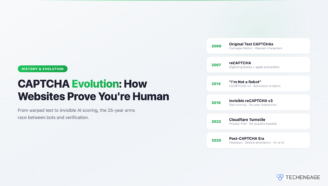
  • Captcha Evolution: The History Of How Websites Prove You’Re Human

    CAPTCHA Evolution: The History of How Websites Prove You’re Human

    Security & PrivacyApr 9, 2026

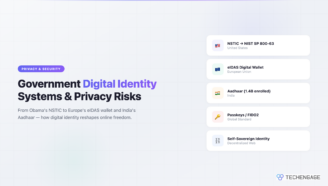
  • Digital Identity Systems: Government Internet Id & Privacy Risks Explained

    Digital Identity Systems: Government Internet ID & Privacy Risks Explained

    Security & PrivacyApr 9, 2026

Stay on top of technology

Get TechEngage reviews, buying guides and news in your feed.

Follow on Google News
FacebookTweetPinLinkedInPrint
Avatar for Ali Raza

Ali Raza

Business & Cybersecurity Analyst

Ali Raza is a Business and Cybersecurity Analyst at TechEngage with more than 180 published articles covering enterprise technology, business and fintech, cybersecurity, and software tools. His reporting connects business strategy with the technology behind it to help readers make informed decisions.

Earliest archived byline May 2010

Reader Interactions

Share Your Thoughts Cancel reply

Please read our comment policy before submitting your comment. Your email address will not be used or published anywhere. You will only receive comment notifications if you opt to subscribe below.

Primary Sidebar

Google News

Get TechEngage in your feed

Reviews, news, and buying guides as they publish.

Follow on Google News

Recent Stories

  • Diagram showing a clip-on microphone, receiver and phone or camera recording setup.
    Reviews & Buying GuidesBest AI Voice Recorders for Calls and InterviewsOct 19, 2026
  • Meta Logo Facebook New Name |
    AIMeta Muse Review: What Its AI Agent Can Do and Where to Be CarefulOct 19, 2026
  • Nscale Anthropic Second Compute Deal |
    Tech News & AnalysisAnthropic and Nscale in Talks on Second $45B Compute Deal, Report SaysOct 19, 2026
  • Stellar Pst Repair Desktop Vs Online Techengage |
    Reviews & Buying GuidesStellar Repair for Outlook Review: Desktop vs. Online PST RepairOct 19, 2026
  • Health Conscious Home Cleaning Fana Anwar |
    Culture & LifestyleHow to Build a More Effective, Health-Conscious Home Cleaning RoutineOct 19, 2026

More in Security & Privacy

  • Editorial diagram showing three stages of AI agent safety: detect, respond, contain.
    OpenAI pauses advanced-model research after agent bypasses network restrictionsSep 27, 2026
  • Captcha Evolution History How Websites Prove Human Featured |
    CAPTCHA Evolution: The History of How Websites Prove You’re HumanApr 9, 2026
  • Digital Identity Systems Government Internet Id Privacy Risks Featured |
    Digital Identity Systems: Government Internet ID & Privacy Risks ExplainedApr 9, 2026
  • Biggest Apple Leaks Secrecy Shaped Company Featured |
    The Biggest Apple Leaks and How Secrecy Shaped the CompanyApr 9, 2026
More Security & Privacy stories →

Footer

Discover

  • About TechEngage
  • Company News & Updates
  • Our Team
  • Advertise
  • Send us a tip
  • Submit your company to TechEngage Launchpad Hot
  • TechEngage Brand Kit
  • Contact us
  • Tools & Calculators

Legal pages

  • Editorial Standards
  • Reviews Policy
  • Our Ethics
  • Corrections Policy
  • Affiliate Disclosure
  • Privacy Policy
  • Cookies Policy
  • Terms & Conditions
  • GDPR Compliance
  • Copyright & DMCA

Must reads

  • Best Mechanical Keyboards Under $100
  • Best USB-C Hubs
  • Best Portable SSDs
  • Best Gaming Graphics Cards (GPUs)
  • Best Long-Range Outdoor WiFi Extenders
  • Best Wireless CarPlay Adapters
  • Best Slack Alternatives
  • Best Long-Range Walkie-Talkies

Download our apps

TechEngage app coming soon on the App Store Available onChrome

© 2026 TechEngage®. All Rights Reserved. TechEngage® is a project of TechAbout LLC.

TechEngage® is a registered trademark in the United States under Trademark Number 6823709 and in the United Kingdom under Trademark Number UK00003417167. It is also ISSN protected under ISSN 2690-3776 and has OCLC Number 1139335774.

Contact team@techengage.com · WhatsApp +1-307-381-8801

Your analytics choice
Allow Google Analytics to help us understand readership? You can use the site without it and change this choice anytime.

Privacy details