• Skip to primary navigation
  • Skip to main content
  • Skip to primary sidebar
  • Skip to footer
TechEngage

TechEngage®

Technology Reviews, Guides & Analysis

  • Cryptocurrency
  • Science
    • Energy
    • Environment
    • Health
    • Space
  • Apps
  • More
    • Opinion
    • Noteworthy
    • Culture
    • Events
    • Deals
    • Startups
      • Startup Submissions
  • Videos
  • Tools
TechEngage » Internet

Millions of websites won’t work on over 30% of Android phones in 2021 — here’s why

Avatar for Sheharyar Ahmad Saeed Sheharyar Ahmad Saeed November 9, 2020

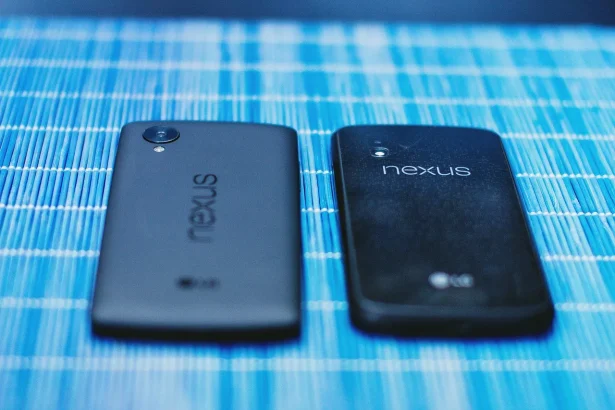
Google Nexus phones
FacebookTweetPinLinkedInPrintEmail

The widely preferred certificate authority, Let’s Encrypt, is parting its way from another authority IdenTrust. Except for its own root certificate, Let’s Encrypt has been using a cross-signed certificate from IdenTrust. However, the partnership will be ended by September 1, 2021.

This transition would cause a problem for millions of websites on over 30% of Android devices. The heart of the problem lies in the compatibility issue. The devices that are running Android 7.1.1 or older version will be facing a problem in loading. The root certificate of Let’s Encrypt will provide support to the updated versions, and thus devices with the older version still tend to rely on cross-signatures from authorities like former IdenTrust.

Five years ago, when Let’s Encrypt launched, that’s exactly what we did. We got a cross-signature from IdenTrust. Their “DST Root X3” had been around for a long time, and all the major software platforms trusted it already: Windows, Firefox, macOS, Android, iOS, and a variety of Linux distributions. That cross-signature allowed us to start issuing certificates right away, and have them be useful to a lot of people. Without IdenTrust, Let’s Encrypt may have never happened and we are grateful to them for their partnership. Meanwhile, we issued our own root certificate (“ISRG Root X1”) and applied for it to be trusted by the major software platforms.

via Let’s Encrypt

In its announcement, Let’s Encrypt dubbed its decision as the company is standing on its own two feet. According to statistics drawn from Android Studio, over 34% of Android devices worldwide are operating version 7.1 or older. So after January, a huge amount of sites and apps might face security and compatibility problems.

Google has been the torchbearer and constantly urging the website developers to obtain an SSL certificate for the domain directly from a Certificate Authority. Secure Sockets Layer or simply SSL is a type of digital certificate that renders authentication for a website and provides an encrypted connection. Google has also endorsed the services of Let’s Encrypt and ask users to obtain a free SSL certificate from this popular Certificate Authority. As per the Google Transparency Report, 95% of website traffic over the search engine is now encrypted on its network.

At first, the certificate was only necessary for e-commerce websites where users need to give their confidential details, but since more or less every website now asks for user’s information hence the Google made it mandatory for websites to obtain an SSL certificate.

Workaround for the problem

The answer to this problem is also suggested by some experts to install and use Mozilla’s Firefox browser on these older version devices because it utilizes its own root certificate list to check online web pages. As of the time of writing, Firefox Mobile is supporting Android 5.0 and above. But still, the apps that are likely to depend on older certificates will not be able to take advantage of this patch.

Filed Under: Internet, Phones Tagged With: Android, Android Smartphones, news, SSL Certificates, Website

Related Stories

  • Samsung Galaxy Note 7 Review

    Samsung Galaxy Note 7 Review

  • Samsung Galaxy S7 Review

    Samsung Galaxy S7 Review

  • The Synesthesia Mask

    The Synesthesia Mask

FacebookTweetPinLinkedInPrintEmail
Avatar for Sheharyar Ahmad Saeed

Sheharyar Ahmad Saeed

Mobile & Events Reporter

Sheharyar Ahmad Saeed is a Mobile and Events Reporter at TechEngage, tracking smartphone launches, tech conferences, and social media developments across more than 170 articles. He approaches technology with a blend of artistic curiosity and scientific rigor, making complex product announcements easy to follow for everyday readers.

Joined October 2020

Reader Interactions

Share Your Thoughts Cancel reply

Please read our comment policy before submitting your comment. Your email address will not be used or published anywhere. You will only receive comment notifications if you opt to subscribe below.

Primary Sidebar

TechEngage-Apple-News TechEngage-Google-News

Recent Stories

  • The Complete History of the Internet: From ARPANET to AI (Visual Timeline)
  • The 10 Best-Selling Cars of All Time [Infographic]
  • Best Gaming Graphics Cards (GPUs): 8 Picks From Budget to Enthusiast
  • Best Long-Range Outdoor WiFi Extenders: 8 Tested Picks for Reliable Coverage
  • Best AM Radios for Long-Distance Reception: 10 Tested Picks

Footer

Discover

  • About TechEngage
  • Newsroom
  • Our Team
  • Advertise
  • Send us a tip
  • Startup Submission Questionnaire
  • Brand Kit
  • Contact us

Legal pages

  • Reviews Guarantee & Methodology
  • Community Guidelines
  • Corrections Policy and Practice
  • Cookies Policy
  • Our Ethics
  • Disclaimer
  • GDPR Compliance
  • Privacy Policy
  • Terms and Conditions

Must reads

  • Best AirPods alternatives on Amazon
  • Best PC monitors for gaming on Amazon
  • Best family board games
  • Best video doorbells without subscription
  • Best handheld video game consoles
  • Best all-season tires for snow
  • Best mobile Wi-Fi hotspots
  • Best treadmills on Amazon

Download our apps

TechEngage app coming soon on App Store

© 2026 TechEngage®. All Rights Reserved. TechEngage® is a project of TechAbout LLC.

TechEngage® is a registered trademark in the United States under Trademark Number 6823709 and in the United Kingdom under Trademark Number UK00003417167. It is also ISSN protected under ISSN 2690-3776 and has OCLC Number 1139335774.