

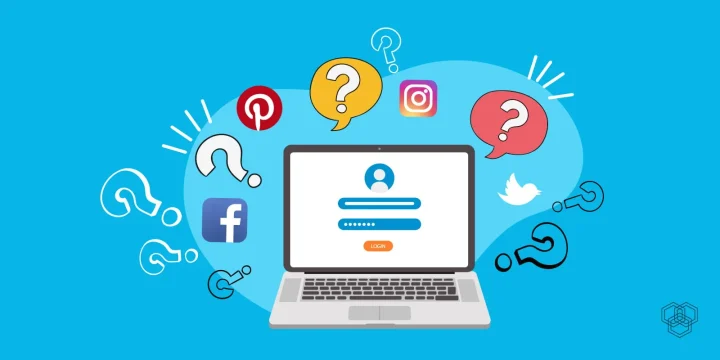
You know the loop: you open a site, tap Log in, and stare at Google, Apple, Facebook, and email like it is a multiple-choice test you failed last month. Social login is convenient until you have twenty of them and zero notes.
You do not need a memory palace. You need a system that records which identity unlocked each site — usually a password manager — plus a few recovery tricks when you are already locked out.
Remember which social login you used
What social login actually is
Social login is single sign-on: the site trusts Google, Apple, Facebook, Microsoft, or another provider to confirm it is you. You are not creating a separate password for that site (unless they also ask for one). The upside is speed. The downside is dependency on that provider and a foggy paper trail of which button you clicked.
Why you forget which button you used
Sites offer different subsets of providers. You may have used Apple on one shopping site (hide my email) and Google on another. Browser autofill sometimes suggests a password entry that never existed because you never made one. Mobile apps hide the original method behind a generic “Continue.”
Fix it with a password manager (best default)
In 1Password, Bitwarden, Dashlane, or Chrome/Safari’s built-in manager, create (or edit) the item for that website and put the provider in the notes or username field — for example Login method: Sign in with Apple (relay: xyz@privaterelay.appleid.com).
- After every successful social login, spend ten seconds updating the vault item.
- Store the relay or alias email the provider generated — especially Apple Hide My Email.
- If the site later lets you set a password, save that password in the same item and note “also linked to Google.”
This is the same discipline we recommend for email accounts in how to protect your email from hackers.
Check the site’s account or security page
If you can still get in on one device, open the site’s Account, Security, or Connected apps page. Many show “Signed in with Google” or list linked providers. Screenshot it into your password manager notes.
On the provider side, check Google’s Third-party connections, Apple ID → Sign-In with Apple, or Facebook → Settings → Apps and websites — revoke anything you do not recognize.
Email “forgot password” as a detective tool
On the login screen, try Forgot password with each email you use. The reset mail’s wording often reveals whether a local password exists. If the site says “No account for this email,” try your Apple relay address. If it says “Use Google to sign in,” you have your answer.
Do not spray password resets across every alias you own on a shared computer — finish the flow or cancel it so you do not leave open reset tokens.
Passkeys and when social login still wins
Where a site offers passkeys, prefer them for the accounts you care about. Passkeys remove the “which social button?” problem for that site. Keep social login for low-stakes services where you want one-tap signup — and still log the method in your vault.
Security habits that prevent the mess
- Pick one primary provider per category (for example Apple for shopping, Google for work tools) and stick to it when the site offers both.
- Avoid Facebook login for anything financial or health-related when Google/Apple/email are options.
- Review connected apps quarterly; revoke dead startups.
- Turn on MFA on the provider accounts themselves — a stolen Google session unlocks every site that trusts it.
FAQs
Why does a site not show the social button I used before?
The site may have dropped that provider, or you are on a regional/app variant with fewer options. Use forgot-password and the provider’s connected-apps list to confirm.
Is Sign in with Apple better than Google?
Apple’s Hide My Email is excellent for reducing spam. Google is fine when you already live in Workspace. The best choice is the one you can recover and that you record in a password manager.
Can a password manager save social logins automatically?
Managers save passwords well; social buttons are inconsistent. Manual notes for “method = Apple/Google” are still worth it.
What if I used Hide My Email and lost the relay address?
Open Apple ID settings → Sign-In with Apple / Hide My Email to list relay addresses, then match them to sites.
Should I convert social-login sites to email + password?
For important accounts, yes — or passkeys — so you are not locked out if you lose the social account. Keep the old link documented until you verify the new method.




Share Your Thoughts