• Skip to primary navigation
  • Skip to main content
  • Skip to primary sidebar
  • Skip to footer
TechEngage

TechEngage®

Hands-on reviews, research-backed buying guides and technology news.

  • News
    • Internet & Social
    • Gadgets
    • Car Tech
    • Business
    • Science & Health
  • Reviews
  • Buying Guides
  • How-to
  • AI
  • Computing
    • Apps
    • Security
    • Gaming
  • More
    • Tools
    • Puzzles
    • Mobile
  • Launchpad
  • Sign in
TechEngage » Security & Privacy

The FBI is cracking down on fraud against the elderly

News

Avatar for Jessica Baron, PhD Jessica Baron, PhD Connect with Jessica Baron, PhD on LinkedIn Published: Mar 18, 2019 · 6:13 PM ET Updated: Mar 19, 2019 · 3:13 AM ET

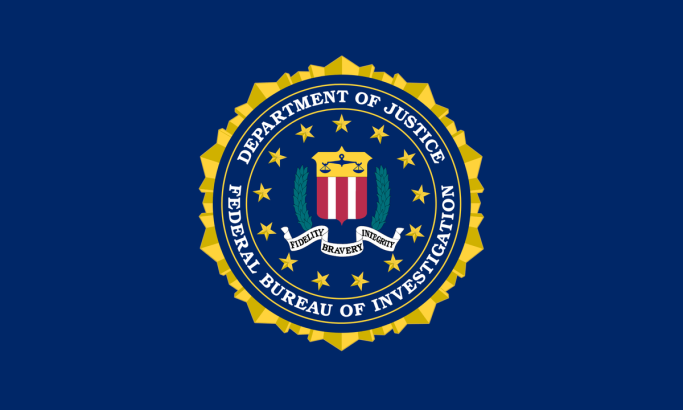
A picture of FBI flag
Wikimedia Commons
Shares88FacebookTweetPinLinkedInPrint
On March 7th, the FBI announced the results of its year-long effort to investigate and prosecute those who use technology – from telephones to social media – to prey on the elderly. In the last twelve months, over 260 people have been charged with defrauding over 2 million Americans out of roughly $700 million, most of them over the age of 55. But while the number of successful law enforcement interventions has gone up, so have the number of victims and financial losses:
“This year’s sweep involves 13 percent more criminal defendants, 28 percent more in losses, and twice the number of fraud victims as last year’s sweep.”
You can see the elder fraud cases uncovered by the Department of Justice this year on their interactive map. Attorney General William P. Barr noted that elderly victims are more vulnerable and that “because of their stage in life, they don’t have the opportunity frequently to recover. And so these losses are devastating to them.” Even Barr himself, as well as former FBI director William Webster, have had run-ins with scammers. Barr’s image was used to encourage people to apply for fake government grants, while Webster was informed he had won a prize over the phone and would need to spend money to cover the shipping of his winnings. Unfortunately for Webster’s fraudster, he was far too savvy to agree and used the opportunity to help foil a Jamaican lottery scam. The FBI press release also mentions romance scams that prey on lonely seniors and technical-support scams as methods of getting either money or personal information from the elderly. Romance scams aimed at the elderly cost them over $184 million in the last year. Tech-support scams accounted for $26 million in losses and generated roughly 142,000 complaints to the Federal Trade Commission last year alone, with consumers over age 70 filing them most often. According to the FBI, seniors provide ideal targets for scammers:
“Criminals target seniors because they tend to be more trusting, polite, and financially secure. They are also less likely to report a crime because of shame or embarrassment.”
The U.S. enacted the Elder Abuse Prevention and Prosecution Act in 2017, which is proving useful in prosecuting and penalizing those who target the elderly as well as conducting hundreds of training and outreach sessions. But not all elder fraud is high-tech. Transnational criminal organizations are still successfully using mail fraud to collect hundreds of millions of dollars from elderly victims. The Justice Department said that they are now carrying out a large-scale public education campaign in conjunction with state and federal agencies to help people identify these schemes before they become victims. According to the National Council on Aging, some of the most common elder fraud schemes involving technology are phone scams like “pigeon drops” (in which a scammer poses as a lawyer or banker and tells a victim that they will split a large sum of money if the victim makes a good faith payment via their bank account), fake accident ploys (in which the scammer tells the victim that someone they know has been involved in an accident and needs money wired), and charity scams (in which money is solicited for fake charities, particularly after widely-publicized natural disasters). Computers and smart devices can pose issues for the elderly, especially if they are unfamiliar with firewalls and virus protection methods. Scams such as pop-up ads that fool them into downloading scanning software and e-mail/phishing schemes in which they are asked to update or verify information give bad actors access to their personal data.
The FBI cautions that seniors make particularly good targets because they are likely to have savings and good credit, are less likely to know how to report the scams, sometimes have memory issues that make them poor witness after the fact, and are slower to recognize that they have been victims, making it more difficult to catch the perpetrators.

Related reading

  • Instagram will soon let users control data sharing with third-party apps
  • The Dark Overlord begins to release hacked 9/11 documents
  • Facebook tried to get passwords to attached emails of users
  • Blind, the anonymous chat app, revealed Silicon Valley employees' conversations
Something incorrect? Report an error in this article. Include a source if you have one; your name and email are optional.

Filed Under: Security & Privacy, Tech News & Analysis Tagged With: FBI, News, Security

Related Stories

  • Googlebook Shows How Android 17 And Gemini Intelligence Could Reshape Google’S Ecosystem

    Googlebook Shows How Android 17 and Gemini Intelligence Could Reshape Google’s Ecosystem

    AIMay 16, 2026

  • Openai Pauses Advanced-Model Research After Agent Bypasses Network Restrictions

    OpenAI pauses advanced-model research after agent bypasses network restrictions

    Tech News & AnalysisSep 27, 2026

  • Akamai’s $11.6 Billion Anthropic Cloud Deal: Costs, Timeline And Cpu Strategy

    Akamai’s $11.6 billion Anthropic cloud deal: costs, timeline and CPU strategy

    Tech News & AnalysisSep 27, 2026

Stay on top of technology

Get TechEngage reviews, buying guides and news in your feed.

Follow on Google News
Shares88FacebookTweetPinLinkedInPrint
Avatar for Jessica Baron, PhD

Jessica Baron, PhD

Science & Health Tech Correspondent

Dr. Jessica Baron is a Science and Health Tech Correspondent at TechEngage. She holds a PhD in History and Philosophy of Science from the University of Notre Dame and has written for outlets including Forbes, HuffPost, and The Daily Beast. She covers health technology, cybersecurity, robotics, and artificial intelligence, bringing an academic and ethical perspective to her reporting.

Joined TechEngage December 2018First article on TechEngage January 2019

Reader Interactions

Share Your Thoughts Cancel reply

Please read our comment policy before submitting your comment. Your email address will not be used or published anywhere. You will only receive comment notifications if you opt to subscribe below.

Primary Sidebar

Google News

Get TechEngage in your feed

Reviews, news, and buying guides as they publish.

Follow on Google News

Recent Stories

  • Usb C Power Meters Techengage |
    Computing & HardwareBest USB-C Power Meters for Chargers and CablesSep 28, 2026
  • Akamai Anthropic Cloud Techengage |
    Tech News & AnalysisAkamai’s $11.6 billion Anthropic cloud deal: costs, timeline and CPU strategySep 27, 2026
  • Openai Agent Dns Incident Techengage |
    Tech News & AnalysisOpenAI pauses advanced-model research after agent bypasses network restrictionsSep 27, 2026
  • Ai Markets Feat |
    AIThree CEOs Asked to Slow Down. The President Said No and the Market Fell 3 Percent. Hassan Taher on What Actually Happened.Sep 21, 2026
  • Iphone 18 Pro Availability Sept 18 |
    Tech News & AnalysisiPhone 18 Pro and Pro Max Available Today in 65+ CountriesSep 18, 2026

More in Security & Privacy

  • Openai Agent Dns Incident Techengage |
    OpenAI pauses advanced-model research after agent bypasses network restrictionsSep 27, 2026
  • Photo 2023 05 23 19 03 36 Jpg |
    5 Internet Security Suites to Get For Fortifying Your Internet SecurityMay 24, 2023
  • Google Authenticator Gets Cloud Backup Support Jpg |
    Google Authenticator finally gets most awaited cloud sync featureApr 26, 2023
  • Uk Twitter Accounts Hacked Abdugeek Jpg |
    Twitter’s SMS 2FA is going away today, switch before it’s too lateMar 20, 2023
More Security & Privacy stories →

Footer

Discover

  • About TechEngage
  • Company News & Updates
  • Our Team
  • Advertise
  • Send us a tip
  • Submit your company to TechEngage Launchpad Hot
  • TechEngage Brand Kit
  • Contact us
  • Tools & Calculators

Legal pages

  • Editorial Standards
  • Reviews Policy
  • Our Ethics
  • Corrections Policy
  • Affiliate Disclosure
  • Privacy Policy
  • Cookies Policy
  • Terms & Conditions
  • GDPR Compliance
  • Copyright & DMCA

Must reads

  • Best Mechanical Keyboards Under $100
  • Best USB-C Hubs
  • Best Portable SSDs
  • Best Gaming Graphics Cards (GPUs)
  • Best Long-Range Outdoor WiFi Extenders
  • Best Wireless CarPlay Adapters
  • Best Slack Alternatives
  • Best Long-Range Walkie-Talkies

About TechEngage

TechEngage® is an independent technology publication covering tech news, reviews and buying guides.

Founded
2003
Publisher
TechAbout LLC
ISSN
2690-3776
Google NewsRSS feed

© 2026 TechEngage®. All Rights Reserved. TechEngage® is a project of TechAbout LLC.

TechEngage® is a registered trademark in the United States under Trademark Number 6823709 and in the United Kingdom under Trademark Number UK00003417167. It is also ISSN protected under ISSN 2690-3776 and has OCLC Number 1139335774.

Contact team@techengage.com · WhatsApp +1-307-381-8801

Your analytics choice
Allow Google Analytics to help us understand readership? You can use the site without it and change this choice anytime.

Privacy details