

In this guide
Coveron is worth considering if you are an eligible US customer who wants identity monitoring and a route to recovery help in one subscription. Its plans serve different needs: Scam Protection focuses on scams and exposure, Identity Theft Protection adds identity benefits and one-bureau credit monitoring, and Full Protection expands to three bureaus and more software.
Our verdict: Identity Theft Protection is the most useful starting point for someone buying Coveron for identity-related support. Full Protection makes more sense when three-bureau monitoring is a priority and its software extras replace tools you would otherwise buy. Skip the subscription if your only goal is a credit freeze, or if your bank, employer, or insurer already supplies the benefits you need.
- Main strength: Several monitoring services and eligible recovery benefits in a single package.
- Main trade-offs: Plan-specific credit coverage, eligibility and verification requirements, insurance exclusions, and higher renewal costs.
- Best fit: An eligible US adult who values help managing the aftermath of identity theft and will respond to monitoring alerts.
- Check first: Your state’s availability, existing coverage, the relevant benefits document, and the annual bill after the first term.
What Coveron does, and what it cannot prevent
Coveron is the brand previously called NordProtect. Its company information says the name changed on May 26, 2026 and identifies it as part of Nord Security, the group behind NordVPN. The new name continued the existing accounts rather than creating a reason to buy a second subscription.
The service brings together monitoring, alerts, and eligible recovery and insurance benefits. These are different jobs. Monitoring can flag activity that needs attention. Recovery help can guide the work that follows a covered incident. Insurance can reimburse qualifying losses or expenses under the applicable policy. None of those functions can promise that your identity will never be misused.
The terms of service identify Cyber Protection Insurance Services Inc. as the service developer, with benefits involving HSB Specialty Insurance Company. Keep the roles separate when comparing the product: the brand, monitoring service, and insurer do not perform the same work.
Eligibility: check this before choosing a plan
The full identity and financial protection service is intended for eligible US adults. Some features require a valid US Social Security number and successful identity authentication. Credit services also depend on sufficient credit history for the relevant credit file. Paying for a subscription does not guarantee that every monitoring feature can be activated.
Current product information excludes New York residents from identity and cyber protection benefits. Washington has separate documents in the legal hub. Match the benefits document to your state, plan, purchase date, and purchase channel. A general feature list cannot replace the terms that apply to your order.
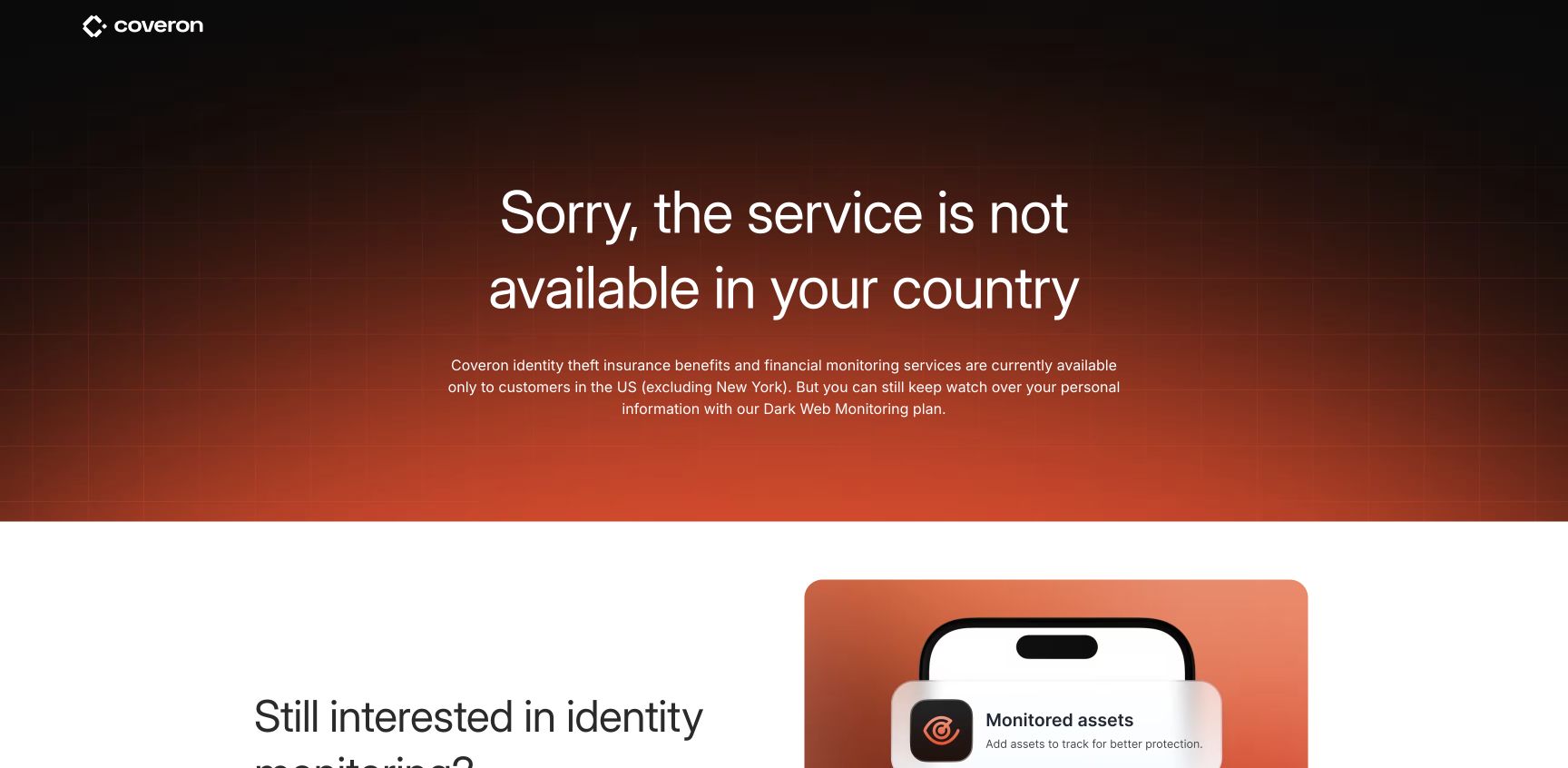
Outside the US, Coveron’s site can show a separate Dark Web Monitoring offer instead. That package is narrower than the full US identity insurance and financial monitoring service. A website loading, or a browser appearing in another country, does not establish eligibility for US benefits.
Which Coveron plan should you choose?
The plan names conceal the most important buying distinction: scam monitoring, identity-related support, and three-bureau credit coverage are separate steps. Start with the job you need the service to do, then compare the plan that actually includes it.
| Individual plan | Main reason to consider it | Important limit |
|---|---|---|
| Scam Protection | Scam-focused coverage and dark web monitoring | Credit monitoring is not listed in this tier. |
| Identity Theft Protection | Identity-related benefits with one-bureau credit monitoring | One bureau does not cover changes across all three credit files. |
| Full Protection | Three-bureau monitoring and added security software | The larger bundle has the highest renewal bill. |
Scam Protection is the narrower purchase. Its pricing page lists online fraud and cyberattack benefits alongside exposure monitoring. It should not be treated as a cheaper way to receive every identity-theft benefit from the next tier. Choose it for its stated scam-related coverage, not for a generic promise of complete identity protection.
Identity Theft Protection is the better starting point for identity-related help. In the current offer it costs $24 more than Scam Protection across the initial 24 months, or $1 more per month. That small introductory gap adds one-bureau credit monitoring and a different set of identity benefits. The renewal gap is larger, so assess the continuing price separately.
Full Protection’s clearest upgrade is three-bureau monitoring. It also lists a VPN, next-gen antivirus, and personal data removal features. Those extras matter if they replace services you need. If you already have a security suite or VPN you prefer, the extra software may duplicate your current setup.
Pricing: what you pay now and after the offer
If software extras are driving your choice, compare them with services you already use. Our NordVPN review covers a standalone VPN option, while our VPN explainer describes what a VPN can and cannot protect.
The US individual pricing page displayed these 24-month introductory offers on October 31, 2026. Amounts are in US dollars before applicable tax. The monthly equivalents require the full initial term upfront. The separate renewal schedule lists one-year renewal terms.
| Plan | First 24 months, upfront | Intro monthly equivalent | Annual renewal |
|---|---|---|---|
| Scam Protection | $119.76 | $4.99 | $119.88 |
| Identity Theft Protection | $143.76 | $5.99 | $191.88 |
| Full Protection | $239.76 | $9.99 | $335.88 |
The introductory total covers two years; the renewal total covers one. Scam Protection’s annual renewal works out to $9.99 a month, Identity Theft Protection to $15.99, and Full Protection to $27.99. These are calculations from the annual bills, not separately billed monthly offers. Coveron says prices may change and may be tested.
Full Protection costs $96 more than Identity Theft Protection during the first 24 months, equivalent to $4 a month. At the displayed renewal rates, the difference becomes $144 a year, or $12 a month. Decide whether three-bureau monitoring and the software extras are worth that ongoing difference, not just the first-term upgrade price.
Dark web monitoring: an alert is the beginning
Coveron’s dark web monitoring checks supported identifiers against monitored sources and alerts you to possible exposure. An alert can help you notice an old credential or another detail that needs attention. Its value depends on what you do with the information.
If a password is exposed, replace it and any reused versions, then secure the affected account. If financial details are involved, contact the relevant provider through a trusted channel. Do not assume that receiving an alert removes every copy of the data or blocks a fraudulent transaction.
Coveron also cautions that it cannot locate every source where exposed information may appear. No alert is not the same as no risk. Continue reviewing important accounts and statements instead of treating a monitoring dashboard as a substitute for them.
One-bureau monitoring, three bureaus, and a free freeze
Coveron’s credit monitoring description covers changes such as new accounts and credit inquiries. Identity Theft Protection lists one bureau; Full Protection lists Equifax, Experian, and TransUnion. That is a substantive difference because activity can appear in one credit file without appearing identically in the others.
The supplied score uses VantageScore 3.0, and a lender may use a different model. Treat it as a monitoring reference, not a promise of a particular lending decision. Identity authentication and the credit-file requirements still apply.
A credit freeze does a different job. It restricts access to a credit file for new-credit checks, while monitoring reports activity. The FTC explains that freezes are free to place and lift through the three bureaus. You do not need a Coveron subscription to obtain that protection. Our guide to protecting your digital identity covers complementary account habits.
Insurance and recovery help: read past the headline limit
Coveron advertises up to $2 million in eligible identity theft recovery expenses on relevant plans, with access to a restoration case manager through its coverage arrangement. Its feature information also describes a $100 deductible and sublimits for some expenses. The applicable policy determines what is covered.
The important question is what the benefit pays for. Identity recovery expenses, stolen money, cyber extortion, and other losses have different definitions and limits. A maximum benefit is not a cash payment whenever data leaks. Check eligible events, evidence requirements, deductibles, notice deadlines, and exclusions before buying.
The online fraud benefit illustrates the distinction. The advertised maximum is $100,000, but the feature page also lists exclusions involving business-related fraud, certain family fraud, auctions or gambling, and investment scams. Coveron should not be bought as a substitute for business cyber insurance or investment-loss protection.
Recovery support can be worth paying for if you want help organizing a difficult process. There is also a free starting point: the FTC directs identity-theft victims to IdentityTheft.gov for a personal recovery plan and next steps. Compare the assistance included in your plan with what you can obtain yourself, and check whether existing insurance or employer benefits overlap.
The privacy trade-off of identity monitoring
A monitoring service needs information to monitor. Coveron’s privacy policy describes collecting identity and contact information for verification, plus credit or financial details for enabled services. Choose the features you need before sharing additional information or connecting accounts.
Use a unique account password and the strongest account protection available. Keep control of who is enrolled and which identifiers are added. A larger monitoring bundle is useful only if you are comfortable with the information and permissions required to operate it.
Who should buy Coveron, and who should skip it?
Coveron is most appealing to an eligible US customer who values a combined monitoring package and a route to recovery help. Identity Theft Protection is the starting point we would compare for that need. Full Protection earns a closer look when coverage across all three credit bureaus matters enough to justify the recurring premium.
Skip or delay the purchase if you only want a credit freeze, do not meet the eligibility rules, or find that exclusions remove your main reason for buying. Check your bank, credit-card provider, employer, insurer, and current subscriptions for overlapping benefits. Paying twice for similar services does not automatically improve a recovery outcome.
This review covers the published plans, pricing, eligibility requirements, feature details, and regional availability. Alert delivery speed, restoration case handling, and insurance claim outcomes are outside its scope.
Frequently asked questions
Is Coveron the same service as NordProtect?
Coveron says NordProtect became Coveron on May 26, 2026, with existing accounts continuing under the new name.
Can customers outside the US use the full Coveron service?
The full identity insurance and financial monitoring offering is for eligible US customers. A separate non-US dark web monitoring plan does not provide the same package of US benefits.
Which plan is the best starting point for identity protection?
Identity Theft Protection is the starting point to compare for identity-related benefits and one-bureau credit monitoring. Full Protection adds three-bureau monitoring and more software at a higher recurring cost.
Do I need Coveron to freeze my credit?
No. The FTC says credit freezes are free to place and lift through the credit bureaus. Monitoring and a freeze serve different purposes.
Does the $2 million benefit guarantee reimbursement?
No. It is an advertised maximum for qualifying recovery expenses on relevant plans, subject to the applicable policy, eligibility, exclusions, deductibles, and claim requirements.
The verdict: useful support, if the plan matches the problem
Coveron’s strongest selling point is convenience: monitoring and eligible recovery benefits brought into one package. Identity Theft Protection is the more focused starting point for that combination. Full Protection is easier to justify for three-bureau monitoring than for a long list of software extras you may already own.
Buy from the benefits document and the renewal bill. If the service fills a real gap in your current protection and you value help after identity theft, it deserves a place on the shortlist. If you mainly need a freeze or basic account security, start with those measures before adding another subscription.


Share Your Thoughts