

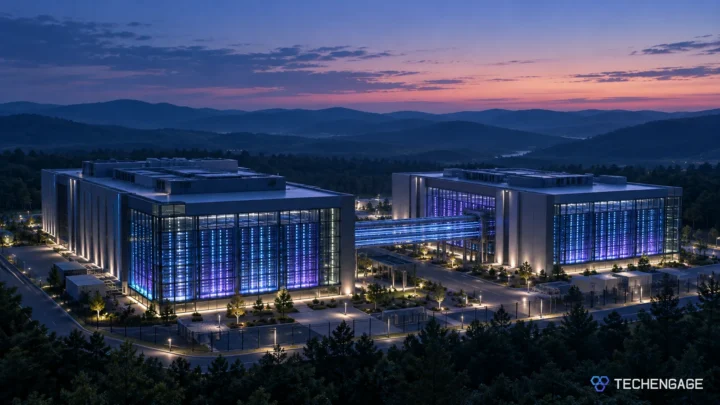
Anthropic and Nscale are discussing a second cloud-computing agreement worth about $45 billion, according to a Bloomberg report published October 19. The proposed deal would cover another building at Nscale’s Monarch campus in West Virginia. It is still a negotiation, not a signed contract or operating data center.
Reuters reported the Bloomberg account and said it could not independently verify the talks. Neither company had responded to Reuters’ requests for comment at the time of its report. That leaves the price, capacity and timing subject to confirmation from Anthropic and Nscale.
What the reported second deal would add
The reported plan calls for roughly 460 megawatts of computing capacity in a second Monarch facility using Nvidia’s forthcoming Vera Rubin chips. Anthropic would also have a right of first refusal for a third building, Reuters said, citing Bloomberg’s sources. Discussions could change or end without an agreement.
This would be separate from the roughly $45 billion arrangement for another building that was reported in August. It would be misleading to present the two reported values as $90 billion already committed. One agreement has been reported previously; the new proposal has not been confirmed by either company, and a headline contract value is not the same as cash already spent or capacity already delivered.
The campus is planned, not fully online
Nscale describes Monarch as a multi-phase development in Mason County, West Virginia. The company says its first phase is designed for 1.35 gigawatts of AI computing capacity, with delivery targeted by early 2028. It describes a longer-term expansion path beyond that initial phase. Those are Nscale’s plans, not a report that the proposed second Anthropic building is finished or funded.
The scale matters because AI labs need more than chips. A large training cluster also needs power, cooling, networking and a schedule that lets the customer deploy its models when the capacity is ready. A 460-megawatt facility would be a major piece of infrastructure, but the reported number alone cannot tell Claude users when, or whether, they will see any change in service.
How this differs from Anthropic’s Akamai agreement
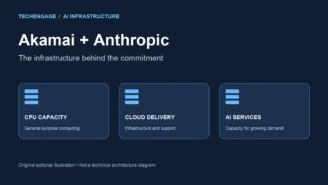
Anthropic has announced other infrastructure arrangements for different workloads. In September, Akamai disclosed an $11.6 billion agreement focused on CPU capacity. The proposed Nscale building, by contrast, is being described as a large GPU-based AI compute project. The deals should not be treated as interchangeable, or added into a single annual spending figure.
More capacity could help Anthropic support future training and deployment demand if construction, equipment deliveries and commercial terms proceed as planned. It does not establish a new Claude model, a performance gain, lower API prices or improved availability today. Customers making deployment decisions should rely on the service terms and performance they can actually use.
Why a second building is consequential
If the talks produce a contract, Anthropic would be reserving another substantial block of future compute at the same campus. That could give the two companies a simpler path to coordinate power, networking and operations than building an unrelated site from scratch. It would also deepen Anthropic’s exposure to Monarch’s delivery schedule. Neither outcome is guaranteed by the current report.
Nscale says Monarch will generate power on-site and use closed-loop cooling. Those are the developer’s project descriptions. They do not independently establish that all permits, financing or equipment for a second building are in place. The distinction matters as AI companies announce large future capacity figures while actual server availability depends on construction and commissioning.
What to watch next
The immediate question is whether Anthropic or Nscale confirms an agreement for the second building, along with its value, duration and conditions. After that, the useful milestones are financing, construction progress, power availability, chip delivery and the date capacity enters service.
Until those details are disclosed, the new $45 billion figure remains a reported possibility. Bloomberg’s account has brought the talks into public view; it has not turned them into completed capacity.



Share Your Thoughts