

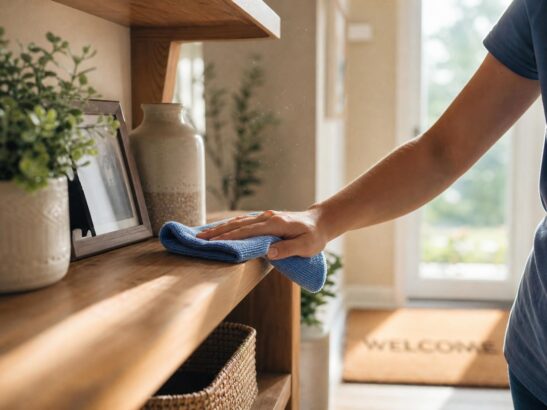
A health-conscious home cleaning routine starts with two simple habits: capture dust instead of brushing it into the air, and deal with dampness before it becomes a persistent problem. A damp cloth, a suitable vacuum and a schedule you can keep are more useful than buying one appliance and expecting it to clean every surface.
Household dust can include tracked-in soil, pollen, pet dander and fibers. Its makeup varies from home to home, so focus first on the places where it collects and the things that bring it inside. The EPA recommends regular vacuuming and damp dusting to reduce indoor particles.
Keep dirt and moisture from building up
Put a mat at the entrance and clean it regularly. Taking off outdoor shoes where practical reduces the dirt you carry onto floors. If you have pets, give their bedding and favorite resting spots a place in your cleaning schedule rather than waiting until fur is visible everywhere.
Check for leaks, condensation and damp patches while you clean. Dry wet materials promptly and fix the source of water. The EPA advises keeping indoor humidity below 60%, ideally between 30% and 50%, to limit conditions that favor mold growth. A basic hygrometer can help you check whether a humid room needs attention, but it will not fix a leak.
Clean from high surfaces down to the floor
Start with shelves, window sills and other raised surfaces. Wipe them with a lightly damp microfiber cloth, then clean furniture, baseboards and floors. Rinse or replace a dirty cloth instead of spreading the same dust across the room. Check the surface care instructions before using water or a cleaning product on wood, electronics or delicate finishes.
Vacuum carpet, rugs and upholstery with a machine suited to those surfaces. On hard floors, pick up loose debris before damp mopping if the flooring allows it. Avoid soaking floors or leaving rugs wet. For a computer, keyboard or other electronics, follow the manufacturer’s cleaning instructions and keep liquids away from openings; our PC cleaning guide covers a different kind of dust-sensitive surface.
Where a robot or cordless vacuum fits
A robot vacuum can maintain accessible floors between more thorough cleaning sessions. It still needs its bin emptied, brushes cleaned and obstacles cleared. It is unlikely to replace cleaning stairs, furniture or tight edges. If you’re comparing models, look at how well each reaches your floor type and whether you can replace its filters and brushes.
A cordless vacuum is easier to carry to stairs, upholstery and corners. Before choosing one, consider its usable runtime with the attachment and power setting you expect to use, its weight, bin capacity and replacement filter cost. A label such as HEPA describes filter performance; the vacuum’s overall design, seals and maintenance also affect what escapes during use. Neither format makes a dusty room clean by itself.
Make a schedule you can actually follow
- As needed: Wipe up spills, clear tracked-in dirt and dry wet areas promptly.
- Weekly starting point: Damp-dust busy rooms, vacuum floors and upholstery, and wash bedding according to its care label. Increase the frequency where pets, heavy traffic or symptoms call for it.
- Periodically: Clean vents and baseboards, check for moisture, and wash or replace vacuum filters according to the appliance instructions.
This is a starting point, not a rule for every household. A small home with hard floors may need less work than one with carpets and several pets. Notice which rooms collect dust fastest and adjust the routine there first.
If someone in the home has allergies or asthma
Vacuuming can briefly stir up particles. Someone who reacts to dust may prefer to stay out of the room while it is being cleaned. The CDC’s asthma guidance also recommends washing bedding regularly, considering allergen-proof mattress and pillow covers, and controlling indoor humidity. Follow advice from a clinician for individual symptoms; a cleaning routine is not a treatment plan.
If you use an air cleaner, treat it as a supplement to source control and cleaning, not a replacement. The EPA notes that air cleaners cannot remove every indoor pollutant. Ventilate when appropriate for the weather and outdoor air quality, and follow product labels when using cleaning chemicals.
A quick room-by-room plan
- Entryway: Clean the mat and pick up dirt before it travels through the house.
- Bedroom: Launder bedding, wipe raised surfaces and vacuum under the bed where reachable.
- Living room: Give rugs, upholstery and pet resting spots regular attention.
- Kitchen and bathroom: Wipe spills, check damp areas and fix leaks rather than covering them up with fragrance.
Start with one room and a routine you can repeat. When a new pet, renovation or seasonal pollen changes what collects in your home, change the schedule with it.




Share Your Thoughts