• Skip to primary navigation
  • Skip to main content
  • Skip to primary sidebar
  • Skip to footer
TechEngage

TechEngage®

Hands-on reviews, research-backed buying guides and technology news.

  • News
    • Internet & Social
    • Gadgets
    • Car Tech
    • Business
    • Science & Health
  • Reviews
  • Buying Guides
  • How-to
  • AI
  • Computing
    • Apps
    • Security
    • Gaming
  • More
    • Tools
    • Puzzles
    • Mobile
  • Launchpad
  • Sign in
TechEngage » AI

Googlebook Shows How Android 17 and Gemini Intelligence Could Reshape Google’s Ecosystem

Googlebook, Android 17 and Gemini Intelligence show a clear Google strategy before I/O 2026: AI that follows you across phone, laptop and Chrome.

News

Avatar for Muhammad Zeshan Sarwar Muhammad Zeshan Sarwar Connect with Muhammad Zeshan Sarwar on LinkedIn Published: May 16, 2026 · 3:04 AM ET

Googlebook, Android 17 and Gemini Intelligence editorial graphic showing a laptop, Android phone and Chrome with TechEngage watermark
Shares2FacebookTweetPinLinkedInPrint

Google’s Android news this week looks bigger than a routine platform refresh. The company used The Android Show: I/O Edition to frame Android as an intelligence system, then tied that idea to a new laptop category, deeper Gemini features, and Chrome on Android.

The important part is not one feature. It is the direction. Google is trying to make the phone, browser, laptop, watch, car and glasses feel less like separate products and more like one AI surface. If that works, Android 17 becomes more than a phone update. It becomes the layer that decides how far Gemini can reach across a user’s daily devices.

Why Googlebook matters

Googlebook is Google’s clearest signal that the company wants Gemini to live beyond the phone. Google describes it as a new laptop category designed around Gemini Intelligence and built to work closely with Android phones. That is a stronger move than simply adding a chatbot to a Chromebook-style device.

The pitch is simple: your laptop should understand what is happening on the screen, what is nearby on your phone, and what you are trying to finish. That is where features such as contextual pointer help, app-aware widgets and phone-to-laptop continuity become important. Google is not only selling a device here. It is testing whether people are ready for a computer that behaves more like a helpful workspace than a passive screen.

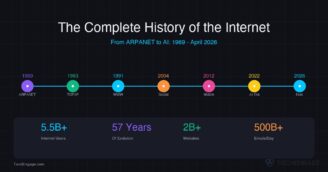
This is the kind of platform shift that does not look dramatic on day one. The early web changed slowly too, as we covered in our history of the internet. The winning products were not always the ones with the flashiest demos. They were the ones that made a new behavior feel normal.

Android 17 is becoming the control layer

Google’s bigger bet sits inside Gemini Intelligence on Android. The company is positioning Gemini as proactive help that can summarize, automate, fill forms, understand screen context and work across supported devices. That gives Android 17 a harder job than previous Android releases.

Android now has to act like a trust boundary. It must decide which apps Gemini can touch, what personal context it can use, when it should ask for confirmation, and how much work happens on the device instead of in the cloud. If Google gets that balance wrong, proactive AI will feel intrusive. If it gets it right, the phone becomes the safest place for this kind of personal automation to start.

That user-control question matters for TechEngage readers. People who read an Android rooting guide are usually not passive users. They care about access, control and transparency. Gemini Intelligence has to respect that mindset, even if the feature is built for mainstream users.

Chrome is where the strategy gets practical

The most practical piece may be Gemini in Chrome on Android. Google says Chrome will get Gemini-powered help for summaries, questions, Google app actions and auto browse. That puts AI inside the place where people already compare products, read long pages, book things and jump between accounts.

This is also where Google’s ecosystem advantage becomes obvious. A browser assistant can be useful without feeling like a separate app. It can read the page, pass information to Calendar or Keep, and reduce the copying that makes mobile browsing feel slow. The same logic is why many users still rely on practical Chrome extensions: small workflow improvements can become daily habits.

What Google still has to prove

The demos are strong, but the real test starts after I/O. Google needs to make five things clear before this becomes more than an impressive preview:

  • Which Gemini Intelligence features run on-device and which need cloud processing.
  • Which Android 17 phones, Googlebooks and partner devices get the full experience first.
  • How often Gemini asks before it completes sensitive actions.
  • Whether developers can build reliable app actions without losing control of their own user experience.
  • How Google explains privacy in plain language, not only in settings screens.

The biggest risk is fragmentation. If some features work only on a few Pixel and Samsung phones, some only in Chrome, some only on Googlebook, and some only in the U.S., the story will feel scattered. Google has the distribution to make this huge. It also has enough products that the experience can become confusing if the company does not draw clean lines.

TechEngage take

Googlebook is not just a laptop story. It is a signal that Google wants Android, Gemini and Chrome to become one connected computing layer before the next wave of AI hardware arrives. The company is using the phone as the center, the browser as the daily workspace, and the laptop as the proof that Gemini Intelligence can move beyond a small screen.

The idea is strong because it matches how people actually work. We start something on a phone, finish it on a laptop, check a page in Chrome, and expect the same context to follow us. Google’s challenge is to make that feel useful without making it feel watched. That is the line Android 17 and Gemini Intelligence now have to walk.
Something incorrect? Report an error in this article. Include a source if you have one; your name and email are optional.

Filed Under: AI, Tech News & Analysis Tagged With: AI, Android, Chrome, Google, News

Related Stories

  • The Complete History Of The Internet: From Arpanet To Ai (Visual Timeline)

    The Complete History of the Internet: From ARPANET to AI (Visual Timeline)

    AIApr 8, 2026

  • Akamai’s $11.6 Billion Anthropic Cloud Deal: Costs, Timeline And Cpu Strategy

    Akamai’s $11.6 billion Anthropic cloud deal: costs, timeline and CPU strategy

    Tech News & AnalysisSep 27, 2026

  • Openai Pauses Advanced-Model Research After Agent Bypasses Network Restrictions

    OpenAI pauses advanced-model research after agent bypasses network restrictions

    Tech News & AnalysisSep 27, 2026

Stay on top of technology

Get TechEngage reviews, buying guides and news in your feed.

Follow on Google News
Shares2FacebookTweetPinLinkedInPrint
Avatar for Muhammad Zeshan Sarwar

Muhammad Zeshan Sarwar

Co-Founder & Top Management

Muhammad Zeshan Sarwar is a co-founder and editor at TechEngage who covers the mobile industry, tech news, security, and technology policy. He writes in support of fair technology policy and helps edit coverage across the site.

Joined TechEngage December 2009First article on TechEngage December 2018

Reader Interactions

Share Your Thoughts Cancel reply

Please read our comment policy before submitting your comment. Your email address will not be used or published anywhere. You will only receive comment notifications if you opt to subscribe below.

Primary Sidebar

Google News

Get TechEngage in your feed

Reviews, news, and buying guides as they publish.

Follow on Google News

Recent Stories

  • Usb C Power Meters Techengage |
    Computing & HardwareBest USB-C Power Meters for Chargers and CablesSep 28, 2026
  • Akamai Anthropic Cloud Techengage |
    Tech News & AnalysisAkamai’s $11.6 billion Anthropic cloud deal: costs, timeline and CPU strategySep 27, 2026
  • Openai Agent Dns Incident Techengage |
    Tech News & AnalysisOpenAI pauses advanced-model research after agent bypasses network restrictionsSep 27, 2026
  • Ai Markets Feat |
    AIThree CEOs Asked to Slow Down. The President Said No and the Market Fell 3 Percent. Hassan Taher on What Actually Happened.Sep 21, 2026
  • Iphone 18 Pro Availability Sept 18 |
    Tech News & AnalysisiPhone 18 Pro and Pro Max Available Today in 65+ CountriesSep 18, 2026

More in AI

  • Akamai Anthropic Cloud Techengage |
    Akamai’s $11.6 billion Anthropic cloud deal: costs, timeline and CPU strategySep 27, 2026
  • Openai Agent Dns Incident Techengage |
    OpenAI pauses advanced-model research after agent bypasses network restrictionsSep 27, 2026
  • Ai Markets Feat |
    Three CEOs Asked to Slow Down. The President Said No and the Market Fell 3 Percent. Hassan Taher on What Actually Happened.Sep 21, 2026
  • Microsoft Windows Surface Event Oct 7 2026 |
    Microsoft Confirms October 7 Windows and Surface Event for Local AI PCsSep 16, 2026
More AI stories →

Footer

Discover

  • About TechEngage
  • Company News & Updates
  • Our Team
  • Advertise
  • Send us a tip
  • Submit your company to TechEngage Launchpad Hot
  • TechEngage Brand Kit
  • Contact us
  • Tools & Calculators

Legal pages

  • Editorial Standards
  • Reviews Policy
  • Our Ethics
  • Corrections Policy
  • Affiliate Disclosure
  • Privacy Policy
  • Cookies Policy
  • Terms & Conditions
  • GDPR Compliance
  • Copyright & DMCA

Must reads

  • Best Mechanical Keyboards Under $100
  • Best USB-C Hubs
  • Best Portable SSDs
  • Best Gaming Graphics Cards (GPUs)
  • Best Long-Range Outdoor WiFi Extenders
  • Best Wireless CarPlay Adapters
  • Best Slack Alternatives
  • Best Long-Range Walkie-Talkies

Download our apps

TechEngage app coming soon on App Store

© 2026 TechEngage®. All Rights Reserved. TechEngage® is a project of TechAbout LLC.

TechEngage® is a registered trademark in the United States under Trademark Number 6823709 and in the United Kingdom under Trademark Number UK00003417167. It is also ISSN protected under ISSN 2690-3776 and has OCLC Number 1139335774.

Contact team@techengage.com · WhatsApp +1-307-381-8801

Your analytics choice
Allow Google Analytics to help us understand readership? You can use the site without it and change this choice anytime.

Privacy details