

I manage seven Facebook Pages across different businesses, and I’ve unpublished and republished pages more times than I can count. Sometimes a client is rebranding and doesn’t want the old page visible during the transition. Sometimes a seasonal business needs to go dark for six months. And sometimes you just inherited a neglected page that needs a complete overhaul before anyone should see it again.
Whatever your reason, unpublishing a Facebook Page hides it from public view without deleting it. Your content, followers, reviews, and page history stay intact. Only people with admin roles on the page can still see it. Think of it as putting your storefront behind a curtain while you renovate — everything’s still there, just hidden from foot traffic.
The catch: Meta has redesigned the Facebook Pages interface multiple times since the original “Classic Pages” layout, and the steps have shifted. The process I’m walking through below reflects the current 2026 interface, which uses the “New Pages Experience” that Meta began rolling out in 2023 and has continued refining since.
Table of Contents
How to Unpublish a Facebook Page (New Pages Experience)
These steps work on both desktop and the Facebook mobile app. I’ll cover the desktop process first since the visual layout is easier to follow, then note the mobile differences below.
Step 1: Switch to Your Facebook Page
Log into Facebook with the account that has admin access to the page. Click your profile picture in the top-right corner, then select “See all profiles” from the dropdown. Choose the Facebook Page you want to unpublish. You’ll now be operating as that Page rather than your personal profile.
If you don’t see the page listed under your profiles, you may not have admin access. Only page admins and certain elevated roles can unpublish a page. Check with whoever originally created the page to verify your access level.
Step 2: Open Page Settings
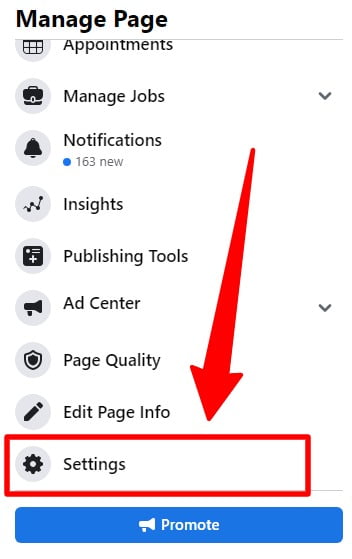
Once you’ve switched to your Page profile, navigate to your Page. Click “Settings” in the left sidebar menu. On some screen sizes, you may need to scroll down or click “See more” to find it. On the Facebook mobile app, tap the three-dot menu (⋯) on your Page, then tap “Settings” or “Page settings.”
Step 3: Find the Page Visibility Option
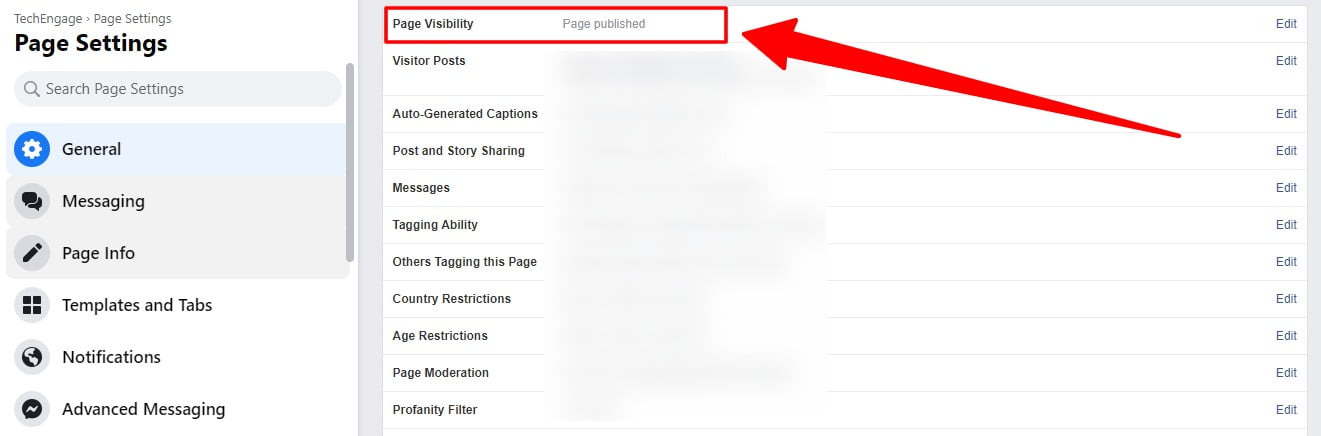
Inside Settings, look for “Privacy” or “Page and tagging” section (Meta has reorganized these categories several times — the exact label depends on your current interface version). Under this section, find “Page visibility” or “Page deactivation.”
In the older Classic Pages layout (still active on some accounts), this was located directly under General Settings > Page Visibility on the main settings page.
Step 4: Unpublish the Page
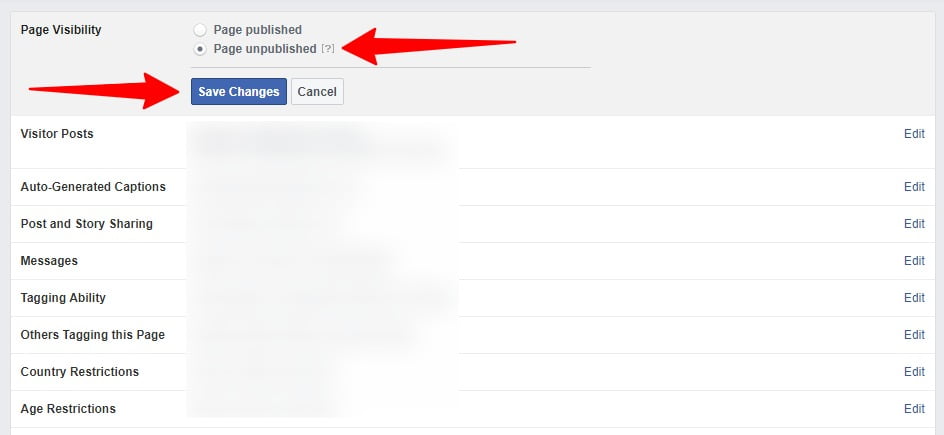
Click or tap on the Page Visibility option. You’ll see a toggle or radio button selection between “Page published” and “Page unpublished.” Select “Page unpublished” and click “Save Changes.”
Facebook will ask you to confirm your choice and may prompt you to select a reason for unpublishing (options typically include “my page isn’t complete yet,” “I want to recreate the page,” or “other”). Select whichever applies and confirm.
Your page is now unpublished. Anyone visiting the URL will see a message that the page isn’t available. Search engines will stop showing it in results (though cached versions may persist for a few days to weeks depending on the search engine’s crawl cycle). Existing followers won’t receive a notification that you’ve unpublished — the page simply becomes invisible to them.
How to Republish a Facebook Page
Bringing your page back online follows the exact same path in reverse:
- Switch to your Page profile
- Go to Settings
- Find Page Visibility
- Select “Page published”
- Click Save Changes
Your page reappears instantly. Followers can see it again, and search engines will re-index it on their next crawl. Posts you scheduled while the page was unpublished will begin publishing on their scheduled times once the page is live again.
One thing to note: if your page was unpublished for an extended period (months), Facebook’s algorithm may initially show your new posts to fewer followers than before. Engagement typically takes a week or two to normalize as the algorithm recalibrates your page’s distribution patterns.
Unpublishing vs. Deactivating vs. Deleting: What’s the Difference?
These three options sound similar but have very different consequences. I’ve seen business owners confuse them with costly results, so here’s the breakdown:
| Action | Page Visible? | Content Preserved? | Followers Kept? | Reversible? | Best For |
|---|---|---|---|---|---|
| Unpublish | No (admins only) | Yes, all content intact | Yes | Yes, instantly | Temporary hiding, rebranding, page updates |
| Deactivate | No | Yes, stored by Meta | Yes (dormant) | Yes, by reactivating | Extended breaks, seasonal businesses |
| Delete | No | No — permanently removed | No — permanently lost | Only within 14-day grace period | Permanent closure, no plans to return |
Unpublishing is by far the safest option if there’s any chance you’ll want the page back. Your reviews, posts, photos, videos, follower count, and page insights all remain exactly as they were. You can work on the page behind the scenes — updating the profile picture, cover photo, about section, and pinned posts — while nobody sees the work in progress.
Deactivating goes a step further. The page disappears completely, and Meta stores all the data on their servers. You can reactivate later, but there’s less flexibility to edit the page while it’s deactivated compared to when it’s merely unpublished.
Deleting is permanent. After a 14-day grace period (during which you can cancel the deletion), everything is gone: followers, content, reviews, insights, ad history, custom audiences built from the page — all of it. I’ve had a client accidentally delete instead of unpublish, and recovering from that mistake involved rebuilding their entire Facebook presence from scratch. Don’t make that mistake. If you’re looking to protect your digital presence more broadly, understanding how VPNs protect your privacy is worth reading alongside any social media management strategy.
When Should You Unpublish a Facebook Page?
Over the years, I’ve unpublished pages for clients in all of these situations. Each one is a legitimate use case:
Rebranding or Business Name Change
If your business is changing its name, logo, or visual identity, unpublishing lets you update the page’s profile picture, cover photo, about section, username, and category without followers seeing a half-finished transition. I recommend unpublishing for at least 24-48 hours during a rebrand — enough time to update everything, schedule a few on-brand posts, and have the “new look” ready to go when you republish.
Incomplete or Outdated Page
A Facebook Page with missing business hours, no profile picture, a broken website link, or posts from three years ago does more harm than good. It signals to potential customers that the business is neglected or possibly closed. Unpublish it, fill in every section properly, add fresh content, and then republish when it looks professional.
Seasonal Business Closure
Seasonal businesses (holiday shops, summer camps, seasonal restaurants) sometimes prefer to unpublish during the off-season rather than leaving a dead page visible for months. This prevents confused customers from trying to contact a closed business and avoids the slow accumulation of unanswered messages and negative reviews about unresponsive communication.
Dealing With a PR Crisis or Negative Attention
When a business faces sudden negative attention — a viral complaint, a review-bombing campaign, or a public controversy — temporarily unpublishing the page can stop the bleeding while you formulate a response. This isn’t a long-term solution (hiding looks worse than addressing the issue), but a 24-48 hour pause can prevent a bad situation from escalating while you craft a thoughtful response. Understanding the real effects of social media on businesses and individuals adds important context to crisis management decisions.
Transferring Page Ownership
When a business changes hands, unpublishing during the ownership transition prevents the new owner from inheriting a live page that still reflects the previous owner’s branding, messaging, and contact information. Unpublish, transfer admin roles, let the new owner customize, then republish.
What Happens When You Unpublish a Facebook Page
People ask me about the consequences constantly, so here’s exactly what changes — and what doesn’t — when you flip that switch:
What Stops Working
- Public visibility — Nobody can find your page through Facebook Search, Google, or direct URL. Visitors see “This content isn’t available right now.”
- Active ads — Any Facebook or Instagram ads running from the page will be paused automatically. You’ll need to restart them after republishing. Ad accounts and audience data remain intact.
- Scheduled posts — Posts scheduled for future dates won’t publish while the page is unpublished. They’ll remain in your scheduled queue and can either be published manually after republishing or will post on schedule once the page goes live again.
- Messenger responses — Customers can’t initiate new conversations. Existing threads are still visible to admins but customers won’t see them while the page is down.
- Embedded content — Facebook Page plugins, embedded posts, and like buttons on your website will stop displaying correctly.
What’s Preserved
- All content — Posts, photos, videos, stories, reels, events — everything remains intact and accessible to page admins.
- Followers and likes — Your follower count doesn’t reset. Everyone who liked or followed the page will still be following it when you republish.
- Reviews and ratings — All reviews and star ratings are preserved. They’ll reappear when you republish.
- Page Insights and analytics — Historical data, audience demographics, and performance metrics remain accessible to admins.
- Admin roles and permissions — All page roles (admin, editor, moderator, advertiser, analyst) remain assigned to the same people.
- Custom audiences and pixel data — If you’ve built custom audiences from page engagement or installed the Meta Pixel, that data persists.
How to Unpublish a Facebook Page on Mobile
The mobile process mirrors desktop closely, but the navigation differs slightly due to the app’s interface:
- Open the Facebook app on your phone
- Tap the menu icon (three horizontal lines on Android, or your profile picture on iOS)
- Tap “Pages” and select your page
- Tap the gear icon or “Settings”
- Scroll to find “Privacy” or “Page visibility”
- Toggle the page to “Unpublished”
- Confirm and save
If you’re managing multiple pages, make absolutely sure you’ve selected the correct page before unpublishing. I once accidentally unpublished a client’s active campaign page instead of their test page — a mistake that took three panicked phone calls to sort out because the client’s ad team thought the page had been hacked.
Troubleshooting: Common Issues When Unpublishing
“I Can’t Find the Page Visibility Option”
Meta has reorganized page settings multiple times. If you’re on the New Pages Experience, the option may be under Settings > Privacy > Page and tagging rather than the old General Settings > Page Visibility path. If you still can’t find it, try accessing page settings through Meta Business Suite instead, which offers a more consistent interface for page management.
“I Don’t Have Permission to Unpublish”
Only users with Admin access (or the equivalent “full control” role in the New Pages Experience) can unpublish a page. Editors, moderators, and other roles don’t have this capability. Check your page role under Settings > Page roles or ask an existing admin to either unpublish the page for you or upgrade your access level.
“My Page Was Auto-Unpublished by Facebook”
Meta occasionally unpublishes pages that violate community standards or commerce policies. If your page was unpublished without your action, check your Page Quality tab (under Settings or Meta Business Suite) for any policy violations. You’ll typically see a notification explaining what triggered the action and whether you can appeal. Common triggers include misleading content, repeated intellectual property complaints, or violating advertising policies.
“My Ads Stopped Running After Unpublishing”
This is expected. Facebook automatically pauses all active ad campaigns associated with an unpublished page. When you republish, your ads won’t automatically resume — you’ll need to manually restart them through Ads Manager. Budget that didn’t spend during the pause period is returned to your available balance.
Best Practices Before Unpublishing Your Facebook Page
Before you hit that unpublish button, I’d recommend running through this checklist. It takes five minutes and prevents headaches later:
- Download your page data first. Go to Settings > Your Facebook Information > Download your information and request a copy of your page’s posts, photos, and videos. Having a local backup gives you peace of mind, even though unpublishing preserves everything online.
- Pause active ad campaigns manually. While Facebook auto-pauses ads when you unpublish, manually pausing them first gives you cleaner control over your ad accounts and prevents unexpected budget charges during the transition.
- Notify your team. If multiple people manage the page, let them know before unpublishing. Nothing creates confusion faster than someone trying to post to a page that’s suddenly invisible.
- Set up an auto-response in Messenger. Before unpublishing, configure an away message in Messenger explaining that the page is temporarily unavailable and providing alternative contact information (email, phone number, website). This catches anyone who messages right before or during the unpublish window.
- Check your website for embedded Facebook elements. If your website uses Facebook Page plugins, like buttons, or embedded posts, those will break while the page is unpublished. Consider temporarily removing them or replacing them with a placeholder. If you’re concerned about broader online security during transitions, our guide on security apps for your devices covers additional protective measures.
Frequently Asked Questions About Unpublishing a Facebook Page
These are questions I’ve gotten repeatedly from clients and colleagues over the years. Posting them here because the official Facebook Help Center buries answers across dozens of pages.
How long can a Facebook Page stay unpublished?
Indefinitely. There’s no time limit on how long a page can remain unpublished. I’ve had client pages sit unpublished for over a year with no issues — everything was intact when we republished. That said, if a page remains unpublished for extremely long periods (years), Meta’s platform changes may alter how certain features work when you eventually bring it back.
Will I lose my followers if I unpublish?
No. Follower count is fully preserved during an unpublish. However, some followers may unfollow organically over time simply because they notice the page is gone and clean up their followed pages. For short unpublish periods (days to weeks), follower loss is negligible. For longer periods (months), expect a small single-digit percentage drop from natural unfollowing.
Can I still edit my page while it’s unpublished?
Yes. This is one of the main advantages of unpublishing over deactivating. Admins and editors can still update the profile picture, cover photo, about section, business hours, posts, and other page content while the page is unpublished. You’re working on a live page that nobody can see — it’s essentially a staging environment.
Does unpublishing affect my page’s SEO?
Temporarily, yes. Google and other search engines will remove your Facebook Page from search results once they detect it’s inaccessible. When you republish, the page will be re-indexed, but it may take days to weeks to reappear in search results depending on how frequently search engines crawl your page’s URL. For pages with established search visibility, keep the unpublish window as short as possible.
Can customers still see my reviews when the page is unpublished?
No. Reviews are tied to the page, so when the page becomes invisible, reviews become invisible too. They’re not deleted — they’ll reappear when you republish. But if potential customers are searching for your business and relying on Facebook reviews to make purchasing decisions, unpublishing removes that social proof temporarily. Keep that in mind when timing your unpublish.
Final Thoughts
Unpublishing a Facebook Page is one of the safest, most reversible actions you can take in social media management. It’s a pause button, not a delete button. Use it whenever you need breathing room to update, rebrand, or simply step back without burning bridges with your audience.
The one piece of advice I’d add from personal experience: if you’re unpublishing for a rebrand, have all your new assets (logo, cover photo, about text, first few posts) ready before you unpublish. The faster you can republish with the new look, the less disruption your followers experience. I aim for same-day turnarounds on rebrands whenever possible — unpublish in the morning, update everything, republish by evening. Your followers wake up the next day to a refreshed page and barely notice the change. That’s the goal.


Share Your Thoughts