• Skip to primary navigation
  • Skip to main content
  • Skip to primary sidebar
  • Skip to footer
TechEngage

TechEngage®

Hands-on reviews, research-backed buying guides and technology news.

  • News
    • Internet & Social
    • Gadgets
    • Car Tech
    • Business
    • Science & Health
  • Reviews
  • Buying Guides
  • How-to
  • AI
  • Computing
    • Apps
    • Security
    • Gaming
  • More
    • Tools
    • Puzzles
    • Mobile
  • Launchpad
  • Sign in
TechEngage » Security & Privacy

Apple iPhone 5C Password Lock ‘Defeated’ With £75 Hardware Hack

Avatar for Nouman S Ghumman Nouman S Ghumman Follow Nouman S Ghumman on X Published: Sep 19, 2016 · 12:17 PM ET Updated: Feb 28, 2021 · 2:11 PM ET

NewsNews report. Not a buying guide or hands-on product test.
Apple iPhone 5C Password Lock ‘Defeated’ With £75 Hardware Hack
FacebookTweetPinLinkedInPrint
From the archive
Archive record: This article originated before the February 2018 change of ownership and is retained with permission from the earlier TechEngage team. Product details may have changed since it was written.


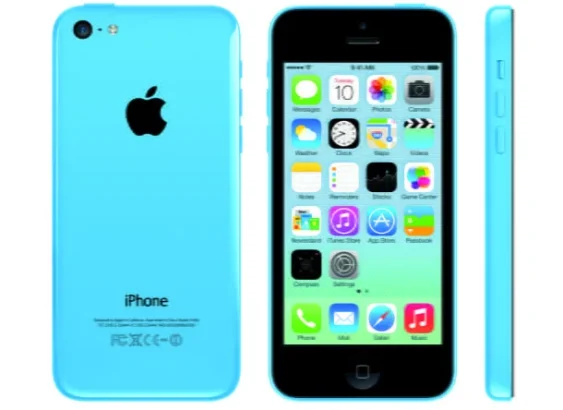
A Cambridge computer scientist claims has achieved an iPhone 5C hack the FBI struggled to do with $1 million

Apple’s iPhone passcodes can be bypassed by modifying the smartphone with a £75 cloned memory chip which can brute force the password lock, according to Cambridge computer scientist Dr. Sergei Skorobogatov.

Skorobogatov claims that by cloning the Nand chip on an iPhone 5C, which acts as the device’s main flash storage, he can circumnavigate the lock Apple puts on its iPhones if a password it inputted incorrectly too many times.

Attack of the clone

Gualtiero Boffi |

Skorobogatov has managed to find a different way to breach an iPhone 5C’s security with a method that cost a tiny fraction of the $1 million the FBI reportedly paid a security firm to retrieve data from a locked iPhone owned by San Bernardino gunman Syed Rizwan Farook when Apple refused to lift the lock.

By modifying an iPhone to accept a cloned chip with a password counter set to zero, Skorobogatov was able to have a further six attempts an inputting the correct password into a locked iPhone 5C.

“The process does not require any expensive and sophisticated equipment. All needed parts are low cost and were obtained from local electronics distributors. By using the described and successful hardware mirroring process it was possible to bypass the limit on passcode retry attempts,” he explained.

Each time he reach the incorrect password entry limit, he simply removed the cloned chip and replaced it with a fresh clone with a password counter set to zero, effectively giving him as many attempts at the password it takes to stumble across the right one.

Using this technique it took Skorobogatov 40 hours of work to brute force past the four digit password. However, he indicated that with more recent models, such as the iPhone 7, using this technique many not be possible and would require further research.

FBI director James Comey had previously said that the technique, known as Nand mirroring, would not work on the iPhone Farook used. But it would appear that Skorobogatov’s work has proven him wrong.

Other methods have been used to hack iPhones in various ways in the past, including cloning fingerprints to trick the Touch ID scanner with Play-Doh.


Related reading

  • How does a VPN protect user privacy and anonymity?
  • Solving common PC security threats with Outbyte AVarmor
  • Cybersecurity Awareness Tips for Employees
  • How to Find and Remove Harmful Software Using Chrome
Something incorrect? Report an error in this article. Include a source if you have one; your name and email are optional.

Filed Under: Security & Privacy, Tech News & Analysis

Related Stories

  • Coveron Review: Is Its Identity Protection Worth It?

    Coveron Review: Is Its Identity Protection Worth It?

    Reviews & Buying GuidesOct 31, 2026

  • Nordvpn Review: Features, Privacy And Value

    NordVPN Review: Features, Privacy and Value

    Reviews & Buying GuidesOct 31, 2026

  • Editorial diagram showing three stages of AI agent safety: detect, respond, contain.

    OpenAI pauses advanced-model research after agent bypasses network restrictions

    Tech News & AnalysisSep 27, 2026

Stay on top of technology

Get TechEngage reviews, buying guides and news in your feed.

Follow on Google News
FacebookTweetPinLinkedInPrint
Avatar for Nouman S Ghumman

Nouman S Ghumman

VP & Associate General Counsel

Nouman S Ghumman serves as Vice President and Associate General Counsel at TechEngage. He holds an LLM in International Commercial Law from City, University of London and is a Managing Partner at SG Advocates and Legal Consultants. He writes on smartphones, cybersecurity, internet regulation, and the legal dimensions of technology.

Reader Interactions

Share Your Thoughts Cancel reply

Please read our comment policy before submitting your comment. Your email address will not be used or published anywhere. You will only receive comment notifications if you opt to subscribe below.

Primary Sidebar

Google News

Get TechEngage in your feed

Reviews, news, and buying guides as they publish.

Follow on Google News

Recent Stories

  • Eu Digital Fairness Act Illustration |
    Tech News & AnalysisEU Proposes New Controls for Autoplay and SubscriptionsNov 11, 2026
  • Nordvpn Black Friday 2026 Campaign |
    DealsNordVPN Black Friday 2026 Deal Offers Up to 78% Off and 3 Extra MonthsNov 11, 2026
  • Anthropic Ipo Illustration |
    Tech News & AnalysisAnthropic Starts IPO Roadshow With a Proposed $70 to $78 Share PriceNov 10, 2026
  • Australia Ai Safety Illustration |
    Tech News & AnalysisAustralia Plans AI Safety Regulator and Fast Incident ReportingNov 10, 2026
  • Instagram Teen Accounts Illustration |
    Tech News & AnalysisInstagram Expands AI Age Checks for Teen Accounts WorldwideNov 10, 2026

More in Security & Privacy

  • Captcha Evolution History How Websites Prove Human Featured |
    CAPTCHA Evolution: The History of How Websites Prove You’re HumanApr 9, 2026
  • Internet Surveillance Laws Sopa Cispa Featured |
    Internet Surveillance Laws: From SOPA & CISPA to Modern Privacy BattlesApr 9, 2026
  • Biggest Apple Leaks Secrecy Shaped Company Featured |
    The Biggest Apple Leaks and How Secrecy Shaped the CompanyApr 9, 2026
  • Digital Identity Systems Government Internet Id Privacy Risks Featured |
    Digital Identity Systems: Government Internet ID & Privacy Risks ExplainedApr 9, 2026
More Security & Privacy stories →

Footer

Discover

  • About TechEngage
  • Company News & Updates
  • Our Team
  • Advertise
  • Send us a tip
  • Submit your company to TechEngage Launchpad Hot
  • TechEngage Brand Kit
  • Contact us
  • Tools & Calculators

Legal pages

  • Editorial Standards
  • Reviews Policy
  • Our Ethics
  • Corrections Policy
  • Affiliate Disclosure
  • Privacy Policy
  • Cookies Policy
  • Terms & Conditions
  • GDPR Compliance
  • Copyright & DMCA

Must reads

  • Best Mechanical Keyboards Under $100
  • Best USB-C Hubs
  • Best Portable SSDs
  • Best Gaming Graphics Cards (GPUs)
  • Best Long-Range Outdoor WiFi Extenders
  • Best Wireless CarPlay Adapters
  • Best Slack Alternatives
  • Best Long-Range Walkie-Talkies

Download our apps

TechEngage app coming soon on the App Store Available onChrome

© 2026 TechEngage®. All Rights Reserved. TechEngage® is a project of TechAbout LLC.

TechEngage® is a registered trademark in the United States under Trademark Number 6823709 and in the United Kingdom under Trademark Number UK00003417167. The publication is identified by ISSN 2690-3776 and OCLC Number 1139335774.

Contact team@techengage.com · WhatsApp +1 307 463 4505

Your analytics choice
Allow Google Analytics to help us understand readership? You can use the site without it and change this choice anytime.

Privacy details