• Skip to primary navigation
  • Skip to main content
  • Skip to primary sidebar
  • Skip to footer
TechEngage

TechEngage®

Hands-on reviews, research-backed buying guides and technology news.

  • News
    • Internet & Social
    • Gadgets
    • Car Tech
    • Business
    • Science & Health
  • Reviews
  • Buying Guides
  • How-to
  • AI
  • Computing
    • Apps
    • Security
    • Gaming
  • More
    • Tools
    • Puzzles
    • Mobile
  • Launchpad
  • Sign in
TechEngage » Science & Health Tech

Can the weather affect your flight?

Explainer

Avatar for Fana Anwar Fana Anwar Connect with Fana Anwar on LinkedIn Published: Dec 2, 2020 · 10:28 PM ET Updated: Apr 2, 2021 · 7:54 PM ET

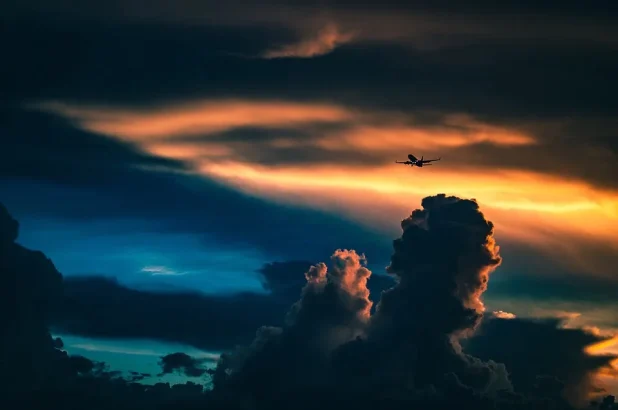
An Airplane passes through clouds during sunset
Image: Pixabay
Shares8FacebookTweetPinLinkedInPrint

The weather has always been a part of our discussions since eternity. Since the dawn of humans on earth, the weather has played an essential role in our everyday lives. So it is not surprising that we are always curious about the weather even when we have no control over it. Learning about weather conditions is even more necessary for certain aspects of our lives.

Flying on an aircraft is one such aspect. Pilots and flight coordinators need to understand the sky and weather conditions to ensure that the flight arrives safely at the destination. They have to monitor wind, atmospheric pressure, air temperature, and visibility during a flight. Flight control rooms need access to the most precise weather data collection and analysis to manage the flight directions.

That is why they use the best API’s for weather prediction before and during the flight. Their APIs are so precise that many government agencies like NOAA rely on their instruments to publish the weather forecasts on their website. Even though the weather APIs monitor several aspects, in this article, we are going to talk about how its effect on the atmospheric conditions and wind play a vital role for flights.

The atmosphere

The atmosphere is the layer of air that surrounds the earth and moves along with it. The combination of several gasses creates the air that we breathe in and forms the atmosphere. There are five layers in the atmosphere. Aircraft fly within the two lowest layers, which are the Troposphere and the Stratosphere.

The Troposphere is the layer closest to the surface of the earth and goes up to approximately 33,000 feet. The altitude of the Troposphere varies with geographical location and air temperature. At the equator, the height of the Troposphere is about 55,000 feet, whereas, at the poles, it is about 25,000 feet.

As we go up the Troposphere, air density, pressure, and temperature keep decreasing till we reach the Stratosphere, after which the temperature becomes constant. The area between the Troposphere and Stratosphere where the two layers join is called the Tropopause, which acts as a lid and keeps the layer locked in.

Since the atmospheric conditions like air pressure, density, and temperature can vary so much, airlines use a term called International Standard Atmosphere for standardization.

Wind

As we mentioned before, the combination of gases creates the air around us. It acts like a liquid and moves along as the earth rotates. However, air also moves around from high pressure to low-pressure areas, which creates the winds. Although we always talk about wind in miles per hour, airlines measure it in knots (1 knot = 1.15 mph).

Pilots and flight control personnel have access to charts created by APIs that project atmospheric pressure of different areas, and they navigate the flight based on these. If you have seen such a chart, you might have noticed rings of different colors. These rings are called isobars, and the closer they are, the greater the winds.

Wind always moves in counterclockwise directions into low-pressure areas and clockwise around high-pressure zones in the Northern hemisphere. In the southern hemisphere, the winds act oppositely. Looking at the API charts, pilots and flight personnel can deduce the direction and speed of the winds that help them to manage the flight path.

You might have noticed that sometimes on windy days, the take-off and landing could be bumpy, but it is smooth during the flight. That is because winds can occur at different levels of the Troposphere. On windy days, buildings and trees can create wind turbulence close to the ground, but it might be smoother as we go up a few thousand feet.

However, if you have flown over the Atlantic Ocean, you might have heard pilots mention jet streams. Jet streams are narrow but strong currents of winds that flow in a Quasi horizontal direction in the upper Troposphere or the Stratosphere. They occur when there are steps created in the Troposphere due to sudden differences in the temperature.

Jet streams are common along the 30° and 60° latitudes due to the differences in the Tropopause heights. Jet streams flow towards the east, which is why the flight time from America to Europe is shorter than in the opposite direction.

Jet stream speeds can vary a lot over the Atlantic due to turbulence in the ocean currents. That is why flight routes over the ocean vary a lot. Pilots try to fly within the core of a jet stream when flying eastwards. However, they would try to avoid them when flying to the west.

So as you can see, weather and atmospheric conditions can affect the wind speeds, which in turn can affect your flight. Pilots and flight control personnel have to constantly monitor these conditions to ensure that flights reach their destinations safely and in time.



Related reading

  • Can Weather APIs Help in Keeping the Environment Healthy?
  • 5 aerospace and aviation technologies that will change the industry
  • Tooth Sensors Are a Thing Now
  • Eating Healthy and Fresh During Lockdown by Using Meal Kits
Something incorrect? Report an error in this article. Include a source if you have one; your name and email are optional.

Filed Under: Science & Health Tech Tagged With: Airplanes, Weather

Related Stories

  • Can Weather Apis Help In Keeping The Environment Healthy?

    Can Weather APIs Help in Keeping the Environment Healthy?

    Science & Health TechDec 20, 2023

  • Nuclear Power: A Rise In The Environment

    Nuclear Power: A Rise in the Environment

    Science & Health TechSep 30, 2023

  • Apple Is Using More Recycled Products Than Ever Before

    Apple is Using More Recycled Products than Ever Before

    Science & Health TechApr 22, 2022

Stay on top of technology

Get TechEngage reviews, buying guides and news in your feed.

Follow on Google News
Shares8FacebookTweetPinLinkedInPrint
Avatar for Fana Anwar

Fana Anwar

Writer & Reviewer

Fana Anwar is a former contributor at TechEngage who wrote about apps and software, tech news, science and health technology, and business. Her articles focused on explaining new tools and developments for a general audience.

Joined TechEngage October 2018First article on TechEngage October 2018

Reader Interactions

Join the Discussion
  1. Avatar for Alex LopezAlex Lopez says

    December 14, 2020

    This is a very interesting article indeed! You have accumulated a lot of information. I will check more into the role of API providers, including Climacell for aviation.

    Reply

Share Your Thoughts Cancel reply

Please read our comment policy before submitting your comment. Your email address will not be used or published anywhere. You will only receive comment notifications if you opt to subscribe below.

Primary Sidebar

Google News

Get TechEngage in your feed

Reviews, news, and buying guides as they publish.

Follow on Google News

Recent Stories

  • Usb C Power Meters Techengage |
    Computing & HardwareBest USB-C Power Meters for Chargers and CablesSep 28, 2026
  • Akamai Anthropic Cloud Techengage |
    Tech News & AnalysisAkamai’s $11.6 billion Anthropic cloud deal: costs, timeline and CPU strategySep 27, 2026
  • Openai Agent Dns Incident Techengage |
    Tech News & AnalysisOpenAI pauses advanced-model research after agent bypasses network restrictionsSep 27, 2026
  • Ai Markets Feat |
    AIThree CEOs Asked to Slow Down. The President Said No and the Market Fell 3 Percent. Hassan Taher on What Actually Happened.Sep 21, 2026
  • Iphone 18 Pro Availability Sept 18 |
    Tech News & AnalysisiPhone 18 Pro and Pro Max Available Today in 65+ CountriesSep 18, 2026

More in Science & Health Tech

  • Word Image 107084 1 |
    Can Weather APIs Help in Keeping the Environment Healthy?Dec 20, 2023
  • Nuclear Power |
    Nuclear Power: A Rise in the EnvironmentSep 30, 2023
  • Psd 0Bd2Aa68 Jpg |
    Apple is Using More Recycled Products than Ever BeforeApr 22, 2022
  • Hd 98240176 Jpg |
    James Webb Space Telescope’s Newest Selfie is a RevolutionMar 21, 2022
More Science & Health Tech stories →

Footer

Discover

  • About TechEngage
  • Company News & Updates
  • Our Team
  • Advertise
  • Send us a tip
  • Submit your company to TechEngage Launchpad Hot
  • TechEngage Brand Kit
  • Contact us
  • Tools & Calculators

Legal pages

  • Editorial Standards
  • Reviews Policy
  • Our Ethics
  • Corrections Policy
  • Affiliate Disclosure
  • Privacy Policy
  • Cookies Policy
  • Terms & Conditions
  • GDPR Compliance
  • Copyright & DMCA

Must reads

  • Best Mechanical Keyboards Under $100
  • Best USB-C Hubs
  • Best Portable SSDs
  • Best Gaming Graphics Cards (GPUs)
  • Best Long-Range Outdoor WiFi Extenders
  • Best Wireless CarPlay Adapters
  • Best Slack Alternatives
  • Best Long-Range Walkie-Talkies

Download our apps

TechEngage app coming soon on App Store

© 2026 TechEngage®. All Rights Reserved. TechEngage® is a project of TechAbout LLC.

TechEngage® is a registered trademark in the United States under Trademark Number 6823709 and in the United Kingdom under Trademark Number UK00003417167. It is also ISSN protected under ISSN 2690-3776 and has OCLC Number 1139335774.

Contact team@techengage.com · WhatsApp +1-307-381-8801

Your analytics choice
Allow Google Analytics to help us understand readership? You can use the site without it and change this choice anytime.

Privacy details