• Skip to primary navigation
  • Skip to main content
  • Skip to primary sidebar
  • Skip to footer
TechEngage

TechEngage®

Hands-on reviews, research-backed buying guides and technology news.

  • News
    • Internet & Social
    • Gadgets
    • Car Tech
    • Business
    • Science & Health
  • Reviews
  • Buying Guides
  • How-to
  • AI
  • Computing
    • Apps
    • Security
    • Gaming
  • More
    • Tools
    • Puzzles
    • Mobile
  • Launchpad
  • Sign in
TechEngage » Security & Privacy

Enhancing cybersecurity for remote working

Avatar for Chuck Fried Chuck Fried Published: May 29, 2020 · 4:33 AM ET Updated: Feb 17, 2021 · 12:02 AM ET

a person typing on laptop
Shares41FacebookTweetPinLinkedInPrint
The COVID-19 pandemic is changing every aspect of everyday life, from where we go to who we see to how we work. With stay-at-home orders in effect for more than 300 million people in the U.S., not to mention billions globally, companies are facing the new reality of relying on a remote workforce to keep the proverbial lights on. Although there can be plenty of benefits to a remote workforce, such as reduced stress and increased productivity, many companies that were forced into remote working are having a difficult time adapting. In an effort to accommodate this new reality, cybersecurity efforts may need to be enhanced to keep business and client data safe. Here’s how your business can enhance security overall, not just in light of the pandemic.

Enhance passwords

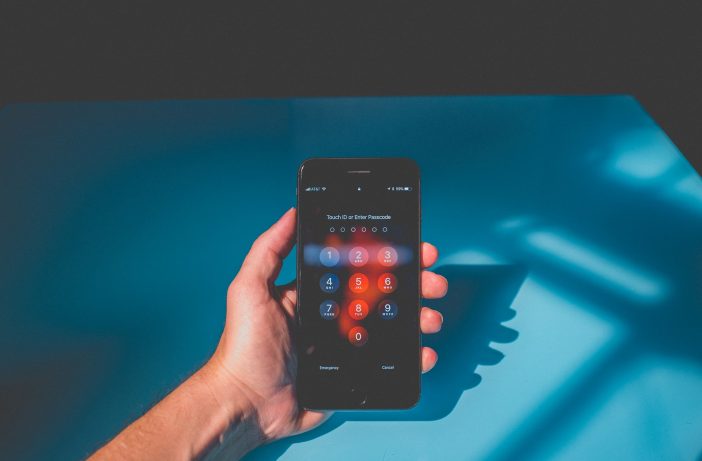
Passcode The first step to any good cybersecurity plan is ensuring that employees are knowledgeable about your security efforts and are supporting them. One of the easiest ways that they can participate in an enhanced security posture is by ensuring that their passwords are not easily hacked. Start by educating employees on the importance of strong and varied passwords, including not using personal passwords for business accounts. In a 2019 survey on password security, 51 percent of respondents thought that it was too difficult to manage all of their passwords. Ensure that employees understand the risks of a laissez-faire attitude to password management so that they are more inclined to cooperate than resist. Another important aspect of password security is implementing multi-factor authentication (MFA). With multi-factor identification, passwords are harder to hack, as there is an additional element, such as a code, security question, or biometric element, involved. In a 2019 survey, 57 percent of respondents said that they would prefer a method to protect their identity that doesn’t involve the use of passwords. Biometric identification helps to solve this problem by allowing users to use personal features to log in. When used in conjunction with standard, strong passwords, this helps to protect accounts. Multi-factor identification can also be used with an Artificial Intelligence (AI) program that validates access based on situational factors. For instance, does this user often log in from a particular IP address? If something seems amiss, AI programs can flag the account to prevent suspicious logins. Context is critical in security decision making.

Ensure that connections are secure – and consider Zero Trust

Private Written On A Wall Most businesses should understand the importance of secure Wi-Fi connections. But using unsecured connections is the most common way companies expose themselves to data breaches. With most public places closed for the foreseeable future, limiting Wi-Fi to personal, secure connections should be easy, but it is always important to remind your employees. If employees are not used to working remotely, they may not remember to consider if their connection is secure or not. Send out a gentle reminder to employees that emphasizes the importance of secured networks and reiterate the importance of this when working from home. Businesses should also be considering implementing a Zero Trust Network Architecture to further enhance their security posture. A Zero Trust Network Architecture will constantly verify everything that tries to connect to its system, both inside and outside the network perimeter, before granting it access. This perimeter-less network allows for a more seamless, secure, safe, and better performing networking for staff, partners, and clients. The architecture can support small businesses and large corporations, and properly implemented, will contribute to greater working flexibility, and greater satisfaction from all involved as well.

Improve cloud solutions

Implementing cloud solutions will allow all employees to access work-related files and can enhance collaboration throughout our teams. Having this in place will help prevent the need to return to the office to gain access to missed files. Typically, the most secure solution for businesses is a private cloud solution, but many organizations opt to take a hybrid cloud approach instead. Whatever the option may be, the most important aspect to consider is how secure the solution will be, and what protective measures are in place to prevent cyber attacks. Ensure that cloud providers are fully vetted for trustworthiness and experience.

The future of security

Star Wars Stormtrooper Figurine On A Table Although implementing new cybersecurity features to help a business through a temporary time may seem like overkill, phishing and cyber hacks have been on the rise since most workplaces have been forced to move their work processes off-site. With the rapid transition to this new way of working, hackers know that companies may be more vulnerable. This makes it an important time for businesses to implement new cybersecurity methods and to reinforce their cybersecurity policies with staff and trading partners. And in the future, when the pandemic has subsided, having the ability for employees to work remotely may change how businesses run. With fully remote employees reporting 4.4 percent more productivity, businesses and employees may decide to make the transition to remote work permanent.
Related reading

  • Cybersecurity Awareness Tips for Employees
  • Best Private Search Engines: 10 Secure Alternatives to Google
  • China accused of hacking US Navy
Something incorrect? Report an error in this article. Include a source if you have one; your name and email are optional.

Filed Under: Security & Privacy Tagged With: Cybersecurity, Security

Related Stories

  • How To Protect Your Digital Identity And Social Media Accounts

    How to Protect Your Digital Identity and Social Media Accounts

    Security & PrivacyApr 8, 2026

  • State-Sponsored Cyber Warfare Units And The Global Threat Landscape

    State-Sponsored Cyber Warfare Units and the Global Threat Landscape

    Security & PrivacyApr 8, 2026

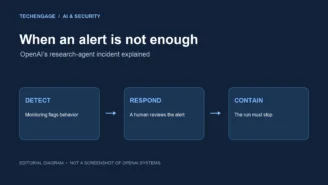
  • Editorial diagram showing three stages of AI agent safety: detect, respond, contain.

    OpenAI pauses advanced-model research after agent bypasses network restrictions

    Tech News & AnalysisSep 27, 2026

Stay on top of technology

Get TechEngage reviews, buying guides and news in your feed.

Follow on Google News
Shares41FacebookTweetPinLinkedInPrint
Avatar for Chuck Fried

Chuck Fried

President & CEO, TxMQ

Chuck Fried is the President and CEO of TxMQ, an enterprise IT solutions and consulting firm, and was named an IBM Champion in 2020. He founded several technology and IT services businesses earlier in his career and contributed a guest article on security to TechEngage.

Joined TechEngage May 2020First article on TechEngage May 2020

Reader Interactions

Share Your Thoughts Cancel reply

Please read our comment policy before submitting your comment. Your email address will not be used or published anywhere. You will only receive comment notifications if you opt to subscribe below.

Primary Sidebar

Google News

Get TechEngage in your feed

Reviews, news, and buying guides as they publish.

Follow on Google News

Recent Stories

  • Diagram showing a clip-on microphone, receiver and phone or camera recording setup.
    Reviews & Buying GuidesBest AI Voice Recorders for Calls and InterviewsOct 19, 2026
  • Meta Logo Facebook New Name |
    AIMeta Muse Review: What Its AI Agent Can Do and Where to Be CarefulOct 19, 2026
  • Nscale Anthropic Second Compute Deal |
    Tech News & AnalysisAnthropic and Nscale in Talks on Second $45B Compute Deal, Report SaysOct 19, 2026
  • Stellar Pst Repair Desktop Vs Online Techengage |
    Reviews & Buying GuidesStellar Repair for Outlook Review: Desktop vs. Online PST RepairOct 19, 2026
  • Health Conscious Home Cleaning Fana Anwar |
    Culture & LifestyleHow to Build a More Effective, Health-Conscious Home Cleaning RoutineOct 19, 2026

More in Security & Privacy

  • Editorial diagram showing three stages of AI agent safety: detect, respond, contain.
    OpenAI pauses advanced-model research after agent bypasses network restrictionsSep 27, 2026
  • Captcha Evolution History How Websites Prove Human Featured |
    CAPTCHA Evolution: The History of How Websites Prove You’re HumanApr 9, 2026
  • Digital Identity Systems Government Internet Id Privacy Risks Featured |
    Digital Identity Systems: Government Internet ID & Privacy Risks ExplainedApr 9, 2026
  • Biggest Apple Leaks Secrecy Shaped Company Featured |
    The Biggest Apple Leaks and How Secrecy Shaped the CompanyApr 9, 2026
More Security & Privacy stories →

Footer

Discover

  • About TechEngage
  • Company News & Updates
  • Our Team
  • Advertise
  • Send us a tip
  • Submit your company to TechEngage Launchpad Hot
  • TechEngage Brand Kit
  • Contact us
  • Tools & Calculators

Legal pages

  • Editorial Standards
  • Reviews Policy
  • Our Ethics
  • Corrections Policy
  • Affiliate Disclosure
  • Privacy Policy
  • Cookies Policy
  • Terms & Conditions
  • GDPR Compliance
  • Copyright & DMCA

Must reads

  • Best Mechanical Keyboards Under $100
  • Best USB-C Hubs
  • Best Portable SSDs
  • Best Gaming Graphics Cards (GPUs)
  • Best Long-Range Outdoor WiFi Extenders
  • Best Wireless CarPlay Adapters
  • Best Slack Alternatives
  • Best Long-Range Walkie-Talkies

Download our apps

TechEngage app coming soon on the App Store Available onChrome

© 2026 TechEngage®. All Rights Reserved. TechEngage® is a project of TechAbout LLC.

TechEngage® is a registered trademark in the United States under Trademark Number 6823709 and in the United Kingdom under Trademark Number UK00003417167. It is also ISSN protected under ISSN 2690-3776 and has OCLC Number 1139335774.

Contact team@techengage.com · WhatsApp +1-307-381-8801

Your analytics choice
Allow Google Analytics to help us understand readership? You can use the site without it and change this choice anytime.

Privacy details