• Skip to primary navigation
  • Skip to main content
  • Skip to primary sidebar
  • Skip to footer
TechEngage

TechEngage®

Hands-on reviews, research-backed buying guides and technology news.

  • News
    • Internet & Social
    • Gadgets
    • Car Tech
    • Business
    • Science & Health
  • Reviews
  • Buying Guides
  • How-to
  • AI
  • Computing
    • Apps
    • Security
    • Gaming
  • More
    • Tools
    • Puzzles
    • Mobile
  • Launchpad
  • Sign in
TechEngage » Science & Health Tech

NASA is sending worms to space to protect astronauts

Avatar for Fazeel Ashraf Fazeel Ashraf Follow Fazeel Ashraf on X Published: Dec 9, 2018 · 6:01 PM ET Updated: Jul 1, 2020 · 2:55 AM ET

NewsNews report. Not a buying guide or hands-on product test.
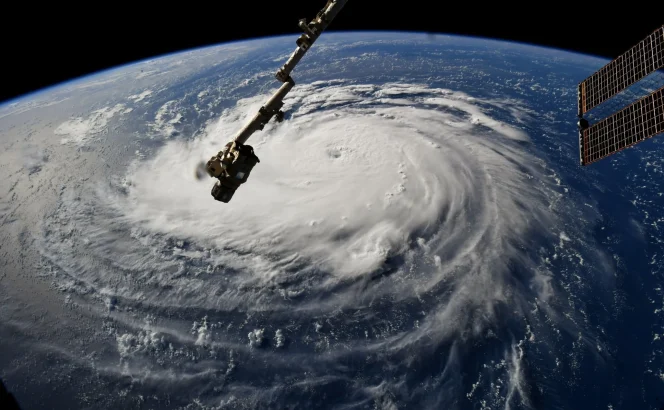
NASA sending worms to Space
Image Credits: NASA
Shares2FacebookTweetPinLinkedInPrint

NASA is sending worms in outer space. This might sound like a plot from a Sci-Fi movie, where everything soon goes into disarray, and the worms start eating the astronauts or something similar. But it’s for a good cause. Scientists will send worms to stop astronauts from losing weight.

Most of us don’t know this, but an astronaut’s physiology can change in space. Their whole physical structure from weight to height can fluctuate while they are in space. Astronauts can lose up to 40 percent of their weight during a 6-month space mission.

This can make astronauts physically incapable of doing their job. These worms are so tiny that they can only be seen under a microscope. The microscopic worms are called C. elegans and are fascinating specimens.

These remarkable “creatures” share some of the vital characteristics as homo sapiens do. In other words, they are part human. This is a good thing, believe it or not. The worms assist in demonstrating some of the ways space can affect muscle and the ability to utilize energy.

This experiment is being carried out by British scientists from Exeter and Nottingham universities and was initiated on 5th December 2018. The worms will be sent to the International Space Station from the Kennedy Space Centre in Florida, USA.

The space station is in orbit around the Earth at a distance of between 205 and 270 miles away. The worms will start multiplying in space, and after growing to adults, in around 6.5 days, they will be frozen and then sent back to Earth.

This is a very vital experiment as I said earlier. It will help scientists figure out why or how astronauts undergo certain physical changes while they are in space. This experiment will also figure out health problems on Earth. This research could even result in new treatment options for diseases such as diabetes.

Space missions are a good depiction of how accelerated aging occurs and the rate at which humans age is connected to a phenomenon known as “insulin signaling.” It is how insulin increases the uptake of glucose into fat and muscle cells. As humans age, our metabolism slows, and so our bodies become less efficient at metabolizing glucose.

If scientists can figure out how spaceflight affects the aging process, they can use more specific treatment options for patients.  Targeted interventions such as drugs will help slow or prevent muscle atrophy from occurring in astronauts.

The researchers will use mutant worms. These mutant worms have a more sensitive response to glucose. They have a high or low uptake of glucose into their muscle cells and can help calculate how their muscles are affected by space.

It’s because of such experiments that many companies that send experiments in space are popping up. Just think of Space Tango, the startup from Lexington Kentucky that is helping scientists grow cannabis plants and its byproducts aboard the International Space Station.

The project is a proper collaboration, and actual team effort went into it. It is supported by The European Space Agency, UK Space Agency, BBSRC, MRC, and Arthritis Research UK.
Related reading

  • Is the James Webb Space Telescope a New Era of Space Exploration or a Quest for a Habitable Planet?
  • Blue Origin sues NASA over the decision to award SpaceX lunar lander contract
  • NASA disclosed a mosaic of images from the James Webb Space Telescope (JWST)
Something incorrect? Report an error in this article. Include a source if you have one; your name and email are optional.

Filed Under: Science & Health Tech, Tech News & Analysis Tagged With: NASA, Space

Related Stories

  • Nasa Disclosed A Mosaic Of Images From The James Webb Space Telescope (Jwst)

    NASA disclosed a mosaic of images from the James Webb Space Telescope (JWST)

    Science & Health TechFeb 21, 2022

  • Is The James Webb Space Telescope A New Era Of Space Exploration Or A Quest For A Habitable Planet?

    Is the James Webb Space Telescope a New Era of Space Exploration or a Quest for a Habitable Planet?

    Science & Health TechFeb 18, 2022

  • Blue Origin Sues Nasa Over The Decision To Award Spacex Lunar Lander Contract

    Blue Origin sues NASA over the decision to award SpaceX lunar lander contract

    Science & Health TechAug 17, 2021

Stay on top of technology

Get TechEngage reviews, buying guides and news in your feed.

Follow on Google News
Shares2FacebookTweetPinLinkedInPrint
Avatar for Fazeel Ashraf

Fazeel Ashraf

Tech & Gaming Editor

Fazeel Ashraf is the Tech and Gaming Editor at TechEngage, covering global tech news, social media, gaming releases, and cybersecurity. An IT graduate of the National University of Sciences and Technology, he contributes to the site's news and features coverage.

Reader Interactions

Share Your Thoughts Cancel reply

Please read our comment policy before submitting your comment. Your email address will not be used or published anywhere. You will only receive comment notifications if you opt to subscribe below.

Primary Sidebar

Google News

Get TechEngage in your feed

Reviews, news, and buying guides as they publish.

Follow on Google News

Recent Stories

  • Eu Digital Fairness Act Illustration |
    Tech News & AnalysisEU Proposes New Controls for Autoplay and SubscriptionsNov 11, 2026
  • Nordvpn Black Friday 2026 Campaign |
    DealsNordVPN Black Friday 2026 Deal Offers Up to 78% Off and 3 Extra MonthsNov 11, 2026
  • Anthropic Ipo Illustration |
    Tech News & AnalysisAnthropic Starts IPO Roadshow With a Proposed $70 to $78 Share PriceNov 10, 2026
  • Australia Ai Safety Illustration |
    Tech News & AnalysisAustralia Plans AI Safety Regulator and Fast Incident ReportingNov 10, 2026
  • Instagram Teen Accounts Illustration |
    Tech News & AnalysisInstagram Expands AI Age Checks for Teen Accounts WorldwideNov 10, 2026

More in Science & Health Tech

  • Word Image 107084 1 |
    Can Weather APIs Help in Keeping the Environment Healthy?Dec 20, 2023
  • Nuclear Power |
    Nuclear Power: A Rise in the EnvironmentSep 30, 2023
  • Psd 0Bd2Aa68 Jpg |
    Apple is Using More Recycled Products than Ever BeforeApr 22, 2022
  • Hd 98240176 Jpg |
    James Webb Space Telescope’s Newest Selfie is a RevolutionMar 21, 2022
More Science & Health Tech stories →

Footer

Discover

  • About TechEngage
  • Company News & Updates
  • Our Team
  • Advertise
  • Send us a tip
  • Submit your company to TechEngage Launchpad Hot
  • TechEngage Brand Kit
  • Contact us
  • Tools & Calculators

Legal pages

  • Editorial Standards
  • Reviews Policy
  • Our Ethics
  • Corrections Policy
  • Affiliate Disclosure
  • Privacy Policy
  • Cookies Policy
  • Terms & Conditions
  • GDPR Compliance
  • Copyright & DMCA

Must reads

  • Best Mechanical Keyboards Under $100
  • Best USB-C Hubs
  • Best Portable SSDs
  • Best Gaming Graphics Cards (GPUs)
  • Best Long-Range Outdoor WiFi Extenders
  • Best Wireless CarPlay Adapters
  • Best Slack Alternatives
  • Best Long-Range Walkie-Talkies

Download our apps

TechEngage app coming soon on the App Store Available onChrome

© 2026 TechEngage®. All Rights Reserved. TechEngage® is a project of TechAbout LLC.

TechEngage® is a registered trademark in the United States under Trademark Number 6823709 and in the United Kingdom under Trademark Number UK00003417167. The publication is identified by ISSN 2690-3776 and OCLC Number 1139335774.

Contact team@techengage.com · WhatsApp +1 307 463 4505

Your analytics choice
Allow Google Analytics to help us understand readership? You can use the site without it and change this choice anytime.

Privacy details