
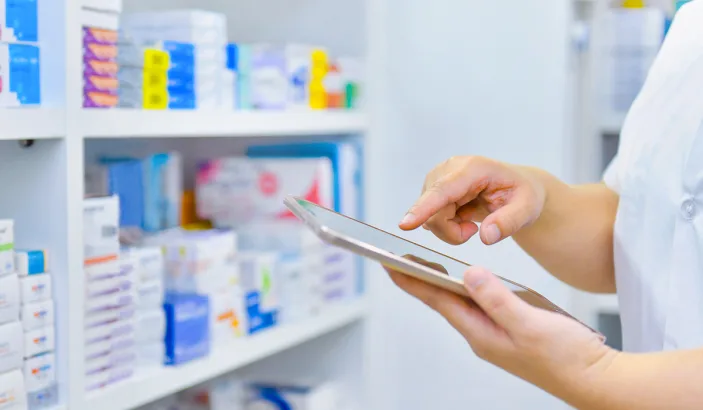
The Federal Association of Pharma wholesalers (PHARGO) is constantly involved at the European level, through its umbrella organization GIRP, in legal, technical, and other developments in Europe and worldwide. It offers, with its subsidiary DATEG, a platform for harmonizing electronic data transmission in cooperation with market partners. The results are defined standards within the pharma industry. All major players in this sector stick to these standards, which are crucial for correct and secure data exchange.
Why is it important to know the standards in Germany?
The regulations and standards concerning electronic document interchange within the pharma industry differ in each country and have their own specifications. In order to ensure error-free document exchange and maintain a high level of efficiency, it is crucial to familiarize oneself with and follow the established standards. In Germany, orders from pharmaceutical wholesalers to pharmaceutical manufacturers are processed using the PHBEST format, which is adapted to the needs and specifics of the industry.
PHBEST is the abbreviation of German “Pharma Bestellung” (EN: pharma order), and is a customized message based on EDIFACT D.96.A. It consists of the header, detail, and summary section. The segments of the order contain, in comparison to regular EDIFACT D.96.A, some different information. Within the PHB segment, the sender and the recipient are identified by their BGA and BFA number (both fields are mandatory). The recipient’s BGA number is only used if the invoice recipient is not identical with the sender of the message, and the billing address is not used. The BGA is a seven-digit number indicating the wholesale branch and can be obtained from PHAGRO in Frankfurt.
Another difference is worth mentioning within the PHP segment, which presents the order items. The article number is indicated by the PZN number, which is responsible for the identification of medicine. Moreover, the article description is indicated, including the dosage form of the medicine. Another pharma-specific document is the UEWAUF “transfer order” (not to be confused with bank transfer, which is worded in the same way in German). This is the exchange of orders that are processed by the manufacturer’s field staff. Other documents, such as dispatch bits of advice and invoices, are also processed using the EDIFACT format.
EDI is a flexible manner for document exchange. It is independent of the industry sector, as it is basically compatible with every type of system within the company. Well-known ERP systems such as SAP, Sage Oracle, Microsoft Navision, etc. and also self-developed in-house solutions are EDI capable in most cases. In addition, the combination of EDI with other types of software such as warehouse management systems, transport management systems, or customer relationship management systems enables companies to take a step forward to uncover and use the full potential of their IT infrastructure.
Most of the big players on the market force their business partners, especially smaller businesses, to be ready for electronic data interchange. Failure to comply with standards, delays, or failure to implement EDI can lead to loss of sales and deterioration of business relationships between pharmaceutical companies.
EDI is beneficial for public health
The EU strives to prevent fraud within the pharma supply chain, where counterfeit medicine does not only reach patients via illegal means but also via a legal supply chain. As a means of data exchange, EDI is a tool that can contribute to preventing the illegal entry of counterfeit medicine into the legal supply chain and help to achieve the goals of EU directive 2011/62/UE.
When all parties within the supply chain (for example, suppliers, manufacturers, and wholesalers) exchange documents via EDI, it allows delivery routes to be traced, from suppliers to wholesalers and retailers. It is also possible to trace which delivery has reached whom and the exact content of that delivery. Moreover, It allows different business partners to exchange basically all types of documents in real-time.
This results in the ability to monitor all exchanged products in real-time, which benefits the supervising authorities and the business itself. This approach will contribute significantly to the elimination of counterfeit medicine in legal circulation.
The exchange of documents via EDI has only benefits for all participants:
Cost reduction
- Fewer operating staff required
- Lower administrative expenses and bureaucracy
Time
- Significant reduction in failures and errors
- Immediate notification of inconsistencies
- Faster payments
- Acceleration of processes
- Reduced office work
- Immediate data transmission
Maintenance of supply chain
- Increased reliability of delivered documents
- Strengthening its own position within the supply chain – many big players in the pharma industry require the use of EDI
Knowledge
- Fulfill and stick to national and international standards and regulations
- Help to prevent the entry of illegal medicine into the legal supply chain
- Data enrichment
- Validation against data from other documents (for example, three-way match)
- Validations of a commercial and mathematical nature
Conclusion
The role of EDI in the pharma industry is increasing steadily, and it is expected that the regulations concerning drug supply will be tightened in the future to protect populations and healthcare systems. Moreover, pharma companies search for optimization opportunities in order to remain competitive on the market. This results in openness towards new solutions and the adaptation of proven and reliable technology – of which EDI has long been an example.
Disclosure: This is a sponsored post, we were compensated to publish this article on our website. Learn more about our disclaimer.


This article I found very innovative and satisfied