


Two years ago, “data scientist” was the job everyone wanted. Today the headlines look different. Generative models do a lot of the lightweight analytics that data scientists used to handle, and the hottest seats at OpenAI, Anthropic, NVIDIA, and Google DeepMind are filled by people with much narrower titles: ML engineer, applied AI researcher, MLOps lead, AI safety analyst. The U.S. Bureau of Labor Statistics still projects roughly 23 percent growth for computer and information research scientists by 2032, and the latest LinkedIn Jobs on the Rise report puts AI-specific roles in the top 5 fastest-growing categories worldwide.
If you are eyeing a career switch into AI in 2026, the good news is that the field has matured. There are clearer paths in. The bad news is that “I took a 12-week bootcamp” is no longer enough on its own. Below are six roles that hire consistently across both Big Tech and the new generation of AI labs, with the realistic salary ranges, the skills you actually need, and the trade-offs nobody talks about in the recruiter pitches.
Table of Contents
1. AI Engineer
An AI engineer is the person companies hire when they say, “we want to use AI, but we don’t actually know how.” The job is part research, part product engineering: figuring out which model fits the problem, wiring it into existing systems, and keeping it running once real users hit it. In practice that looks like building retrieval-augmented generation (RAG) pipelines for an internal knowledge base, fine-tuning open-source models on proprietary data, or stitching together Anthropic, OpenAI, and Google APIs behind a single product surface.
Compensation is among the best in software. Levels.fyi data on AI and ML specialist software engineers shows FAANG-tier roles earning total comp between $220,000 and $480,000 at the L5/Senior level, with staff and principal levels regularly clearing $700,000. Outside Big Tech, expect $140,000–$220,000 for senior IC work in U.S. metros, less in Europe, and significantly less in remote-friendly markets.
The honest trade-off: this role chews through tools faster than any other engineering discipline. The framework you mastered last year is half-deprecated. Expect to read papers, ship prototypes that get killed in a sprint, and explain to non-technical stakeholders why the demo that worked in May breaks in June. If you find that exhilarating, it’s a great fit. If you want stable, predictable work, look elsewhere.
2. Machine Learning Engineer
Machine learning engineers are the people who take a model from “works on a Jupyter notebook” to “serves 50 million predictions a day at p99 latency under 80ms.” It’s the production-engineering counterpart to AI engineering, and it’s where the bulk of new hiring has gone since 2024. The role overlaps heavily with MLOps: you’re expected to know PyTorch and TensorFlow, but you also need to be fluent in Kubernetes, model serving frameworks like Triton or vLLM, vector databases, and the observability stack that catches model drift before customers do.
Where AI engineers are often closer to product, ML engineers tend to sit closer to infrastructure. That has implications for who you’ll work with. Expect a lot of pairing with platform and SRE teams, and less time presenting demos to executives. The compensation arc is similar to AI engineering, with the median sitting slightly lower at less-AI-native companies because the role is older and better understood by HR comp bands.
The hidden challenge of this role in 2026 is fragmentation. There is no single “ML platform” everyone uses. Some shops are deep in SageMaker, others have built internal tooling on top of Ray, others run everything on Vertex AI. Carrying skills between companies takes deliberate work. The engineers who command the highest salaries are typically the ones who can speak fluently across at least two of these stacks and have shipped at meaningful scale at both.
3. Data Engineer
None of the AI roles above function without clean, reliable data feeding them. That’s the data engineer’s job. They build the systems that gather, transform, and stage the unprocessed data your models actually train on, and they own the pipelines that keep production data flowing once a model is live. In a generative-AI shop, that often means building ingestion for unstructured data (PDFs, transcripts, support tickets), running embedding generation at scale, and making sure your vector store doesn’t go stale.
If “AI engineer” is the role with the best headline numbers, “data engineer” is arguably the most resilient. Demand has stayed steady through three rounds of tech layoffs because every model-driven product still needs someone who knows how a CDC pipeline works. Salaries are slightly lower than ML engineering, typically $130,000 to $210,000 for senior IC roles in the U.S., but job stability is higher and the hiring bar is more predictable.
You’ll want strong SQL (still), Python, one orchestration tool (Airflow, Dagster, or Prefect), and at least one cloud warehouse (Snowflake, BigQuery, or Databricks). The new layer in 2026 is feature stores and vector databases: Feast, Pinecone, Weaviate, pgvector. These are no longer optional in AI-heavy roles. For a primer on how AI is reshaping adjacent industries that lean on this kind of data work, our deep dive into AI in healthcare from IBM Watson to today is a good starting point.
4. Robotics Engineer
Robotics is finally having its moment. The convergence of cheap actuators, on-device foundation models, and reinforcement learning from human feedback has pushed humanoid robotics out of the lab and into commercial pilots: Figure 02 is on BMW’s manufacturing floor, Tesla’s Optimus is shipping in limited internal use, and Boston Dynamics’s Atlas has moved into Hyundai logistics work. Industry analyses consistently rank robotics engineering among the fastest-growing AI-adjacent careers through the back half of the decade.
The role itself is genuinely interdisciplinary in a way most software jobs aren’t. You’ll touch mechanical CAD, control theory, ROS 2, embedded C++ for low-level motor control, and Python for the high-level perception and policy layers. Most robotics engineers specialize: perception (LiDAR, depth cameras, visual SLAM), manipulation (grasping and dexterous control), or autonomy (path planning, reinforcement learning). Generalists exist, but specialists get hired faster.
Compensation lags pure-software AI roles a bit, with senior IC robotics engineers typically earning $160,000–$260,000 in U.S. hubs. The industries hiring hardest are warehousing and logistics (Amazon, Symbotic), automotive (Tesla, Waymo, Wayve), industrial automation (ABB, Fanuc with their AI partnerships), and defense. Healthcare robotics is also rebounding after a quieter decade, with applications ranging from surgical assistance to therapy and behavioral support robots. The trade-off here is geography: most senior robotics roles are still on-site because you need to be near the hardware. Fully remote robotics work is rare.
5. Software Engineer (AI Specialization)
This is the role for engineers who don’t want to be researchers but do want to build with AI. Think of it as “software engineer who happens to be very good at integrating LLMs and ML services into normal applications.” Every product team at a midsize company now has at least one of these people, and the demand pulled forward dramatically in 2024–2025 as features like AI search, summarization, and copilots became table stakes for SaaS products.
What separates an AI-specialized software engineer from a generic full-stack hire is hands-on experience with prompt engineering at scale (not the toy-prompt kind, but production prompts with eval suites), function calling and tool use, streaming token responses, RAG patterns, and the cost-and-latency math that comes with making LLM calls in a hot path. Bonus points if you’ve shipped agent systems and can talk honestly about where they break.
Compensation tracks normal software engineering with a modest premium, typically 10–25 percent over equivalent non-AI roles. The career path is excellent because the skills compound: today’s “AI-specialized SWE” becomes tomorrow’s tech lead on a flagship AI product. If you’re already a strong engineer, this is probably the lowest-friction entry point into AI work, and you don’t need a graduate degree to compete. We covered the broader arc of how integrated AI features are shipping inside major products in our walk-through of Microsoft’s Bing AI personality rollout, which is a useful case study in shipping LLM features at scale.
6. Data Scientist
The job description has narrowed since 2024. Where data scientists used to be expected to do everything from ETL to dashboards to ad-hoc modeling, the modern role is much more focused on causal inference, experimentation, and statistical rigor. Companies still need people who can frame an ambiguous business question, design the right experiment, and tell engineering and product whether a launch actually moved a metric. That work hasn’t been automated away — if anything, it’s gotten more valuable as A/B tests have become noisier in a world of personalization.
That said, the entry-level data scientist market has softened meaningfully. Generic “predictive modeling on tabular data” is increasingly handled by AutoML or by ML engineers using out-of-the-box solutions. Junior candidates need to differentiate on domain depth (fintech, biotech, ad tech) or on real causal inference and experimentation chops. Senior data scientists, especially those who can lead experimentation programs end to end, are still in strong demand.
Expected compensation for senior IC data scientists in the U.S. sits around $150,000–$250,000 base plus equity, with staff and principal scientists at top labs occasionally clearing $400,000 in total comp. The skill stack is mostly Python, SQL, a stats library or two, and increasingly tools like Eppo, Statsig, or Optimizely for experimentation infrastructure. Strong communication skills matter more here than in any other role on this list.
How to break into AI in 2026
The honest path-finding question is not “what do I study?” but “what kind of AI work do I actually want to do?” Each of the six roles above has a different on-ramp. Researcher and applied-research positions still favor PhDs and people with publication track records. ML engineering and data engineering are accessible to working software engineers willing to skill up. Software engineers who want to add AI to their toolkit can do it without a career change. Robotics needs hardware-aware experience that takes longer to build.
Before you spend a year (or three) on a degree, talk to people doing the role you want. Reach out cold on LinkedIn. Ask three questions: What does your typical day look like? What did you wish you’d learned earlier? What kind of candidate gets hired in your team right now? You’ll save yourself months of generic study by getting specific intel.
Do you actually need a degree?
It depends on the role. For research scientist and applied research positions, the answer is still yes — at top labs, a PhD remains the default credential, and a strong publication record carries even more weight than the degree itself. For ML engineering, AI engineering, and software engineering with AI specialization, a bachelor’s in computer science, math, or a related field is the common path, but it’s no longer the only one. Self-taught engineers with strong portfolios and shipped projects are hired regularly, especially at startups and AI-native companies.
If you’re already employed in software and want to pivot, a master’s in machine learning or AI from a respected program (Georgia Tech’s OMSCS, UT Austin’s online MSAI, Stanford’s HCP track for AI) can be a strong investment without forcing you to leave your current job. For data engineering and data science, a quantitative bachelor’s plus a clean portfolio is usually enough. For robotics, the bar is higher: most senior roles expect graduate-level coursework in control theory, kinematics, or perception, even when a master’s degree isn’t strictly required on paper.
The skills hiring managers screen for
Beyond a degree, what matters is what you can demonstrate. Two candidates with identical resumes will be filtered very differently based on what’s on their GitHub and what they can talk about in a 45-minute technical screen. Build things that show you understand the failure modes, not just the happy path. A side project that explains why your RAG system hallucinated and how you fixed it is more impressive than ten projects that “successfully ran the tutorial.”
The certifications that still carry weight in 2026 are narrower than the list circulating in older career guides. These are the ones I’d actually invest time in:
- DeepLearning.AI Machine Learning Specialization (Andrew Ng): still the cleanest foundation for ML basics
- DeepLearning.AI and Anthropic AI Engineering and Generative AI courses: current to 2026 tooling
- Google Cloud Professional Machine Learning Engineer: useful if your target shop runs on GCP
- AWS Certified Machine Learning Specialty: same logic, AWS shops
- NVIDIA Deep Learning Institute certifications: particularly relevant if you’re going down the GPU/CUDA path
- MIT xPRO Applied Generative AI for Digital Transformation: heavier on strategy and applied use cases for engineers moving into lead roles
Skip generic “AI for Beginners” courses if you already write production code. They were valuable in 2019. They are not valuable now.
Landing your first AI role
The “junior ML engineer” market is genuinely tighter than it was three years ago. The good news is that adjacent paths still work. If you’re a working software engineer, ask your manager for AI-adjacent project work and get something shipped on the production side of your team. Two quarters of evidence that you’ve integrated an LLM into a real product gives you a much stronger resume than a pure-portfolio play.
If you don’t have that lever, the next-best paths are: contribute to a meaningful open-source AI project (vLLM, LangChain, llama.cpp, Ollama, or a model evaluation toolkit), publish a deep technical write-up on something nuanced you’ve learned, or take on a freelance AI implementation project for a small business. Hackathons can help, but the bar has risen. A weekend hackathon project alone rarely moves the needle in 2026 the way it did in 2022.
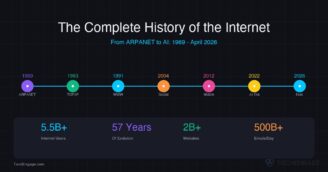
Finally, be patient with the timeline. Most engineers I’ve watched make this switch successfully spent six to twelve months on focused upskilling and project work before landing the role they wanted. Anyone telling you they got an AI engineer job after a four-week course is either selling something or is very lucky. Plan for the realistic version. For broader context on how the AI revolution itself unfolded, our complete history of the internet from ARPANET to AI traces the bigger arc your career is going to be part of.
Frequently Asked Questions
Which AI job has the best salary in 2026?
Senior AI engineers and ML engineers at FAANG-tier companies and AI-native labs (OpenAI, Anthropic, Google DeepMind) consistently top the list, with total comp routinely between $400,000 and $700,000 at the staff level. Robotics engineers and applied-research scientists at top firms are competitive but slightly lower on average.
Can I get an AI job without a computer science degree?
Yes, especially for AI-specialized software engineering, ML engineering, and applied AI work. A strong portfolio of shipped projects, a focused open-source contribution, and the ability to talk fluently about model behavior in a technical interview matter more than the credential. Research roles still skew heavily toward graduate degrees.
Is data science still a good career in 2026?
For senior practitioners with strong causal-inference and experimentation skills, yes. These roles remain in high demand. For generic entry-level predictive modeling on tabular data, the market has softened significantly because AutoML and out-of-the-box ML tooling now handle a lot of that workload.
How long does it take to switch into an AI engineering role?
For experienced software engineers, six to twelve months of focused upskilling, side projects, and on-the-job AI integration work is realistic. For complete career changers, plan for at least 18 to 24 months including formal education or a structured master’s program.
Are AI jobs going to be automated away by AI itself?
The roles most exposed to automation are the ones doing repetitive analytics or boilerplate model training, typically junior data science work. Senior AI roles that involve judgment, system design, novel research, and stakeholder communication remain firmly human-led. The market is shifting faster than it is shrinking.
Which AI role is best for someone with a non-technical background?
The best entry points for non-technical professionals are AI product manager, AI operations or program manager, and AI policy or compliance roles, especially as regulation expands in the EU and U.S. Adjacent fields like digital identity and government technology are also hiring for AI policy expertise. These positions value domain expertise, communication, and structured thinking over coding ability.



Share Your Thoughts