

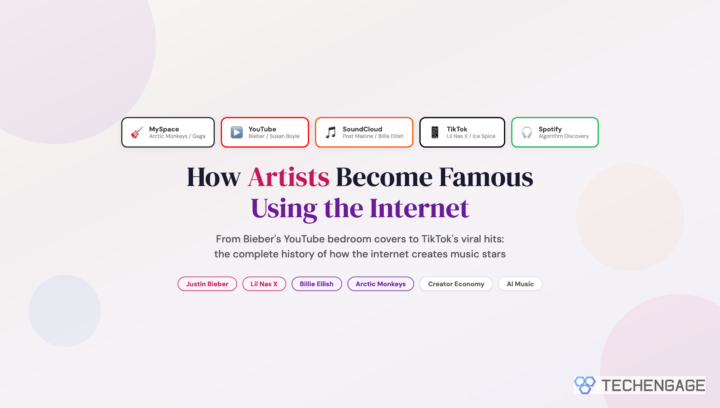
The music industry has undergone a seismic transformation over the past two decades. Where aspiring artists once needed record label connections, radio play, and expensive studio time to reach audiences, the internet has systematically dismantled every traditional gatekeeper. Each platform era brought its own discovery mechanisms, success stories, and cautionary tales.
What started with MySpace band pages in the mid-2000s has evolved into a sprawling ecosystem where a 15-second TikTok clip can generate more career momentum than a decade of playing local venues. This is the complete story of how the internet creates music stars, from bedroom covers to billion-stream careers.
The MySpace Era (2004-2009): Where It All Started
Before YouTube dominated video and before streaming existed, MySpace was the undisputed launchpad for independent musicians. The platform’s customizable profile pages allowed artists to embed music players directly, giving fans instant access to tracks without needing a record deal or distribution agreement.
The Arctic Monkeys became the first major band to ride MySpace to mainstream fame. Sheffield teenagers were sharing the band’s demos on the platform throughout 2004 and 2005, building a grassroots following that record labels couldn’t ignore. Their debut album Whatever People Say I Am, That’s What I’m Not became the fastest-selling debut in UK chart history in January 2006. The band famously claimed they didn’t even set up their own MySpace page; fans did it for them.
Lily Allen followed a similar trajectory. After being dropped by a label, she uploaded demos to MySpace in 2005 and built such a dedicated following that labels came back to her. Her debut album Alright, Still went platinum in multiple countries.
Born Stefani Germanotta, Lady Gaga leveraged MySpace to get noticed by Island Def Jam Music Group at age 19. Her manager Troy Carter has openly confirmed that MySpace was instrumental to her early career, helping her build a fanbase before her debut single “Just Dance” even hit radio in 2008.
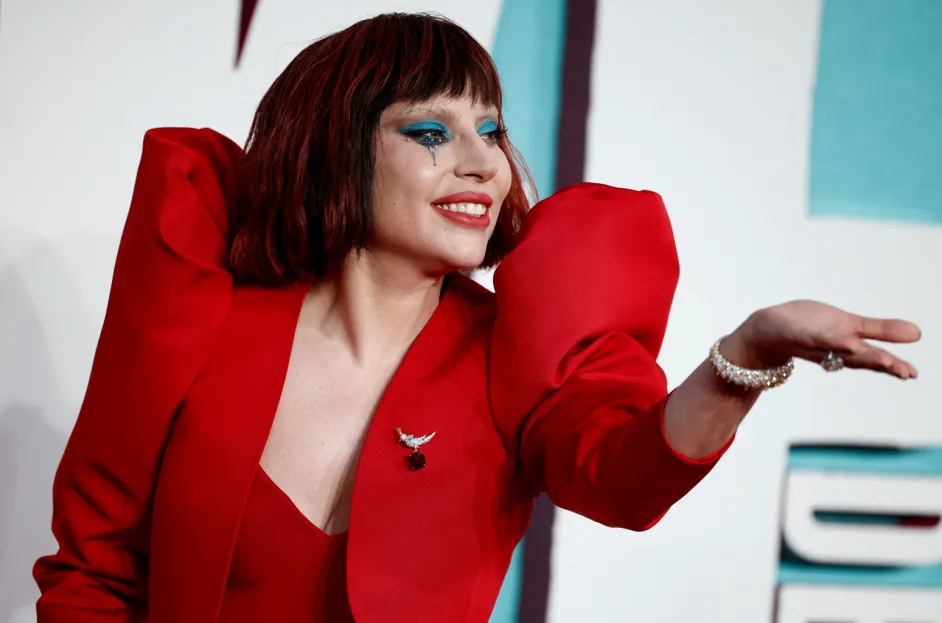
Carter later admitted in a 2010 interview that Gaga’s music videos were made specifically for YouTube consumption, recognizing the platform shift that was already underway. As Carter bluntly stated about MySpace’s declining relevance by that point: the audience had moved on.
The YouTube Revolution (2007-2015): Bedroom to Billboard
YouTube fundamentally changed the equation. For the first time, visual performance talent could reach millions without a television appearance or concert tour. The platform’s recommendation algorithm and related videos sidebar became the most powerful music discovery engine the world had ever seen.
Justin Bieber: The Original YouTube Star
The most consequential YouTube music discovery happened in late 2007. A 13-year-old Justin Bieber from Stratford, Ontario placed second in a local singing competition covering Ne-Yo’s “So Sick.” His mother Pattie Mallette uploaded the performance to YouTube so friends and family could watch. She kept uploading cover songs to his channel, and the subscriber count grew steadily.
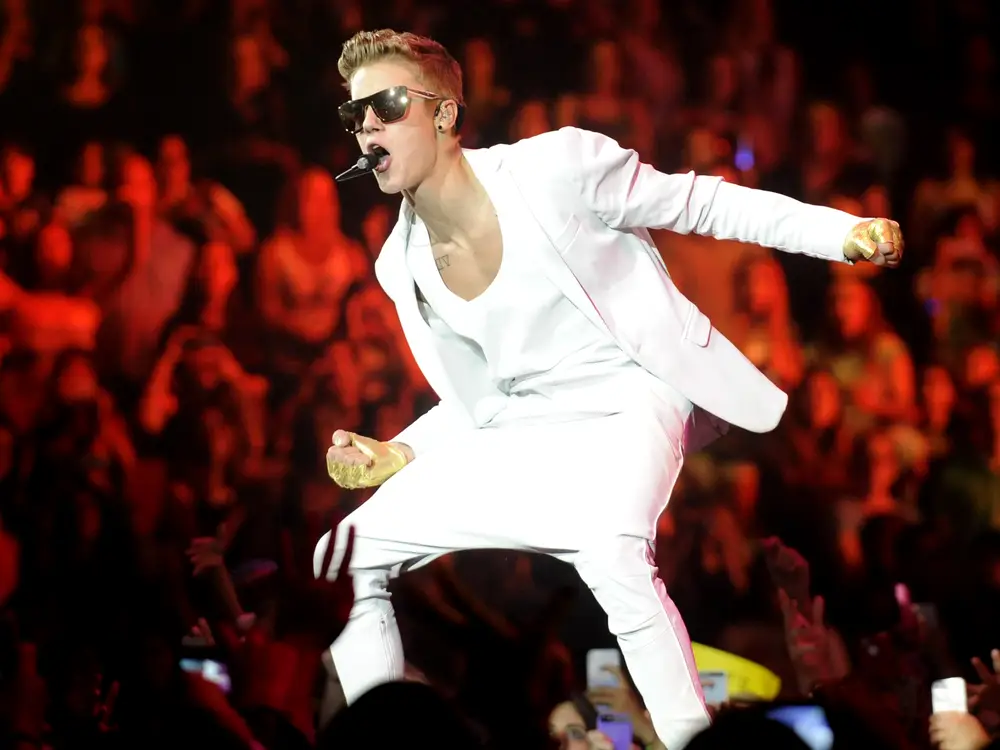
The pivotal moment came when former So So Def marketing executive Scooter Braun accidentally stumbled upon one of Bieber’s videos. Braun tracked down the teenager’s school, contacted his mother, and eventually convinced her to let Justin fly to Atlanta for demo recordings. Through Braun’s connections, Bieber auditioned for Usher and signed with Island Records in 2008. Within months, his face was everywhere online.
Bieber’s rise established the template that countless artists would follow: build an authentic audience through consistent content, get discovered by industry insiders browsing the platform, then leverage that organic following into a traditional record deal. By 2010, Bieber was one of the most followed accounts on Twitter, and he personally managed his social media presence, spending two hours daily interacting with fans. That direct connection between artist and audience became a permanent feature of the music industry.
Greyson Chance and the Viral Performance Formula
If Bieber proved that YouTube could launch careers, Greyson Chance demonstrated just how fast it could happen. In 2010, a video of the 12-year-old performing Lady Gaga’s “Paparazzi” at a sixth-grade music festival was uploaded to YouTube. The performance went viral almost immediately, eventually accumulating over 70 million views.

The viral explosion led to an appearance on The Ellen DeGeneres Show, which was so inspired by Greyson’s talent that DeGeneres launched her own record label, “eleveneleven,” with Greyson as her first signing. Within weeks, a regular kid was represented by Madonna’s manager Guy Oseary and Lady Gaga’s manager Troy Carter.
Susan Boyle: Proof That Talent Alone Could Break Through
Not every YouTube-fueled career relied on youth appeal. Susan Boyle shocked the world in April 2009 when her audition on Britain’s Got Talent was uploaded to YouTube. Singing “I Dreamed a Dream” from Les Miserables, Boyle became the fastest viral sensation the platform had seen at that point.
Within 72 hours, the audition clip had been viewed 2.5 million times. Nine days later, various clips and interviews featuring Boyle had accumulated over 100 million views. YouTube later named her audition the most-watched video of 2009 with over 120 million views. She was signed to Syco/Columbia Records, and her debut album became a global bestseller. Without YouTube’s viral distribution, Boyle’s remarkable voice would likely have remained a local secret.
PSY, Shawn Mendes, and the Expanding YouTube Pipeline
YouTube’s role in music discovery only accelerated through the early 2010s. South Korean artist PSY released “Gangnam Style” in July 2012, and it became the first YouTube video to reach one billion views by December of that year. The song demonstrated that YouTube could bypass language barriers entirely, turning a Korean-language track into a global phenomenon without traditional Western radio play.
Meanwhile, platforms adjacent to YouTube were creating their own pipelines. Shawn Mendes built his following on Vine, the six-second video platform, posting short covers that consistently went viral in 2013. His Vine following translated to YouTube subscribers, which translated to a record deal with Island Records by age 15. The multi-platform strategy was becoming the norm.
The SoundCloud Rap Era (2015-2019): DIY Distribution
SoundCloud offered something YouTube didn’t: frictionless audio uploads with social sharing built in. Artists could release tracks without music videos, without labels, and without any gatekeeping whatsoever. The platform spawned an entire subgenre called “SoundCloud rap” that reshaped hip-hop and pop music permanently.
Post Malone uploaded “White Iverson” to SoundCloud in February 2015. The track accumulated over a million plays within a month, attracting attention from Republic Records. By August, he had a record deal, and the song peaked at number 14 on the Billboard Hot 100. Post Malone has since become one of the most commercially successful artists of his generation, with multiple diamond-certified singles.
Chance the Rapper took the SoundCloud model further by proving that an artist could achieve mainstream success without ever signing a traditional record deal. His 2016 mixtape Coloring Book, distributed for free on SoundCloud and Apple Music, won three Grammy Awards. Chance demonstrated that streaming platforms could replace labels entirely for distribution.
Billie Eilish uploaded “Ocean Eyes” to SoundCloud in 2015 when she was 13 years old. The track, produced by her brother Finneas in their childhood bedroom, went viral and led to a deal with Darkroom/Interscope Records. By 2020, Eilish had swept the Grammy Awards, winning all four major categories at age 18. Her trajectory from bedroom SoundCloud upload to global superstardom became the defining success story of the platform era.
The TikTok Era (2019-2026): 15 Seconds to Stardom
TikTok compressed the discovery timeline from weeks to hours. The platform’s algorithm, powered by machine learning that analyzes watch time, replays, and shares, can push a completely unknown song to millions of users overnight. Unlike YouTube, where viewers actively search for content, TikTok’s For You Page serves music to passive consumers, making accidental discovery the primary mechanism.
Lil Nas X proved TikTok’s power definitively in late 2018 and early 2019. He uploaded “Old Town Road” to various platforms and strategically promoted it on TikTok through meme-friendly content. The track went viral as the soundtrack to the “Yeehaw Challenge,” where users transformed into cowboys. “Old Town Road” spent a record-breaking 19 weeks at number one on the Billboard Hot 100, surpassing records held by Mariah Carey and Luis Fonsi.
Olivia Rodrigo’s “drivers license” dominated TikTok in January 2021, partly fueled by the personal drama narrative that users constructed around the song. It broke the Spotify record for most streams in a single day and propelled her debut album SOUR to massive commercial success. Rodrigo’s story illustrated how TikTok users don’t just discover music; they create narratives around it that amplify reach exponentially.
UK artist PinkPantheress built her entire early career on TikTok, posting snippets of unreleased bedroom productions and letting viral demand dictate which songs she would finish and release. Ice Spice went from a Bronx college student to one of hip-hop’s biggest names after “Munch (Feelin’ U)” went viral on the platform in 2022. Doja Cat, who had already gained some attention from a viral YouTube video, saw her career explode when “Say So” became a TikTok dance trend in late 2019, eventually reaching number one on the Billboard Hot 100.
By 2025, the TikTok-to-label pipeline had become so established that major labels employed full-time TikTok scouts, and artists openly crafted songs with TikTok virality in mind. The 15-second hook became as commercially important as the radio-friendly chorus once was.
Spotify and Algorithm Discovery: The Passive Pipeline
While social platforms require artists to create content alongside music, Spotify’s algorithmic playlists created a purely passive discovery channel. Discover Weekly, Release Radar, and editorial playlists like RapCaviar and Today’s Top Hits became kingmakers capable of adding millions of streams to a track overnight.
Spotify reported in 2025 that over 70% of listening on the platform is algorithm-driven rather than direct searches. For independent artists, landing on an algorithmic playlist can be career-defining. The platform’s data tools, available through Spotify for Artists, allow musicians to track real-time geographic and demographic data about their listeners, enabling targeted touring and marketing decisions that were previously only available to label-backed acts.
Apple Music, Amazon Music, and YouTube Music have developed similar algorithmic recommendation systems, but Spotify’s first-mover advantage in playlist culture has made it the default discovery platform for many listeners. The competition between these services has generally benefited artists by providing multiple algorithmic pathways to audience growth.
AI-Generated Music: The 2024-2026 Controversy
The latest disruption to internet music fame is artificial intelligence. Tools like Suno and Udio can generate full songs from text prompts, raising existential questions about what “becoming famous using the internet” even means when the internet itself can create the music.
In April 2023, an AI-generated track mimicking Drake and The Weeknd called “Heart on My Sleeve” went viral across platforms before being removed for copyright violations. The incident forced the music industry to confront AI head-on. By 2025, major platforms including Spotify, YouTube, and TikTok had implemented AI content labeling requirements, and the Recording Industry Association of America (RIAA) was actively pursuing legal action against AI music generators that trained on copyrighted material.
The debate remains unresolved in 2026. Some artists have embraced AI as a production tool, using it for beat generation and demo creation. Others view it as an existential threat. What’s clear is that AI hasn’t replaced the human element that drives virality; audiences still connect with authentic stories, personalities, and performances. The technology has, however, flooded platforms with AI-generated content, making organic discovery harder for independent human artists.
The Creator Economy: Patreon, Bandcamp, and Direct Monetization
Not every internet-famous musician follows the traditional path to a record deal. The creator economy has enabled artists to build sustainable careers by monetizing their audiences directly, bypassing labels entirely.
Patreon allows musicians to offer subscription-based access to exclusive content, early releases, and behind-the-scenes material. Artists like Amanda Palmer and Pomplamoose have built six-figure annual incomes through the platform without label support. Bandcamp provides a direct-to-fan sales platform where artists keep the vast majority of revenue, and its “Bandcamp Friday” events (where the platform waives its revenue share) have collectively generated hundreds of millions of dollars for independent artists since 2020.
YouTube’s Partner Program, TikTok’s Creator Fund (now replaced by the Creativity Program), and Spotify’s evolving royalty structures have created multiple income streams that didn’t exist a decade ago. In 2026, a mid-tier independent artist with 500,000 monthly Spotify listeners, an active TikTok presence, and a modest Patreon following can potentially earn a livable income without ever signing a record deal. That was unthinkable in 2010 when Bieber’s path to a record label was the only viable model.
What Has Changed and What Hasn’t
Looking across two decades of internet-driven music discovery, certain patterns persist. Raw talent still matters, but it’s no longer sufficient. Artists need content creation skills, platform literacy, and often a willingness to engage with audiences in ways that previous generations of musicians never had to consider. The barrier to entry has dropped to essentially zero; anyone with a phone can upload music. But the barrier to attention has arguably increased, because the competition for algorithmic visibility is fierce.
The speed of discovery has accelerated dramatically. The Arctic Monkeys’ MySpace-fueled rise took roughly 18 months. Bieber’s YouTube journey from first upload to record deal spanned about a year. Ice Spice went from unknown to major-label artist in a matter of weeks. That compression creates opportunities but also instability. Many TikTok-viral artists struggle to convert a single viral moment into sustained careers.
What hasn’t changed is the fundamental human desire to discover and champion new music. Whether it was MySpace users sharing Arctic Monkeys demos, YouTube viewers stumbling on Susan Boyle’s audition, or TikTok users choreographing dances to “Old Town Road,” the internet’s greatest contribution to music has been giving audiences the power to decide who becomes famous. The gatekeepers haven’t disappeared entirely, but the gates are permanently open.
Which platform has launched the most music careers?
YouTube has launched more music careers than any other single platform, including Justin Bieber, Shawn Mendes (via Vine to YouTube), Ed Sheeran, and countless others since 2007. However, TikTok has surpassed YouTube in speed of discovery since 2019, with artists like Lil Nas X, Olivia Rodrigo, and Ice Spice reaching mainstream success within weeks rather than months.
How was Justin Bieber discovered on YouTube?
Justin Bieber was discovered in late 2007 when his mother uploaded videos of him singing cover songs to YouTube. Former So So Def marketing executive Scooter Braun accidentally stumbled upon the videos, tracked down Bieber’s school, and eventually arranged for him to fly to Atlanta for demos. Through connections with Usher, Bieber auditioned for and signed with Island Records in 2008.
How does TikTok help musicians become famous?
TikTok’s algorithm pushes content to users based on engagement metrics like watch time and replays, meaning a song snippet can reach millions of people who never searched for it. Songs go viral when users create videos using them as soundtracks, particularly through dance challenges and meme formats. Major labels now employ full-time TikTok scouts to identify trending tracks and sign artists.
Can artists become successful without a record label in 2026?
Yes. Platforms like Spotify for Artists, Patreon, Bandcamp, and YouTube’s Partner Program allow independent artists to distribute music, build audiences, and earn revenue without label support. Chance the Rapper proved this model by winning three Grammys without ever signing a traditional deal. In 2026, mid-tier independent artists with diversified platform income can sustain full-time music careers.
How is AI affecting music discovery on the internet?
AI music generators like Suno and Udio can create full songs from text prompts, flooding platforms with content and making organic discovery harder for human artists. Major platforms now require AI content labeling. While AI hasn’t replaced the human connection that drives virality, it has complicated the landscape. Some artists use AI as a production tool, while others view it as a threat to authentic musicianship.
What was the SoundCloud rap era?
The SoundCloud rap era (roughly 2015-2019) was a period when SoundCloud’s frictionless upload system allowed hip-hop and pop artists to release music without labels or music videos. Artists like Post Malone, Chance the Rapper, Billie Eilish, and XXXTentacion built massive followings on the platform before transitioning to mainstream success. The era proved that audio-only platforms could launch careers as effectively as video platforms.


And the million question: what they have on common? All sucks.
And the million question: what they have on common? All sucks.
“Nevertheless, his musical aptitude cannot be denied.”
Yes it can. It MUST be denied.
“Nevertheless, his musical aptitude cannot be denied.”
Yes it can. It MUST be denied.
Actually any musical talent he has can be denied. He has one thing going for him people think he is cute, that is is. Put a love son with “Baby” and some marketing and you have have half of the talentless hacks on the radio today add Sex, gun, thugs, cash and alcoholic beverages to that list an you got all the no talent hacks on the radio today and 85% off ALL music on the radio.
You do not need talent you just need marketing, a catchy cookie cuter tune and a massive amount of luck.
want proof? as any Beiber fan what they like about him you will get something like you will get something like “OMG IS IS SO CUTE SQUEEEEE AND HIS HAIR IS AWESOME I WANT TO MARRY HIM! HE LOVES ME” never “I like (biber song here) is is so original, he has talent” oh an with farmvill getting all the tweens Myspace is dead.
Actually any musical talent he has can be denied. He has one thing going for him people think he is cute, that is is. Put a love son with “Baby” and some marketing and you have have half of the talentless hacks on the radio today add Sex, gun, thugs, cash and alcoholic beverages to that list an you got all the no talent hacks on the radio today and 85% off ALL music on the radio.
You do not need talent you just need marketing, a catchy cookie cuter tune and a massive amount of luck.
want proof? as any Beiber fan what they like about him you will get something like you will get something like “OMG IS IS SO CUTE SQUEEEEE AND HIS HAIR IS AWESOME I WANT TO MARRY HIM! HE LOVES ME” never “I like (biber song here) is is so original, he has talent” oh an with farmvill getting all the tweens Myspace is dead.
JB,
Have your testicles descended?
JB,
Have your testicles descended?
The internet is a very powerful form of media that cannot be fought and when used well and effectively brings great, dramatic, and wonderful results and also do wondrous things in one’s life or in whatever that you are doing.
The internet is a very powerful form of media that cannot be fought and when used well and effectively brings great, dramatic, and wonderful results and also do wondrous things in one’s life or in whatever that you are doing.
all you people need to stop hating on Justin Bieber just cuz u ainc cute , popular, and to much to list……
all you people need to stop hating on Justin Bieber just cuz u ainc cute , popular, and to much to list……