
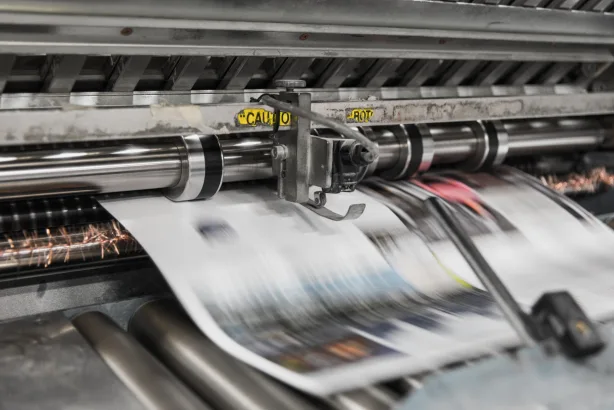
News circulates around the world all day, every day. Reporters spend hours writing everything they need to make the top story, which includes some people working late in case anything comes in at the last minute. As the day draws to a close, the paper is proofed, designed, and printed before it’s distributed.
It’s a result of hours of research, and sometimes a story can take days, weeks, or even months to finalize and take to print. Photoshoots, phone calls, and tough conversations make up the interviews included in a paper, and there are plenty of sections to read through.
The newspaper article layout varies depending on the story and section, but the biggest story is usually the front page lead, and that’ll have a double feature. You’ll usually see the main story with a large picture and a snippet of the story on the front, as you open the paper, you’ll find the big story taking up either one page or a double-page spread – depending on the length.
After the articles are written, headlines will be selected alongside a series of pictures before they get drawn up. Once the writer and designer have agreed on how it looks, they’ll start putting the pages together.
Once politics, news, sport, showbiz, TV, lifestyle, and travel are covered, the paper is sent to be printed in batches – and it’s likely they’ll be distributed by a newspaper printer. These printing machines work on an industrial scale – they don’t use your typical ink and toner cartridges – and print out thousands of copies. This means it’s so important everything in the paper is checked and correct before it reaches this stage, an error or misprint can lead to huge additional costs should you need to reprint.
The paper is printed in chronological order to ensure that once they’re picked up, they can be folded and put into piles to get ready to go. Papers are mass-produced, with most being able to print 1,000 in one go.
Once they’re loaded into batches, they’re put into lorries and sent out to different stores in the UK. Most publications will have particular distributors to take the newspapers to different locations. For example, Menzies Distribution notes that they distribute 30 million newspapers to around 25,000 retailers.
National newspapers have transformed since the rise of social media, and stories are ranked in importance. Some things may come out early in the morning, and by the time it comes to printing that evening, the time has passed, and it’s no longer a big news story. Before the days of social media, a big story would have been considered current for more than 24 hours.
Newspaper demographics have transformed substantially since the rise of social media. While their monthly readership consists of 29.286m overall according to Press Gazette, that consists of both online and print combined. As digital readership goes up, the popularity of physical paper continues to decrease.
Although publications are still reaching millions of people each month, it’s nothing on their previous record-breaking numbers – but the slack is definitely getting picked up by their digital partners.



Share Your Thoughts