

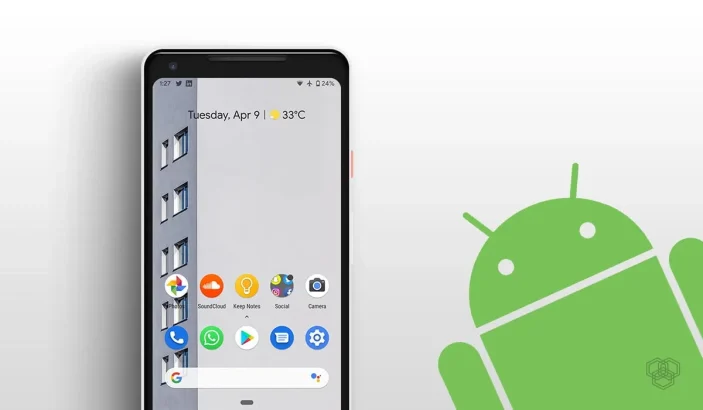
“Stock Android” in 2026 means something different than it did the Nexus era. The Pixel UI has gained features and visual flourishes that the original Nexus-era stock Android deliberately avoided. Samsung’s One UI now ships features Pixel does not (DeX, better multitasking, better camera RAW pipeline). The case for chasing a stock-Android look on a non-Pixel phone has weakened — but the case for chasing the Pixel’s speed and the Pixel’s Material You theming on a non-Pixel device is stronger than ever. This guide walks through how to do that without rooting, using only Play Store apps and built-in settings.
One thing up front: the term “stock Android” has effectively been replaced by “Pixel UI” since around Android 13. Google’s phones have stopped pretending to be a minimalist reference design and now lean into Material You’s expressive theming. The honest 2026 framing is “make your phone look and feel like a Pixel” — that’s the target most people actually want when they say stock.
Contents
Why bother going Pixel-like in 2026
Three reasons still hold up in 2026, even after a decade of OEM-skin improvement:
- Update cadence. Pixel devices get Android monthly security patches the day Google ships them and the major version on launch day. Samsung is now competitive (typically within a week of release for the One UI version that maps to the new Android major), but most other OEMs lag by months. Google’s Android Security Bulletin page shows the cadence in detail.
- Less aesthetic noise. OEM skins have become more opinionated, not less. Xiaomi’s HyperOS, OnePlus’s OxygenOS-with-ColorOS-DNA, Honor’s MagicOS, and Vivo’s FunTouch OS all impose strong visual choices. If those choices clash with how you want your phone to look, the Pixel UI is the cleanest alternative — and it stays out of your way.
- Fewer duplicate apps. A Samsung Galaxy ships with two browsers, two phone apps, two messaging apps, two galleries, two assistants. The Pixel ships with one of each. For users who do not want to maintain “which of these am I supposed to use” mental overhead, the simplification is real.
The honest counter-argument: One UI on a Galaxy S24 or S25 is genuinely excellent in 2026. Samsung DeX, the camera Pro mode, the Note line’s S Pen integration, and One UI’s multitasking polish are features the Pixel UI does not match. The Pixel-like-on-Samsung approach is for users who specifically want simplicity over Samsung’s feature breadth.
1. Replace the launcher
The launcher is the home screen and app-drawer manager — the most visible layer of the phone’s personality. Two options that genuinely deliver a Pixel-like experience without root:
- Pixel Launcher — the official Google launcher. On Android 13+ devices, you can install it from the Play Store. If Play Store says incompatible, sideload via APKMirror — they maintain the latest signed builds. APKMirror is a legitimate APK archive (not a modded-APK site); it serves the same files Google publishes.
- Nova Launcher — the long-standing third-party launcher. Acquired by Branch in 2022, which made some users wary, but the app itself remains the most customizable Pixel-like option. The Prime version ($4.99 one-time) unlocks gestures, custom icon shapes, and per-folder settings. Install Nova Launcher from Google Play.
Pick Pixel Launcher for the authentic Pixel UX. Pick Nova for Pixel-look-plus-power-user-features. Both work without root.
2. Install the Google app suite
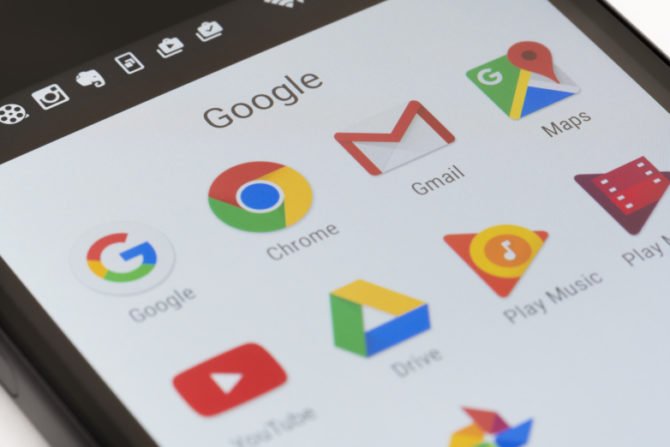
The Pixel comes with a curated set of Google apps for the core OS functions. Install them and set them as defaults to replicate the experience. None of these need root.
- Gboard — Google’s keyboard, with on-device Smart Compose, multilingual support, and the Gemini Nano grammar check on supported devices. Install Gboard from Play Store.
- Messages by Google — supports RCS (the SMS successor), end-to-end encryption between Messages users, web client, and Magic Compose. Install Messages from Play Store.
- Contacts by Google — clean contact list with duplicate merging and Google account sync. Install Contacts from Play Store.
- Phone by Google — Pixel’s dialer with Call Screen, Hold for Me, and Direct My Call (in supported regions). Install Phone from Play Store.
- Calculator — the simple Material You calculator. Install Calculator from Play Store.
- Google Camera (GCam) — the official Pixel Camera app is not available outside Pixel hardware on Play Store. The community-maintained GCam ports at celsoazevedo.com/files/android/google-camera have ports for most modern Android phones. Install with caution — GCam ports rely on individual maintainers and can introduce camera-stack bugs.
- Google Assistant + Gemini — Google migrated from Google Assistant to Gemini as the default assistant across most devices in 2024. The Gemini app replaces Assistant on supported devices; older Android versions still use the Google Search app.
- Google Wallpapers — the rotating curated set Pixel ships with. Install from Play Store. For broader options, our roundup of the best wallpaper apps for Android covers alternatives.
After installing each app, set it as the default under Settings → Apps → Default apps. Some manufacturers (notably Samsung and Xiaomi) make this slightly harder by burying the option deeper, but it always works without root.
3. Apply Material You theming
Material You is the dynamic-colour design system Google introduced with Android 12 in 2021. It pulls a colour palette from your wallpaper and applies it across the system UI, notification panel, and Material You-aware apps. The Pixel’s distinctive 2026 look is Material You with the seasonal wallpapers.
To enable Material You theming on a non-Pixel running Android 12 or later:
- Settings → Wallpaper & style (the menu name varies slightly per OEM)
- Enable Themed icons — on Pixel and Pixel-faithful skins this also re-themes third-party app icons that publish a monochrome variant
- Pick a wallpaper with a strong dominant colour — Material You picks the palette from it
- Toggle Dynamic colours on
Samsung’s One UI 6 and OnePlus’s OxygenOS both implement Material You-style dynamic theming in 2026, although each adds their own flair. If you want the precise Pixel implementation, the Pixel Launcher (above) plus a fresh Material You-aware icon pack is the closest non-root path. Lawnchair Launcher is a strong open-source alternative that hews even closer to the Pixel theming behaviour than Nova does.
4. Strip the bloatware
The pre-installed OEM apps you do not want are the largest single thing standing between your phone and a Pixel-like feel. Three paths to deal with them, in order of effort:
- Uninstall what’s uninstallable. Many OEM apps can be uninstalled directly via Settings → Apps → [app] → Uninstall. This is the simplest path and covers most pre-loaded third-party apps (Spotify, Facebook, Netflix, etc.) that ship pre-installed in many Android markets.
- Disable what’s not uninstallable but is disablable. Built-in OEM apps usually cannot be uninstalled but can be disabled under Settings → Apps → [app] → Disable. Disabled apps don’t run, don’t consume memory, and don’t appear in the launcher.
- ADB to disable system-level apps. Connect the phone to a computer with USB Debugging enabled, run
adb shell pm disable-user --user 0 [package.name]. This handles the system apps the OEM has hidden the disable button for. The Universal Android Debloater open-source tool wraps this in a friendly UI with curated package lists per manufacturer. No root required. This is the cleanest non-root debloat path available in 2026.
One warning: do not blindly disable system packages whose names you do not recognise. Some are load-bearing — disabling them can break the camera, fingerprint sensor, or carrier features. Universal Android Debloater’s per-manufacturer lists flag which packages are safe to remove. For more on the underlying mechanics, our guides on freeing up space on Android and saving battery on Android cover the same territory from different angles.
5. Tighten the animations
OEM skins typically ship slower default animation scales than Pixel. Tightening them is the single change that makes a non-Pixel phone feel like a Pixel more than any other.
- Enable Developer Options: Settings → About phone → tap Build number seven times. (For the per-brand walkthrough, see our guide on enabling USB Debugging — same starting flow.)
- Open Settings → System → Developer options.
- Set Window animation scale, Transition animation scale, and Animator duration scale to 0.5x.
0.5x is the sweet spot — fast enough to feel snappy, slow enough that you still see the transitions and don’t lose visual orientation. Setting them to “Off” entirely makes the OS feel jarring; 1x (the OEM default) feels sluggish by comparison. The Pixel’s default is closer to 0.7x.
What you cannot fix without root
A few elements of the Pixel UI cannot be replicated without root, and the honest answer in 2026 is “give up on them or commit to flashing a custom ROM.”
- System font. The Pixel’s Roboto / Google Sans cannot be replaced system-wide on most OEMs without root. Some Samsung skins ship Google Sans as an optional font; most others do not.
- Quick Settings tiles. The exact Pixel layout and behaviour cannot be replicated without modifying the SystemUI package, which is a root operation.
- Pixel-exclusive software features (Call Screen, Hold for Me, Direct My Call, Pixel-only Magic Eraser variants) — these rely on Pixel-only Tensor chip features and cannot be sideloaded.
- True system-level Pixel Camera (GCam). The GCam ports work but rely on per-device tuning files; the integration with the Pixel’s tensor-accelerated image processing pipeline is not replicable without the Tensor chip itself.
For users who want to go further, the two non-root-but-deeper alternatives in 2026 are LineageOS (open-source AOSP-based ROM for many devices) and, for Pixel hardware specifically, GrapheneOS (privacy-hardened AOSP). Both require unlocking the bootloader, which has its own implications. For broader context on the rooting question, see our Android Rooting Guide.
FAQ
What does “stock Android” actually mean in 2026?
The term refers to the version of Android that ships on Google’s Pixel devices, which in 2026 is more accurately called “Pixel UI.” It’s no longer the minimalist reference design of the Nexus era — Google has added significant Material You theming, AI features (Gemini, Call Screen, Hold for Me), and Pixel-only experiences. When people say “I want stock Android,” they usually mean “I want the Pixel UI experience.”
Can I install Pixel Launcher on a Samsung or Xiaomi phone?
Yes, on most Android 13+ devices. The Pixel Launcher is installable from the Play Store on supported devices, and APKMirror maintains the latest signed builds for sideloading on devices where Play Store shows incompatible. Pixel Launcher works alongside the manufacturer’s launcher — set it as the default home app under Settings.
Can I remove bloatware without rooting my phone?
Yes, three ways. First, try uninstalling directly from Settings — many pre-installed third-party apps can be uninstalled. Second, disable apps you can’t uninstall. Third, use ADB with the Universal Android Debloater tool from a computer to disable system apps that the OEM hid the disable button for. None of these require root.
Does Material You work on non-Pixel phones?
Yes. Material You has been part of Android since version 12 (2021), and every Android 12+ device supports the dynamic-colour API. Samsung’s One UI 6, OnePlus’s OxygenOS, and Xiaomi’s HyperOS all implement Material You-style theming with their own flavour. The Pixel’s specific implementation is closer to the Material You reference than the OEM versions.
Is the Pixel UI really better than Samsung’s One UI in 2026?
For simplicity and faster updates, yes. For raw feature breadth, no — One UI ships features Pixel does not (Samsung DeX, Pro camera mode, S Pen integration on the Note/S Ultra line, better multitasking). The right answer depends on what you value. Both are excellent in 2026; the gap that existed in 2019 between “sleek stock” and “bloated Samsung” has largely closed.



Share Your Thoughts