

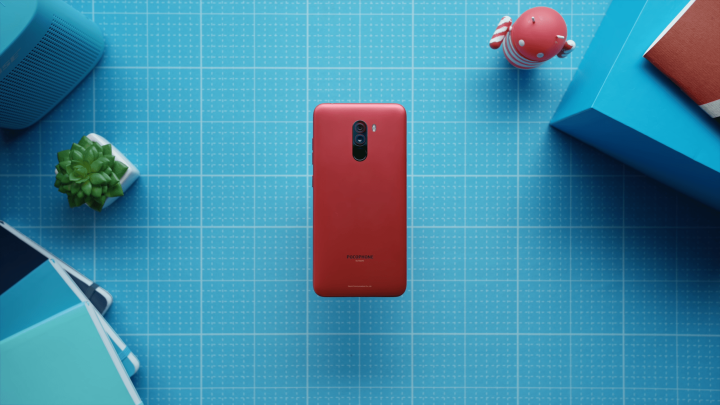
I bought the Pocophone F1 on launch day in 2018 for $300. A Snapdragon 845, 6 GB of RAM, and a 4,000 mAh battery at that price felt like a clerical error from Xiaomi. For context, every other phone running the same processor — the Pixel 3, the OnePlus 6, the Galaxy S9 — cost $500 to $800. The Pocophone undercut them all by a staggering margin, and the smartphone industry noticed.
Now it’s 2026, and the Pocophone F1 occupies a strange position. It’s too old to recommend as a daily driver, but too historically important to ignore. This phone single-handedly spawned the POCO brand (now a standalone Xiaomi sub-brand shipping millions of units annually), forced OnePlus to rethink its pricing, and proved that flagship-grade performance could exist at mid-range prices. Every “budget flagship” phone released since owes something to the F1.
This review covers what the Pocophone F1 got right, where it fell short, whether it’s still usable today, and what its legacy means for budget smartphone buyers in 2026.
Table of Contents
Pocophone F1 Specifications
| Specification | Details |
|---|---|
| Display | 6.18-inch IPS LCD, 1080 x 2246 pixels, 18.7:9 ratio, 403 ppi |
| Processor | Qualcomm Snapdragon 845 (10nm), Octa-core Kryo 385 |
| GPU | Adreno 630 |
| RAM | 6 GB / 8 GB LPDDR4X |
| Storage | 64 GB / 128 GB / 256 GB + microSD up to 256 GB |
| Rear Camera | 12 MP (f/1.9, dual pixel PDAF) + 5 MP (f/2.0, depth sensor) |
| Front Camera | 20 MP (f/2.0) |
| Battery | 4,000 mAh, Quick Charge 3.0 (18W) |
| OS at Launch | Android 8.1 Oreo with MIUI 9.6 (POCO Launcher) |
| Final Software Update | MIUI 12.0.3 based on Android 10 (2020) |
| Biometrics | Rear fingerprint sensor, IR face unlock |
| Connectivity | USB-C, 3.5mm headphone jack, Bluetooth 5.0, Wi-Fi 802.11ac, dual-band |
| Missing Features | No NFC, no wireless charging, no water resistance rating |
| Build Material | Polycarbonate back (standard) / Kevlar back (Armored Edition) |
| Colors | Graphite Black, Steel Blue, Rosso Red, Armored Edition (Kevlar Black) |
| Launch Price | $300 (6/64 GB) |
| Weight | 182 grams |
| Dimensions | 155.5 x 75.3 x 8.8 mm |
Design and Build Quality: Where the Compromises Started
The Pocophone F1 made its price point possible by cutting costs in the most visible area first: the body. While competitors shipped glass and metal frames, the F1 arrived in polycarbonate — plain old plastic. Pick it up next to a Galaxy S9 or Pixel 3 from the same era, and the build quality gap was immediately obvious. The plastic flexed slightly under pressure, the seams weren’t as tight as premium phones, and the overall hand feel screamed “budget.”
Xiaomi tried to address this with the Armored Edition, wrapped in genuine Kevlar fiber. That version felt substantially better — grippy, textured, and tough enough that cases felt unnecessary. It also looked striking in person. But the standard polycarbonate models made up the vast majority of sales, and they felt exactly like what they were: a $300 phone.
Here’s the thing, though: that plastic back had a practical advantage nobody talked about. Drop a glass phone and you’re dealing with a shattered back panel and a $100+ repair. Drop the Pocophone and you got a scuff mark. For a phone marketed toward students, young professionals, and price-conscious buyers, that durability argument actually held water. I dropped mine at least a dozen times over two years of ownership, and it survived every single fall with nothing worse than cosmetic scratches.
The rest of the design was unremarkable for 2018. A wide notch dominated the front (everyone was copying Apple’s iPhone X notch that year), chunky bezels surrounded the display, and heavily rounded corners ate into usable screen area. An aluminum frame held everything together, with tactile power and volume buttons on the right side. The rear fingerprint sensor sat below the dual camera module in a natural, easy-to-reach position.
Display: Adequate, Not Impressive
The 6.18-inch IPS LCD panel was another cost-saving measure. At 1080 x 2246 pixels (403 ppi), sharpness was perfectly fine for day-to-day use — text rendered cleanly, photos looked acceptable, and video streaming at 1080p was comfortable. But compared to the OLED screens in the OnePlus 6 and Galaxy S9, the differences were noticeable: less vibrant colors, weaker contrast (blacks looked gray rather than true black), and narrower viewing angles that washed out at steep angles.
Outdoor visibility was mediocre. Maximum brightness couldn’t fully compete with direct sunlight, a limitation that plagued most LCD panels in that price bracket. The display was also locked at 60Hz — though in 2018, high refresh rate phone screens barely existed outside gaming phones, so this wasn’t a meaningful criticism at launch.
By current standards, this display looks dated. Modern budget phones from Xiaomi’s own Redmi line offer 120Hz AMOLED screens at similar or lower price points. That’s not a knock on the F1 — it’s a testament to how dramatically display technology has trickled down since 2018. If you’re comparing screens across eras, the F1’s panel was fair for its price. Nothing more, nothing less.
Performance: The Entire Selling Point
The Snapdragon 845 was Qualcomm’s flagship processor for 2018. Fabricated on a 10nm process, it featured eight Kryo 385 CPU cores and an Adreno 630 GPU. In benchmarks, the Pocophone F1 scored virtually identically to the Galaxy S9+, Pixel 3, and OnePlus 6 — phones costing twice as much or more.
In real-world usage, the performance matched the numbers. Apps opened instantly. Multitasking between a dozen apps felt smooth. Gaming performance (PUBG Mobile and Fortnite were the benchmarks in 2018) was genuinely flagship-grade. The Adreno 630 GPU handled demanding games at high settings without significant frame drops, and the 6 GB of RAM (8 GB in the higher-tier models) kept apps in memory longer than many flagships of the era.
Xiaomi paired this hardware with POCO Launcher, a customized interface running on top of MIUI. Unlike the feature-heavy standard MIUI, POCO Launcher was stripped down to resemble stock Android — a deliberate design choice targeting the OnePlus audience that valued clean, fast software. The launcher was responsive, minimally intrusive, and complemented the Snapdragon 845’s speed rather than bogging it down with animations and bloatware.
This was the Pocophone’s killer argument, distilled: you were getting 95% of a flagship phone’s performance for 40% of the price. The remaining 5% came from thermal management (the plastic body didn’t dissipate heat as efficiently as metal-and-glass flagships) and sustained performance under prolonged heavy loads. But for the overwhelming majority of users, the performance gap was invisible.
Camera: The Weakest Link
Camera quality was where the $300 price tag showed most clearly. The 12 MP main sensor with f/1.9 aperture and dual-pixel phase detection autofocus produced acceptable photos in good lighting — detailed, reasonably accurate colors, and competent dynamic range. When conditions were right, certain shots could genuinely pass for flagship quality. The portrait mode, powered by the 5 MP depth sensor, handled edge detection and background blur better than I expected from a budget phone.
The problem was consistency. Two photos taken seconds apart under similar conditions could produce wildly different results — one sharp and well-exposed, the next muddy and overprocessed. Xiaomi’s processing algorithms in 2018 hadn’t reached the maturity of Google’s (which made the Pixel 3’s single camera legendary) or Samsung’s tuning. Low-light performance was particularly weak. Without optical image stabilization (another cost cut), handheld night shots were blurry and noisy.
The 20 MP front camera was adequate for social media selfies but nothing special. Video recording supported 4K at 30fps and 1080p at 60fps, with electronic stabilization that introduced noticeable crop. For dedicated mobile photography, the Pixel 3 or even mid-range Samsung phones of the era were meaningfully better. The camera was the concession that funded the flagship processor — and Xiaomi was transparent about that trade-off. If you’re interested in current debates about mobile cameras, our comparison of smartphones versus digital cameras dives deeper into where phones still fall short.
Battery Life: A Genuine Strength
The 4,000 mAh battery was generous for 2018 (when most flagships shipped 3,000-3,500 mAh cells), and the combination of an efficient Snapdragon 845 and a lower-resolution LCD display (OLED screens actually consume more power when displaying white content) meant battery life was genuinely excellent. Consistent screen-on times of 7-9 hours were common, with most users easily reaching bedtime without anxiety about finding a charger.
Quick Charge 3.0 topped the phone from near-empty to about 55-60% in 30 minutes. Not blazing fast by 2026 standards (where 100W+ charging exists on current POCO phones), but perfectly serviceable. The phone shipped without wireless charging — another cost-driven omission — though in 2018, wireless charging adoption was still early enough that most buyers didn’t miss it.
Battery longevity over time held up reasonably well. After two years of daily use, my unit’s battery health had degraded to roughly 85% of original capacity, which is normal for lithium-polymer cells. By the three-year mark, some users reported noticeable battery life reduction, suggesting the F1’s battery aged at a typical rate for phones of this era.
Software and Updates: The Full Timeline
The Pocophone F1 launched on Android 8.1 Oreo with MIUI 9.6 and the POCO Launcher. Xiaomi delivered two major OS updates:
- Android 9 Pie (MIUI 10) — Rolled out in early 2019
- Android 10 (MIUI 12) — Arrived in stages through 2020, with the final stable build (MIUI 12.0.3) landing in late 2020
Android 10 was the last official update. Xiaomi ended security patches for the F1 in 2021, meaning the phone has been without official security updates for nearly five years as of 2026. This is the single biggest reason the phone can’t be recommended as a primary device today — running a phone without security patches exposes you to known vulnerabilities that get exploited in the wild. For anyone serious about phone security, our roundup of the best security apps covers what additional protection looks like.
However, the Pocophone F1 has one significant advantage in the software department: a thriving custom ROM community. Thanks to its popularity and the Snapdragon 845’s well-documented kernel sources, the F1 remains one of the most supported devices on XDA Developers forums. Custom ROMs running Android 14 (and even early Android 15 ports) exist for the F1, breathing new life into the hardware with current security patches and modern Android features. LineageOS, Pixel Experience, and crDroid all maintain active builds. If you’re comfortable with bootloader unlocking and custom ROM installation, the F1 can technically run current software — though that’s a project for experienced users, not everyday consumers.
What the Pocophone F1 Was Missing
Xiaomi made calculated sacrifices to hit the $300 price point. Understanding what was cut explains the phone’s positioning — and the compromises buyers accepted knowingly:
- No NFC — This was the single most-criticized omission. Without NFC, Google Pay (then Android Pay) and contactless payments were impossible. In markets where mobile payments were becoming standard, this was a dealbreaker for many potential buyers.
- No OLED display — Cost dictated an LCD panel. The trade-off was weaker contrast, less vibrant colors, and higher power consumption when displaying dark content.
- No optical image stabilization — The camera relied entirely on electronic stabilization, resulting in softer low-light photos and shakier video.
- No water resistance — No IP rating of any kind. A splash or accidental dunk could damage the phone.
- No wireless charging — A feature that was becoming standard on $800+ flagships but hadn’t trickled down to the mid-range in 2018.
- Plastic build — The polycarbonate body was functional but felt cheap next to glass-and-metal competitors.
- Single bottom-firing speaker — Mono audio that distorted noticeably at higher volumes. Stereo speakers were standard on flagships of the era.
Each of these omissions saved Xiaomi manufacturing cost. Together, they explain the $400-500 price gap between the F1 and conventional flagships. Whether those trade-offs were acceptable depended entirely on individual priorities — and for millions of buyers, the answer was a resounding yes.
Is the Pocophone F1 Still Worth Buying in 2026?
Short answer: no, not as a primary phone. Here’s the longer explanation.
The Snapdragon 845 still handles basic tasks competently. Web browsing, social media, email, YouTube, and light gaming remain functional. The 6 GB of RAM prevents the worst memory management issues. But the software situation makes it impossible to recommend:
- No security patches since 2021 — Five years of unpatched vulnerabilities. Using this phone for banking, sensitive email, or any financial transactions carries genuine risk.
- App compatibility declining — Newer apps increasingly require Android 11 or higher. The F1’s official Android 10 leaves it behind Google’s latest API requirements, and some apps simply refuse to install.
- Battery degradation — After 7+ years, original batteries will have lost 30-40% of their capacity. Replacement batteries are available through third-party repair shops but add cost and risk.
- Camera quality gap — Budget phones in 2026 have cameras that embarrass the F1’s. Computational photography has advanced so dramatically that a $150 Redmi phone today takes noticeably better photos.
Where the F1 still makes sense:
- Secondary or backup device — Keep it in a drawer for emergencies or travel situations where you don’t want to risk your primary phone.
- Custom ROM tinkering — The F1’s excellent ROM support makes it a great learning device for anyone interested in Android development or customization. Flash LineageOS or Pixel Experience and explore what custom ROMs can do.
- Dedicated media player — With a 3.5mm headphone jack, decent speakers (for offline content), and a large enough display, it works as a dedicated podcast/music/video device on home Wi-Fi.
- Kids’ first phone — If your child needs a phone for basic communication and you don’t want to risk an expensive device, the F1 handles calls, texts, and light app use fine. Just keep sensitive accounts off it. Check out creative uses for old smartphones for more ideas.
If you’re shopping for a budget phone in 2026, the POCO brand that the F1 launched still exists and delivers similar value propositions — just with modern hardware, current software support, and dramatically better cameras. Check the best smartphones available on Amazon for current recommendations across every price range.
The Pocophone F1’s Legacy: How It Changed Budget Smartphones
The Pocophone F1’s most lasting impact isn’t its hardware — it’s the market dynamics it disrupted. Before the F1, the “flagship killer” category was essentially a one-company show. OnePlus had carved out the space with the OnePlus One in 2014, and by 2018, their phones had crept up to $500-550. Xiaomi’s decision to undercut even the flagship killer by $200+ forced a recalibration across the entire industry.
Consider what happened next:
- POCO became a standalone brand. Originally launched as a Xiaomi sub-brand, POCO spun off into an independent entity in November 2020. The brand has since released dozens of phones — the POCO X series, M series, C series, and F series — across multiple price points. The F1 proved the concept; the brand scaled it.
- Realme entered the market. OPPO launched Realme in 2018, directly responding to the budget-flagship demand that the Pocophone exposed. Realme now ships more phones annually than OnePlus.
- Samsung launched Galaxy A and M series. Samsung’s mid-range explosion through the Galaxy A50, A52, A54, and beyond was a direct response to Chinese brands proving that good-enough hardware at aggressive prices could steal market share.
- OnePlus prices kept climbing. Ironically, OnePlus — the original flagship killer — abandoned the budget space entirely, with current OnePlus flagships competing at $800-900. They yielded the territory the Pocophone conquered.
- Processor pricing shifted. Qualcomm eventually introduced the Snapdragon 7-series and 6-series with near-flagship performance at significantly lower price points, partly because phone makers proved consumers would pay $300-400 for flagship performance if manufacturers demanded cheaper chips.
The Pocophone F1 didn’t cause all of these shifts independently, but it was the catalyst that proved budget flagships could sell in massive numbers. The phone sold over 700,000 units in its first three months in India alone, validating the market in ways that corporate strategy presentations couldn’t.
How POCO Phones Have Evolved Since the F1
For anyone curious about how far the brand has come since 2018, here’s a quick snapshot of the POCO lineup evolution:
| Phone | Year | Processor | Key Upgrade Over F1 |
|---|---|---|---|
| POCO F2 Pro | 2020 | Snapdragon 865 | AMOLED display, 5G, pop-up camera |
| POCO F3 | 2021 | Snapdragon 870 | 120Hz AMOLED, stereo speakers |
| POCO F4 | 2022 | Snapdragon 870 | OIS camera, 67W charging |
| POCO F5 | 2023 | Snapdragon 7+ Gen 2 | 1440p AMOLED, IR blaster |
| POCO F6 | 2024 | Snapdragon 8s Gen 3 | 90W charging, improved haptics |
| POCO F7 series | 2025-2026 | Snapdragon 8s Gen 4 / Dimensity 8400 | 120W charging, AI features, flagship cameras |
Each generation addressed the F1’s original compromises. OLED displays arrived with the F2 Pro. OIS cameras came with the F4. Charging speeds have increased from 18W to 120W. NFC is now standard across the lineup. The brand kept the F1’s core philosophy — flagship performance at aggressive prices — while systematically fixing the things buyers complained about. If you’ve recently picked up a new POCO phone or any smartphone, our guide on 15 things to do after purchasing a new smartphone walks through essential setup steps.
Pocophone F1 Review Verdict: A Phone That Mattered
The Pocophone F1 was never a perfect phone. The camera was inconsistent. The display was mediocre. The plastic build felt cheap. The lack of NFC was frustrating. These were real, meaningful compromises that affected daily use.
But perfection wasn’t the point. The F1 asked a different question: how much phone do you actually need, and how much of a flagship’s price goes toward things most people never notice? The answer, it turned out, was quite a lot. For $300, buyers got 90% of a flagship experience. The missing 10% was stuff that mattered more in reviews than in real life — glass backs that shatter, OLED blacks most people can’t distinguish from good LCD, and camera differences visible only in side-by-side comparisons at 200% zoom.
I used my Pocophone F1 as my primary phone for 18 months before upgrading. In that time, it never lagged during daily use, never died before bedtime, and handled every app and game I threw at it. The camera frustrated me occasionally, and I missed NFC for transit payments. But at $300, I couldn’t credibly complain. I got exactly what was advertised: flagship guts in a budget body.
In 2026, the Pocophone F1 belongs in the same conversation as the OnePlus One, the Nexus 5, and the original Moto G — phones that permanently changed what consumers expected from smartphones at every price tier. You can’t buy one as a daily driver anymore. But you can buy its direct descendants, and they carry the same DNA: great performance, honest pricing, and calculated trade-offs that respect the buyer’s intelligence.
That’s a legacy worth documenting, even eight years later.
Pros and Cons Summary
Pros
- Flagship Snapdragon 845 performance at $300
- Excellent battery life (4,000 mAh + efficient SoC)
- Clean POCO Launcher close to stock Android
- Strong custom ROM community (still active in 2026)
- Durable polycarbonate body survives drops better than glass
- 3.5mm headphone jack and USB-C
- IR face unlock worked quickly and accurately
- MicroSD expansion up to 256 GB
Cons
- No NFC (no mobile payments)
- Inconsistent camera quality, weak in low light
- IPS LCD display lacks OLED vibrancy and contrast
- Plastic build feels cheap compared to flagships
- No water resistance rating
- Software support ended at Android 10 (2020)
- Single mono speaker with distortion at high volumes
- No wireless charging




Share Your Thoughts