• Skip to primary navigation
  • Skip to main content
  • Skip to primary sidebar
  • Skip to footer

TechEngage®

Connecting mankind with technology

  • News
  • Reviews
  • Cryptocurrency
  • How-to
  • Roundups
  • Science
    • Energy
    • Environment
    • Health
    • Space
  • Apps
  • More
    • Opinion
    • Noteworthy
    • Culture
    • Events
    • Deals
    • Startups
      • Startup Submissions
  • Videos
  • Tools
TechEngage » News » Computing

Intel plans teraflop integrated graphics for 10nm chips in 2019

Fazeel Ashraf Follow Fazeel Ashraf on Twitter Updated: July 16, 2022

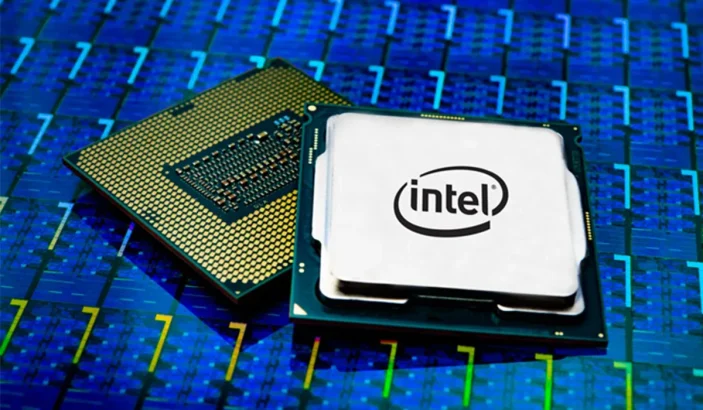
image of intel processors
via Intel
FacebookTweetPinLinkedInPrintEmail

In life, two things are confirmed, death and integrated graphics suck. Integrated graphics can barely run old titles, so forget about running new games. For this reason, dedicated graphics cards are needed. It seems Intel is looking to mend its ways. Intel is looking to improve graphics.

Intel will introduce its Gen11 series of GPUs from next year. Currently, we are at generation 9, so the processor company is looking to skip a whole series straight to 11. This makes it clear how much Intel wants to boost its graphics performance.

The new generation will be the first GPU to cross one teraflop.

Don’t get me wrong, this is a step in the right direction for Intel, but the graphics performance it provides will still suck. Only, it will suck less this time around. Current Iris GPUs on the market can get close to that performance but are still rarely equipped on popular laptops. One of the company’s competitors is Qualcomm which is all set to go head-to-head with Intel with its 7nm Snapdragon 8cx compute platform.

On the other hand, Intel’s parts will only take them up to AMD, which has provided more than 1 Teraflop performance on some iGPUs for quite a few months now.

The Gen11 GPUs will also use tile-based rendering, dividing scenes into tiles so that portions can be rendered individually. However, the biggest advantage will be in saving memory bandwidth, which is already so low when premium components are used. The new GPUs will also support HDR and Adaptive Sync.

Intel did not provide additional information or benchmark scores to compare with the last generation’s GPUs. However, once we get our hands on the actual GPU, we can give our complete analysis.

It will be a good opportunity for us to compare the GPU regarding performance with last year’s GPUs. Since desktop PCs are open-ended regarding hardware, users can easily open the thing up and install an external GPU whenever they desire.

This isn’t possible on laptops due to their innate flaws. Thanks to technological advancements, users can attach external GPUs to their laptops via Thunderbolt 3. Unfortunately, these things can be costly. Then there is the issue of always carrying an external GPU and its casing when one is traveling. The biggest problem is that only a handful of laptops still have a Thunderbolt 3 port.

We all must be realistic, even if Intel somehow does manage to improve its (insert awful word) graphics. They won’t let you play the latest graphics in 60 FPS. Intel’s chips have never been about graphics. That’s why companies like NVIDIA and AMD exist.

Despite the shortcomings still existing, we might get something better than before. Hopefully, users will get decent FPS when playing recent games in low to medium settings. Intel will also release its first dedicated GPU in more than two decades, which is newsworthy.

The GPU dubbed Intel Xe will face stiff competition from graphics card veterans AMD and NVIDIA. But we will have to wait until 2020 to get a taste of Intel Xe.


This post was originally published on December 13, 2018 and was updated on July 16, 2022.

Filed Under: Computing, Components Tagged With: AMD, GPU, GraphicsCard, Intel, IntelHDGraphics, NVIDIA

Related Stories

  • Petey Vid: A privacy-focused video search engine has been launched

    Petey Vid: A privacy-focused video search engine has been launched

  • Apple T2 microchip will be hackers’ worst nightmare

    Apple T2 microchip will be hackers’ worst nightmare

  • Apple finally updated Mac Mini

    Apple finally updated Mac Mini

FacebookTweetPinLinkedInPrintEmail

About Fazeel Ashraf

IT graduate from the National University of Science and Technology with a passion for writing. When not reading or writing, I can be found listening to rock and metal or playing some classic jams on my electric guitar. I’m also a big fan of horror movies.

Reader Interactions

Share Your Thoughts Cancel reply

Please read our comment policy before submitting your comment. Your email address will not be used or published anywhere. You will only receive comment notifications if you opt to subscribe below.

Primary Sidebar

Become a contributor

We are accepting contributor applications. All applications will be decided in 3 days after applying. To learn more visit the contributors page.

How Do Popular Apps Vary Across The World?

battery draining apps

Top 10 battery draining apps to avoid 2025

Recent Stories

  • How Do Popular Apps Vary Across The World?
  • Top 10 battery draining apps to avoid 2025
  • 6 Top Alternatives to Textsheet for 2025
  • Six Jobs Using Artificial Intelligence (AI) to Think About in 2025
  • Amazon Selling: How to Overcome Common Challenges

Footer

Discover

  • About us
  • Newsroom
  • Staff
  • Advertise
  • Send us a tip
  • Startup Submission Questionnaire
  • Brand Kit
  • Contact us

Legal pages

  • Reviews Guarantee
  • Community Guidelines
  • Corrections Policy and Practice
  • Cookies Policy
  • Our Ethics
  • Disclaimer
  • GDPR Compliance
  • Privacy Policy
  • Terms and Conditions

Must reads

  • Best AirPods alternatives on Amazon
  • Best PC monitors for gaming on Amazon
  • Best family board games
  • Best video doorbells without subscription
  • Best handheld video game consoles
  • Best all-season tires for snow
  • Best mobile Wi-Fi hotspots
  • Best treadmills on Amazon

Download our apps

TechEngage app coming soon on App Store

© 2024 TechEngage®. All Rights Reserved. TechEngage® is a project of TechAbout LLC.

TechEngage® is a registered trademark in the United States under Trademark Number 6823709 and in the United Kingdom under Trademark Number UK00003417167. It is also ISSN protected under ISSN 2690-3776 and has OCLC Number 1139335774.

  • Terms & Conditions
  • Privacy Policy