

Canon’s cheapest DSLR has been on shelves since 2016, and it still sells. Here’s why — and where it falls short.
The Canon EOS Rebel T6 (known as the EOS 1300D outside North America) was never designed to impress spec-sheet chasers. It was built to be the camera that gets someone off their phone and into actual photography. And at its current price point — often under $400 with a kit lens — it still does that job remarkably well.
The Rebel T6 is essentially a modest refresh of the Rebel T5, with the same 18MP APS-C sensor, a slightly upgraded DIGIC 4+ processor, and the welcome addition of Wi-Fi and NFC. Canon played it safe. The question worth asking now is whether this budget DSLR still makes sense when mirrorless cameras and smartphones have raised the bar considerably.
Table of Contents
Specifications at a Glance
| Specification | Canon EOS Rebel T6 / 1300D |
|---|---|
| Sensor | 18MP APS-C CMOS |
| Processor | DIGIC 4+ |
| ISO Range | 100–6,400 (expandable to 12,800) |
| Autofocus | 9-point AF (1 cross-type center point) |
| Viewfinder | Optical, 95% coverage |
| LCD | 3-inch, 920k dots (fixed) |
| Video | 1080p at 30/25/24 fps |
| Burst Rate | 3 fps |
| Connectivity | Wi-Fi, NFC |
| Battery Life | ~500 shots (CIPA) |
| Weight | 485g (body only) |
| Lens Mount | Canon EF/EF-S |
Image Quality
The 18MP sensor is the same unit found in the older Rebel T5. In good light, it delivers sharp, vibrant images that can be cropped aggressively and still hold up for social media or medium-sized prints. Color accuracy leans warm, which is flattering for skin tones and outdoor shots without much post-processing needed.
Low light is where the age shows. The native ISO ceiling of 6,400 is workable but noisy, and the expanded 12,800 setting introduces enough grain that most photographers will avoid it unless there is no other option. For context, cameras in the same price range from 2024 and 2025 offer native ISO ranges two to three stops higher with cleaner results. Indoor shooting and evening events require careful exposure management on the T6.
RAW files give reasonable editing headroom. Shadows can be pushed about 1.5 stops before banding becomes visible, which is enough for basic exposure correction but not the kind of dynamic range that forgives serious underexposure.
Autofocus and Performance
Nine autofocus points. One cross-type in the center. That is it.
By modern standards, this is bare-bones. The center point locks on quickly enough for portraits, landscapes, and still subjects, but tracking a moving child or a pet across the frame is a gamble. The outer eight points are single-axis only, meaning they struggle with subjects that have horizontal detail patterns. Anyone shooting sports or wildlife will outgrow this system almost immediately.
The 3 fps burst rate compounds the problem. Holding down the shutter during action results in a sluggish sequence that misses the decisive moment more often than it captures it. For static subjects, the AF is perfectly adequate. For anything that moves unpredictably, it is a genuine limitation.
Build and Handling
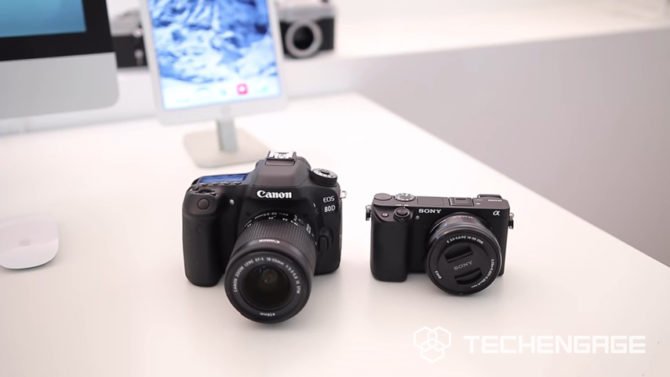
Polycarbonate body, textured grip, 485 grams. It feels like a budget DSLR because it is one, but that is not necessarily a complaint. The light weight makes it comfortable for all-day carrying, and the compact body fits easily into a small camera bag alongside a couple of lenses.
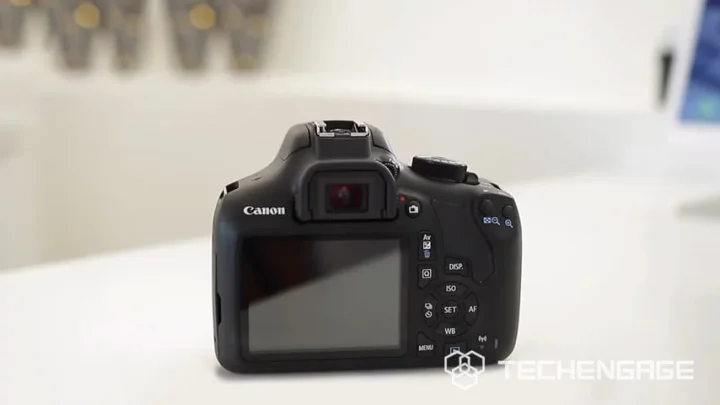
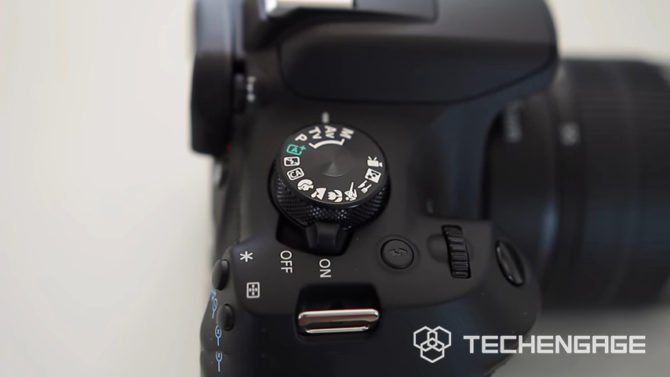
The grip contour is surprisingly good. A middle finger slots into a natural resting position while the index finger lands right on the shutter release. The “Q” button on the back provides quick access to white balance, AF mode, ISO, and exposure compensation without diving into the full menu system. Anyone who has handled any Canon DSLR from the last decade will feel at home within minutes.
The upgraded 3-inch LCD with 920k dots is a noticeable improvement over the T5’s screen. Menu navigation and image review look sharp and clear. The screen is fixed, though, with no tilt or articulation. Shooting from low angles or overhead means guessing at the composition, which gets old fast.
Video Capabilities
Full HD at 30fps with manual exposure control. That checks the basic box, but the video experience is clunky. Autofocus during video recording is slow and hunts visibly, making manual focus almost mandatory for anything beyond casual clips. There is no continuous AF tracking worth relying on.
No 4K. No headphone jack for audio monitoring. No external microphone input on the body itself, though an adapter can work around that limitation. If video is a priority, even a mid-range smartphone from 2024 will outperform the T6 in stabilization, autofocus, and resolution. This camera was built for stills, and it shows.
Wi-Fi and Connectivity
The Rebel T6 added built-in Wi-Fi and NFC, which the T5 lacked entirely. Connecting to the Canon Camera Connect app on a phone allows wireless image transfer and basic remote shooting. The connection process is fiddly the first time but works reliably once paired.
Transfer speeds are slow by current standards. Moving a batch of full-resolution JPEGs takes patience. The practical workflow for most users: shoot all day, transfer the best 10-15 images to a phone over Wi-Fi at the end of the session, and edit or post from there. Trying to transfer every shot wirelessly is an exercise in frustration.
Verdict: Who Should Buy the Rebel T6?
The Canon Rebel T6 makes sense for exactly one audience: someone who wants to learn photography on a real DSLR without spending much money. The EF/EF-S lens mount opens up a massive catalog of Canon lenses, from $100 nifty-fifty primes to professional-grade L-series glass. Starting with a cheap body and investing in good lenses is a strategy that has served photographers well for decades, and the T6 fits that role.
For anyone who plans to shoot video, needs fast autofocus for action, or expects strong low-light performance, the T6 will frustrate more than it satisfies. A used Canon Rebel T7i or a mirrorless option like the Canon EOS M50 Mark II would be a better investment at a similar or slightly higher price point.
The best thing about the Rebel T6 is not the camera itself. It is the fact that every lesson learned on it — exposure, composition, lens selection, manual focus — transfers directly to whatever camera comes next.
Frequently Asked Questions
Is the Canon Rebel T6 still worth buying?
For learning photography on a budget, yes. The body can often be found for under $300 used, and it accepts the full range of Canon EF and EF-S lenses. The camera teaches exposure, composition, and manual shooting in a way that a smartphone simply cannot. For anyone expecting modern features like 4K video, fast autofocus tracking, or clean high-ISO performance, look elsewhere.
What is the difference between the Canon Rebel T6 and the T7?
The T7 bumps the sensor to 24.1MP and keeps everything else mostly the same. Autofocus, burst rate, and video specs are nearly identical. The extra megapixels help with cropping but do not change the overall shooting experience dramatically. If the price difference is small, get the T7. If budget is tight, the T6 still delivers.
Can the Rebel T6 shoot professional-quality photos?
It can produce images that look professional in good lighting with a decent lens attached. The 18MP sensor has enough resolution for large prints, and RAW files offer solid editing flexibility. That said, a professional photographer would hit the AF and low-light limits quickly. The body is entry-level, but a sharp lens makes up for a lot.
What lenses work with the Canon Rebel T6?
Any Canon EF or EF-S lens. That includes everything from the $125 EF 50mm f/1.8 STM (the single best upgrade for this camera) to high-end L-series telephoto lenses. Third-party options from Sigma, Tamron, and Tokina with Canon mounts also work. The lens ecosystem is one of the strongest reasons to buy into the Canon system.
Does the Rebel T6 have Bluetooth?
No. It has Wi-Fi and NFC but no Bluetooth. Connecting to the Canon Camera Connect app requires a Wi-Fi handshake each time, which is slower than the always-on Bluetooth connection found on newer Canon bodies like the T7 and T8i.
Canon EOS Rebel T6 Digital SLR Camera
Canon EOS Rebel T6 (1300D) review covering image quality, autofocus, build, video, and Wi-Fi. Includes specs table, lens compatibility, and whether this budget DSLR is still worth buying.
Product Brand: Canon
4.5
Affiliate Disclaimer: TechEngage participates in the Amazon Services LLC Associates Program. As an Amazon Associate, we earn from qualifying purchases through links to Amazon.com and its affiliated sites. For more information, please read our disclaimer.




Share Your Thoughts