

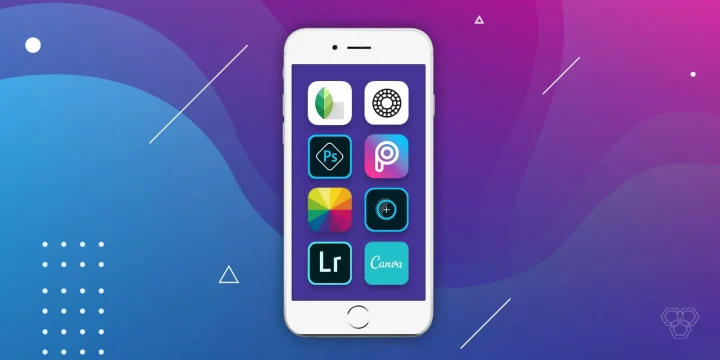
Photo editing apps in 2026 are a different category than they were three years ago. AI-powered features that were paywalled experiments in early 2024 are now the default. Generative fill, background removal, object removal, sky replacement, and natural-language editing all work on a phone in seconds. The trade-off is that the line between “photo editor” and “graphic design tool” has blurred — most modern apps do both, but each one leans toward one or the other.
The nine apps below are the ones I keep coming back to in 2026, picked across mobile and web. Some are pure photo editors (Snapseed, Lightroom Mobile, Pixlr). Some are graphic design with photo support (Canva, Adobe Express, BeFunky). Some are AI-first tools (Photoroom). The right pick depends on what you’re actually trying to make.
Top Photo Editing Apps
1. Adobe Express
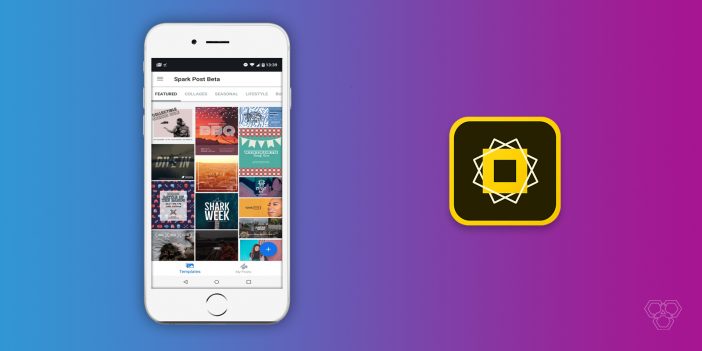
Adobe Express is the rebranded successor to Adobe Spark (Adobe rebranded the product in 2021). The free tier covers most casual users with templates, stock images, fonts, and the AI-powered Generative Fill feature for inserting or removing objects from photos. The paid tier ($9.99 per month standalone, included with Creative Cloud All Apps) unlocks the full template library and removes generation limits.
Where Express fits in 2026: it’s the right pick for users who want graphic-design-with-photo support and who already use Adobe products. The cross-app integration with Photoshop, Illustrator, and Lightroom (round-trip editing without flattening) is the differentiator. For pure photo editing without the design overlay, the dedicated Adobe app is Lightroom Mobile, covered later in this list.
2. BeFunky
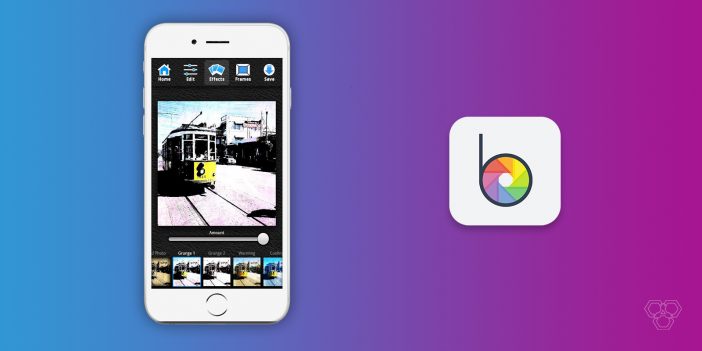
BeFunky has been around since 2007 and has aged into a genuinely useful three-app suite: a photo editor, a collage maker, and a graphic designer, all under one account. The 2024 redesign added AI Image Generator, AI Background Replacer, and AI Image Enhancer features that work decently for casual use even on the free tier.
The free tier is one of the more generous on this list (most photo edits, basic effects, batch processing for a small number of images). BeFunky Plus ($4.99 per month or $34.99 per year) unlocks all the AI features, premium effects, and unlimited batch processing. For a single subscription that covers casual photo editing, social-media-ready graphics, and the occasional collage, BeFunky is the practical pick at the lower price point.
3. Canva
Canva crossed 230 million users globally in 2025 and is the de facto default for non-designers who need to make something look professional. The drag-and-drop interface is the cleanest in the category, the template library is enormous (millions of templates across thousands of categories), and the recent Magic Studio AI suite added genuinely useful features: Magic Edit (object replacement), Magic Eraser (object removal), Magic Expand (extend image canvas), and Magic Write (text generation).
The free tier is unusually capable. Canva Pro ($14.99 per month or $119.99 per year) adds the premium template library, Brand Kit features, background remover, and unlimited Magic Studio generations. For most casual users, the free tier covers what they need indefinitely. For small businesses making social content at volume, Pro pays for itself quickly.
Canva is “graphic design first, photo editing second.” If your starting point is a photo you took and you want to enhance it, Canva works but isn’t optimal. If your starting point is a blank canvas and you want to build something around photos and text, this is the strongest pick on the list.
4. Fotor
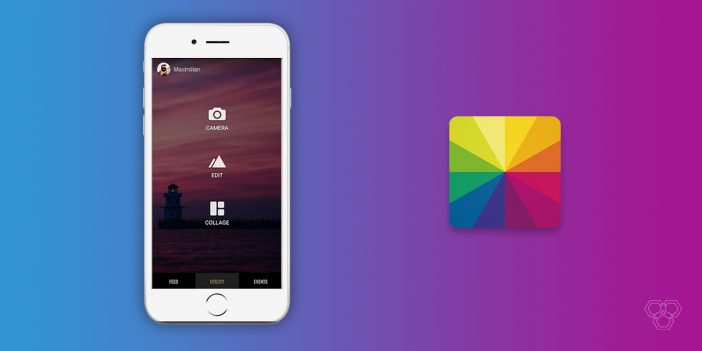
Fotor sits between a pure photo editor and a graphic design tool, and the 2024–2025 updates leaned heavily into AI: AI Photo Enhancer (one-click upscaling and detail recovery), AI Background Remover (clean for portraits, useable for products), and AI Image Generator. The web app is the strongest version; the mobile app is functional but trails the web in feature parity.
What Fotor does well: batch processing on the web (genuinely useful for product photography or e-commerce), HDR effects that look natural rather than over-cooked, and a reasonable selection of one-click photo styles. What it does poorly: the iOS and Android mobile apps have a paywall pattern that nudges users into subscriptions more aggressively than the competition. Fotor Pro is $8.99 per month; Pro+ with full AI generation runs $19.99 per month.
5. Snapseed
Snapseed is the under-rated mobile pick on this list and is the answer to “free professional-grade photo editing on a phone.” Originally built by Nik Software, acquired by Google in 2012, and quietly maintained as a free app ever since, Snapseed has 29 editing tools (called Tools) and filters (called Looks) including curves, white balance, selective adjustments, lens blur, perspective correction, and the genuinely good Healing tool for removing small objects.
The selective tools are the standout feature. Long-press anywhere on a photo and you can adjust brightness, contrast, saturation, or structure for just that area, with falloff controlled by pinching. It’s faster than masking in Lightroom for everyday touch-ups. The app is free, has zero ads, no in-app purchases, and works fully offline. The trade-off is no AI generation features (Snapseed has not added Generative AI to date) and no built-in cloud sync.
For phone-first photo editing where you want pro tools without a subscription, this is the strongest pick on the list. Worth installing immediately. If your phone is running low on storage, our guide to freeing up space on Android covers the maintenance side, and our roundup of best wallpaper apps for Android covers the matching wallpaper-side tools.
6. Adobe Lightroom Mobile
Lightroom Mobile is the closest a phone gets to desktop-grade photo editing. The free tier covers basic adjustments, presets, and the Healing tool. The paid tier (included with Creative Cloud Photography Plan at $9.99 per month, which also bundles desktop Lightroom and Photoshop) unlocks the full toolkit: AI presets, Lens Blur, Generative Remove, Denoise, masking with subject and sky detection, raw editing on phone, and seamless cloud sync between phone, tablet, and desktop.
What this app does that no other on the list matches: full raw photo editing with non-destructive history, professional masking workflows, and round-trip with desktop Photoshop for anything that exceeds mobile capability. The 2025 addition of Generative Remove (AI-powered object removal that intelligently fills the background) genuinely changes what’s possible on a phone.
The honest trade-off: Lightroom Mobile expects you to know what curves, white balance, and HSL adjustments are. Casual users find the interface intimidating. Snapseed (above) is the friendlier alternative for the same core photo-editing workflow without the cloud-sync and pro features. For phones that produce raw files and users who already work in Lightroom on desktop, this is the obvious pick.
7. Photoroom
Photoroom is the AI-first pick on this list and the standout 2024–2026 entrant. The headline feature is one-tap background removal that works on phones (using on-device AI rather than cloud processing) at desktop-Photoshop quality. The free tier covers casual use with watermarked exports; the paid tier (Photoroom Pro at $9.99 per month or $59.99 per year) removes watermarks, unlocks batch processing, and adds AI background generation, AI shadow generation, and product-photo templates.
What it does best: e-commerce and product photography. If you sell on eBay, Etsy, Depop, or Vinted and want consistent, clean product photos without a lightbox, Photoroom is the fastest path. The AI background generator can place a product on a marble countertop, in a living room, or against a colored backdrop with one tap. Resize and bulk-process for marketplace requirements is a single workflow.
What it doesn’t do: traditional photo edits like exposure, contrast, and color grading. It’s a specialist tool, not a generalist editor. Pair it with Snapseed or Lightroom for traditional adjustments before the background work. For e-commerce sellers running their store from a phone, our roundup of best Android keyboard apps includes Grammarly Keyboard which speeds up product-description writing.
8. Pixlr
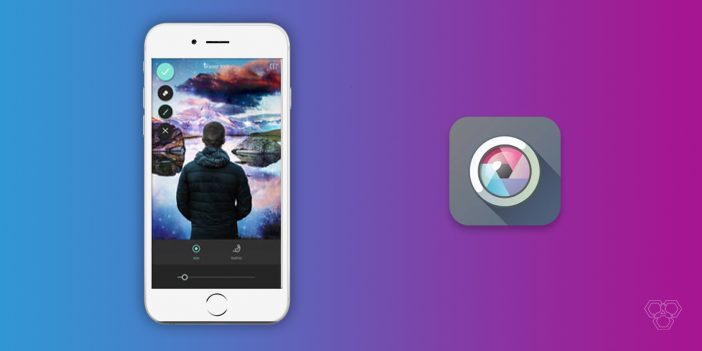
Pixlr is the web-first photo editor that has been quietly serving the “I just want a quick edit on a public computer” niche for over a decade. Pixlr E (the advanced editor) is the closest free web equivalent to Photoshop. Pixlr X (the simplified editor) is the closest free web equivalent to Canva. Both run in a browser, both are free at the basic tier, and both got AI generative features (AI Generative Fill, AI Background Replace) in 2024.
The mobile app is the weaker version. Where Pixlr genuinely earns its place is the web — open the browser tab, drop in a photo, edit, export, done. No installs, no account required for basic use. Pixlr Premium ($1.99 per month for Plus, $4.90 per month for Premium) removes ads, unlocks the full effect library, and lifts AI generation limits. Cheap enough that it’s the strongest value on this list at the paid tier.
9. VSCO
VSCO is the editor for users who care about a specific aesthetic. The film-emulation presets (analog film looks, often paid) are still the strongest in the category, and the community side of the app — sharing edits, discovering presets from other users — gives it a different feel from the toolkit-first apps above. If you’ve ever seen the same washed-out, slightly-faded color grading across an Instagram feed, that look usually came from a VSCO preset.
The free tier covers basic adjustments and 10 presets. VSCO+ ($29.99 per year) unlocks all 200+ presets, advanced photo and video editing tools, and the Montage feature for compositing photos and videos into short clips. VSCO+ Pro ($199.99 per year) adds the company’s full preset library and is aimed at working photographers and content creators rather than casual users.
What VSCO does poorly: traditional editing tools (curves, levels) are present but minimal compared to Lightroom or Snapseed. The app is built around presets-first, fine-adjustments-second. For users who want one-tap recognizable looks rather than from-scratch grading, this is the strongest pick.
How to pick the right photo editor
- You want pro photo editing on a phone, free: Snapseed.
- You want pro photo editing across phone and desktop: Adobe Lightroom Mobile (with Creative Cloud).
- You want graphic design with photo support: Canva.
- You sell products online and need clean backgrounds at scale: Photoroom.
- You want a recognizable Instagram-aesthetic look: VSCO.
- You want web-first quick edits with no install: Pixlr.
- You’re already in the Adobe ecosystem and want graphic design too: Adobe Express.
Most people end up using two or three of these together. A common stack: Snapseed for daily phone edits, Lightroom Mobile for raw photos worth processing properly, and Canva for the occasional social-media post. For broader phone customization, our roundup of Android wallpaper apps and our best Android keyboard apps guide cover the matching app categories.
Frequently Asked Questions
What is the best free photo editing app in 2026?
Snapseed is the strongest free pick. It is genuinely free (no ads, no in-app purchases), works fully offline, and has 29 professional editing tools including selective adjustments, healing brush, and curves. Pixlr is the strongest free web alternative if you don’t want to install anything. Canva’s free tier is also unusually generous if you want graphic design with photo support.
What is the difference between a photo editor and a graphic design app?
A photo editor (Snapseed, Lightroom, Pixlr) starts with a photo you took and helps you adjust exposure, color, sharpness, and small fixes. A graphic design app (Canva, Adobe Express, BeFunky) starts with a blank canvas or template and helps you build a layout that combines text, photos, shapes, and illustrations. Most modern apps do both to some degree, but they each lean toward one. Pick based on what you usually start with.
Are AI photo editing features actually useful?
Yes, with caveats. Object removal, background removal, and one-click upscaling are now genuinely useful and work reliably across all major apps. Generative fill (inserting objects that weren’t in the original photo) is hit-or-miss for fine detail and works best for replacing small objects rather than building scenes. AI presets that automatically tone-grade a photo are useful as starting points but not as final outputs.
Do I need Photoshop on my phone?
For most users, no. Lightroom Mobile and Snapseed cover the editing workflow phone-first users actually want. Photoshop on phone (technically Photoshop Express, plus the new Photoshop iPad and Photoshop Mobile betas) is overkill unless you specifically need layer-based composite work. Save the Photoshop subscription for the desktop where the workflow makes sense.
Which app is best for editing product photos for an online store?
Photoroom is purpose-built for this use case. The AI background removal works at desktop-Photoshop quality, the AI background generator can place products in realistic settings, and the batch processing handles multi-product workflows in minutes rather than hours. Pair with Lightroom Mobile or Snapseed for any traditional editing the photos need before the background work.
Which photo editing app has no subscription?
Snapseed is fully free with no subscription option, no ads, and no in-app purchases. Pixlr’s basic tier is also free, with optional paid plans starting at $1.99 per month. Most other apps on this list operate freemium models where the free tier is functional but the genuinely useful features sit behind a subscription.





Canva is great. I like this most. It is a graphic design platform that allows users to create social media graphics, presentations, posters and other visual content.