


Windows lets you run more than one desktop so work apps, personal tabs, and a meeting deck do not all fight for the same screen. The feature works on Windows 10 and Windows 11. Steps below follow Microsoft’s current Task View guidance and the keyboard shortcuts that still work on both versions.
Official overview: Configure multiple desktops in Windows (Microsoft Support).
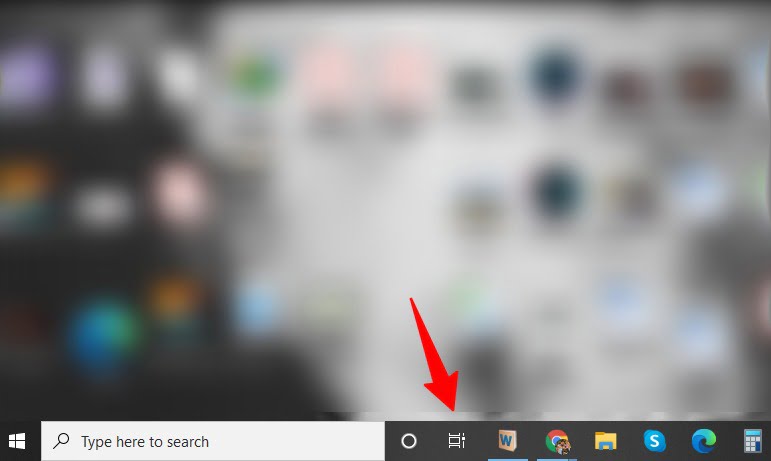
Open Task View
Task View is the control center for virtual desktops.
- Press Windows key + Tab, or
- Select the Task View icon on the taskbar (two overlapping rectangles).
If you do not see the icon:
- Windows 11: right-click the taskbar → Taskbar settings → turn Task view on.
- Windows 10: right-click the taskbar → check Show Task View button.
Create a new desktop
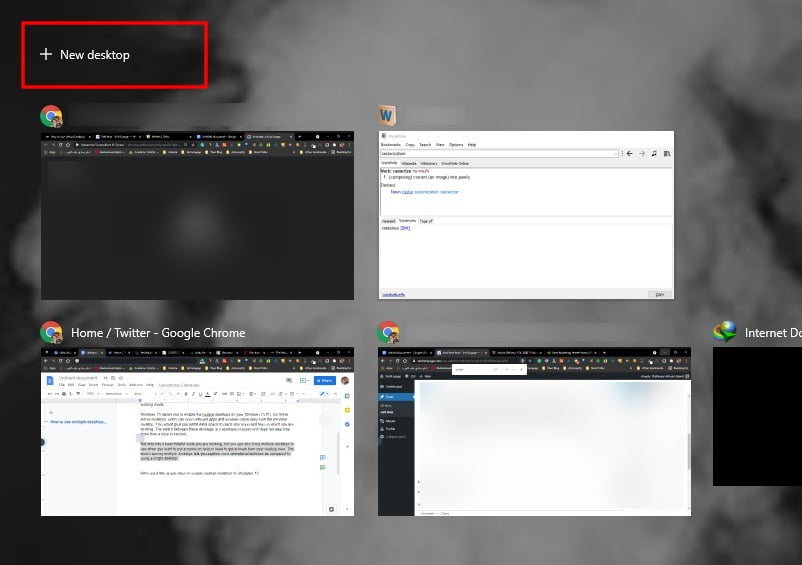
- Open Task View (Windows key + Tab).
- Select New desktop (plus control at the top of Task View on Windows 11, or the new-desktop control shown for your build).
- Optional shortcut: press Windows key + Ctrl + D to create a desktop without opening Task View first.
Click the desktop name in Task View to rename it (Work, Personal, Meeting, and so on). On Windows 11 you can also right-click a desktop thumbnail → Choose background and set a picture wallpaper per desktop so they are easier to tell apart.
Switch between desktops
- Keyboard: Windows key + Ctrl + Left arrow or Windows key + Ctrl + Right arrow.
- Mouse: open Task View and select the desktop thumbnail you want, or hover the Task View icon and pick a desktop.
Windows key + Tab opens Task View. It does not by itself flip to the next desktop. Use the Ctrl combinations above for quick switches.
Move apps between desktops
- Open Task View.
- Drag a window thumbnail onto another desktop, or right-click the window → Move to → pick the desktop.
- To keep a window on every desktop, right-click it in Task View and choose Show this window on all desktops (wording can vary slightly by build).
Close a desktop
- In Task View, hover a desktop thumbnail and select X, or
- Press Windows key + Ctrl + F4 to close the desktop you are on.
Closing a desktop does not force-quit its apps. Windows moves those windows to another desktop.

Taskbar and Alt+Tab behavior
Control whether windows from every desktop clutter the taskbar:
- Open Settings → System → Multitasking.
- Expand Desktops.
- Choose whether the taskbar and Alt+Tab show windows from only the desktop you are using or all desktops.
Keyboard shortcut cheat sheet
- Windows + Tab: open Task View
- Windows + Ctrl + D: new desktop
- Windows + Ctrl + Left / Right: switch desktops
- Windows + Ctrl + F4: close current desktop
Related TechEngage guides
- How to take screenshots on Windows 10 and 11
- How to use Phone Link for SMS on your PC
- How to disable notifications in Windows 10
- How to multitask in Windows (Microsoft Support)
Need a hand or spotted a UI change on your build? Email team@techengage.com or WhatsApp +1-307-381-8801.


Share Your Thoughts