

Gmail is one of those apps you never really close. It sits open in a browser tab all day, and it is the first thing you check on your phone in the morning. So it is fair enough to want it to look like something other than a wall of white. The good news is that Gmail still lets you change its theme — a dark interface, one of Google’s stock photo backgrounds, or a picture of your own — and it takes about thirty seconds.
This guide covers how to change the Gmail theme on desktop, how to switch between light and dark on Android and iPhone, how to use your own photo as a background, and what to do when the Themes option refuses to cooperate.
What “theme” actually means in Gmail
Before you start clicking, it helps to know that Gmail treats theming differently on the web and on mobile, and the difference trips a lot of people up.
- Gmail on the web has a full theme picker. You get a Default theme, a Dark theme, a Light theme, dozens of Google-supplied photo backgrounds, and the option to load your own image from Google Photos or your computer.
- The Gmail mobile apps do not have photo themes at all. On Android and iOS you get exactly three choices — Light, Dark, and System default — and that is the whole menu. If you were hoping to put a beach behind your inbox on your phone, that feature has never existed there.
The web theme is saved to your Google account rather than to one browser, so once you set it, it follows you to any computer where you sign in with the same address. Your mobile theme, on the other hand, is a per-device setting.
How to change your Gmail theme on desktop
This is the main event, and the path has not changed in years, even through Google’s recent Material 3 visual refresh.
Step 1: Open Quick settings
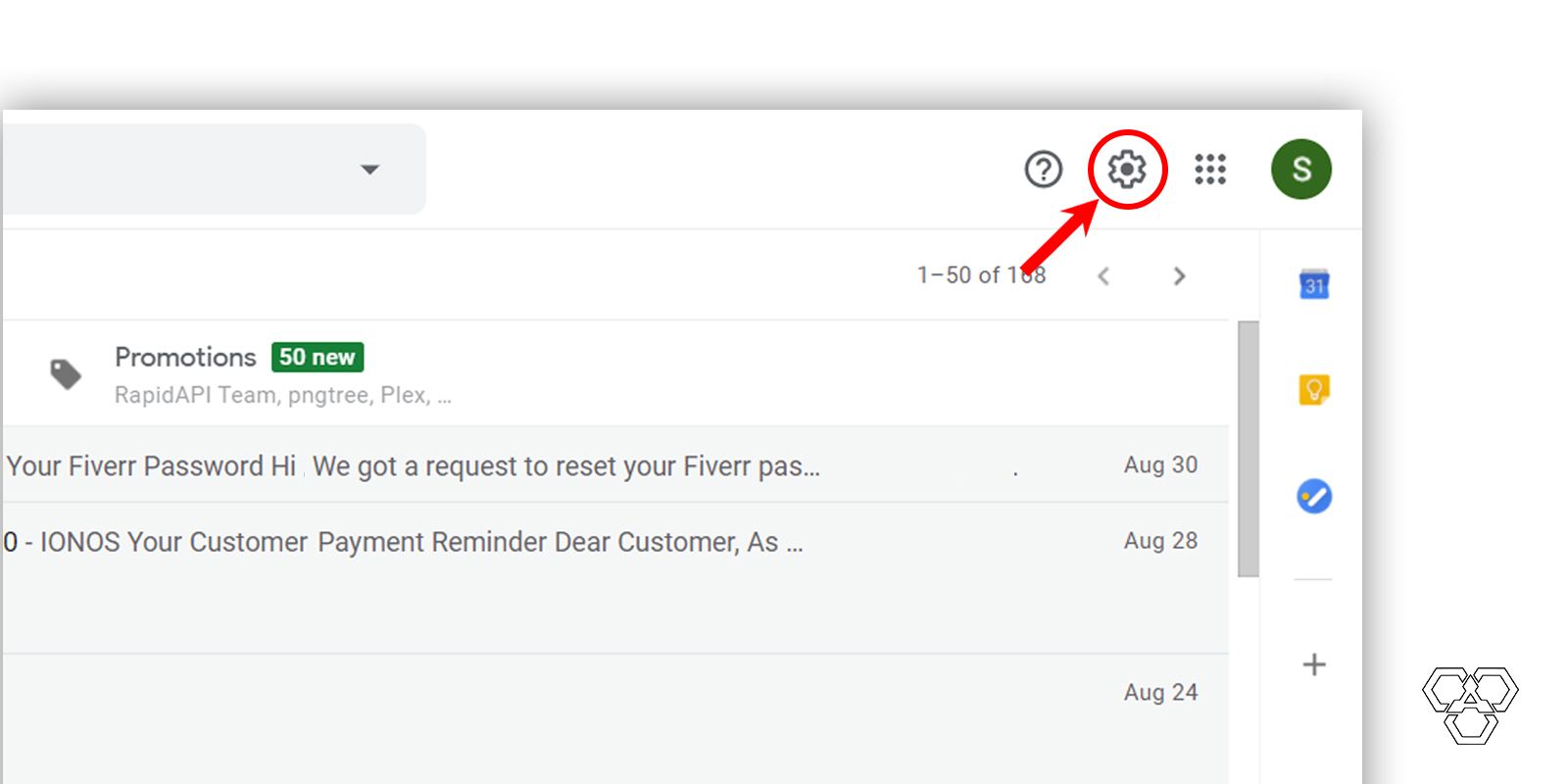
Sign in at gmail.com and click the gear icon in the top-right corner, next to the Google apps grid and your profile picture. That opens the Quick settings panel down the right-hand side of the screen.
Step 2: Find the Theme section and click “View all”
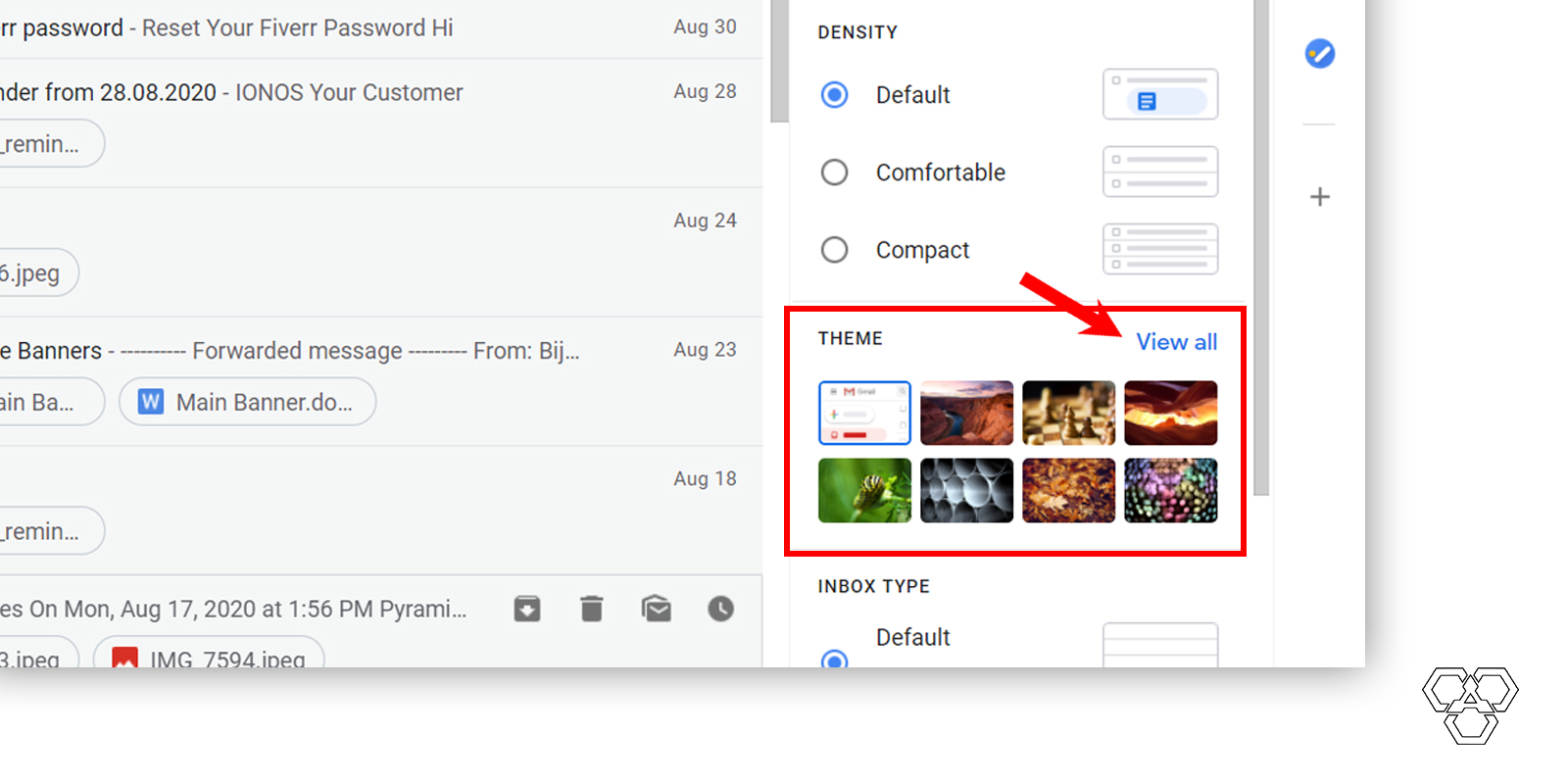
Scroll the Quick settings panel until you reach Theme. You will see a small grid of eight thumbnails there — Google’s shortlist. If one of them appeals to you, click it and you are already done. For the full library, click View all to the right of the Theme heading.
Step 3: Pick your theme and save
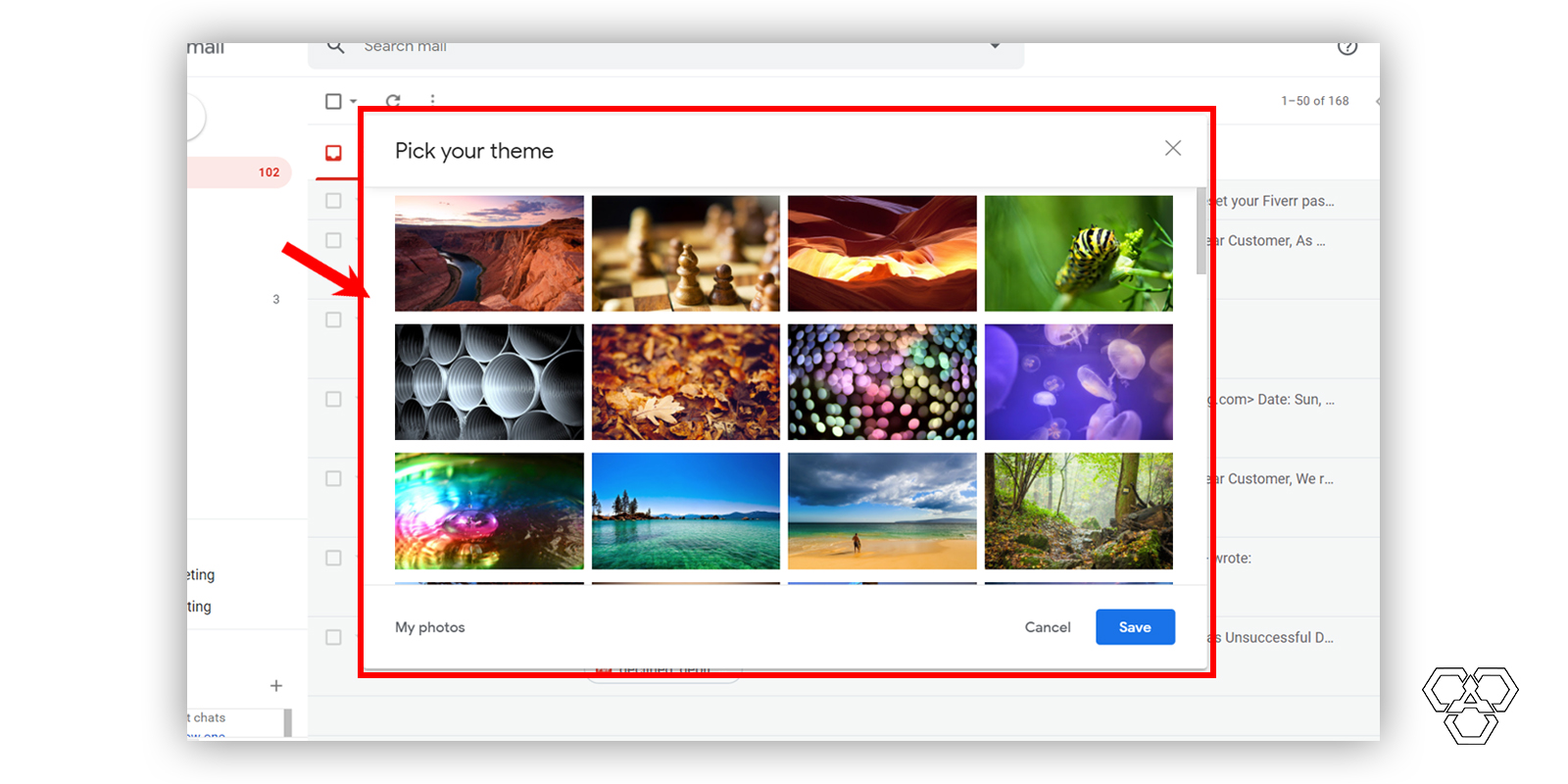
The Pick your theme window opens with the full catalogue: the plain Default and Light themes, the Dark theme, and a long scroll of Google’s photography — canyons, beaches, forests, abstract close-ups. Gmail previews each one live behind the dialog as you click, so you can audition several before committing. When you are happy, click Save.
Step 4: Fine-tune the look
Photo themes come with a few extra controls that most people never notice. With an image theme selected, look for the small options at the bottom of the theme window:
- Text background — puts a light or dark panel behind your message list so subject lines stay readable over a busy photo.
- Vignette — darkens the corners of the background image, which pulls attention back to the centre of the inbox.
- Blur — softens the background so it stops competing with your email.
If a photo theme looks great for a day and then starts driving you mad, blur plus a text background is usually the fix. It keeps the colour without the visual noise.
How to use your own photo as a Gmail background
Google’s stock images are fine, but a personal photo is what most people are actually after. In the Pick your theme window, click My photos in the bottom-left corner. From there you can:
- Browse the Featured collection Google curates for you.
- Pull an image straight out of your Google Photos library.
- Upload a picture from your computer.
Pick something wide and relatively low-contrast. Gmail stretches the image across your whole browser window, so a tall portrait shot or a busy screenshot will look stretched and make your inbox hard to read. A landscape photo at roughly your monitor’s resolution works best, and the blur and vignette controls are there to rescue anything too detailed.
How to turn on Gmail dark theme on desktop
Dark theme lives in the same place as everything else: gear icon → Theme → View all → Dark → Save. It is the tile that looks like a black inbox, usually sitting near Default and Light at the top of the picker.
One expectation to set: Gmail’s Dark theme darkens Gmail — the sidebar, the toolbar, the message list, the compose window. It does not reliably darken the emails themselves. Message bodies are HTML built by whoever sent them, and a newsletter designed with a white background will still open bright white inside your dark inbox. That is not a bug in your setup; it is a limitation of how email works. If it bothers you at night, pairing the Dark theme with your operating system’s own night-light or reduced-white-point setting helps more than anything inside Gmail.
Note too that Gmail on the web has no “follow my system” option. Unlike the phone apps, the desktop theme is whatever you last chose, all day and all night, until you change it manually.
How to change the Gmail theme on Android
- Open the Gmail app.
- Tap the menu (three lines) at the top left, or your profile picture, and open Settings.
- Tap General settings.
- Tap Theme.
- Choose Light, Dark, or System default.
System default is the option worth picking. It hands control to Android, so Gmail flips to dark automatically whenever your phone does — including on a schedule. If nothing appears to change after selecting it, your phone itself is still in light mode: go to Settings → Display → Dark theme and switch it on, or set it to turn on at sunset.
Gmail on Android also picked up Google’s Material 3 Expressive redesign through 2025 and into 2026, which brought rounder corners, clearer separation between sender, subject and preview text, a pill-shaped compose button and refreshed home-screen widgets. Those changes arrive automatically with app updates — there is no toggle for them, and they apply on top of whichever theme you choose.
How to change the Gmail theme on iPhone and iPad
- Open Gmail and tap the menu at the top left.
- Scroll down to Settings.
- Tap Theme.
- Choose Light, Dark, or System default.
With System default selected, Gmail follows whatever you have set under Settings → Display & Brightness on the iPhone itself, so it switches over along with every other app when your device goes dark. As on Android, there are no photo backgrounds — the mobile app is light or dark and nothing more.
Other ways to change how Gmail looks
If the goal is really “make my inbox less exhausting”, the theme is only one lever. The same Quick settings panel holds three more that make a bigger day-to-day difference:
- Density — Default, Comfortable or Compact. Compact strips out attachment chips and spacing so you can see far more messages per screen; Comfortable is kinder if you read long threads all day.
- Inbox type — Default (with the Promotions and Social tabs), Important first, Unread first, Starred first, or Priority Inbox. Switching away from the tabbed default changes how your inbox feels more than any background photo will.
- Reading pane — put a preview panel to the right of, or below, your message list, so you stop bouncing in and out of individual emails.
Troubleshooting: theme won’t change or Themes is missing
- No Theme section in Quick settings. You are probably in Gmail’s basic HTML view or a mobile browser view, neither of which supports themes. Load the full gmail.com desktop site.
- Nothing happens when you click Save. Hard-refresh the tab, and check whether a browser extension is restyling Gmail — dark-mode extensions in particular fight with Gmail’s own themes. Disable it and try again.
- Work or school account with no theme options. Google Workspace administrators can restrict what users change. If Themes is greyed out on a company account, that is an admin policy, not a fault.
- The theme changed on one computer but not another. Give it a minute and refresh — the setting syncs with your account, but an already-open tab keeps rendering the old theme until it reloads.
- A custom photo looks washed out or cropped. Re-upload a wider image, or turn on the text background so the interface stops fighting the picture.
FAQs
Can I change the Gmail theme on my phone?
Only between Light, Dark and System default. The Gmail apps for Android and iOS do not support photo or colour themes — those exist only in Gmail on the web.
Does changing my Gmail theme affect the people I email?
No. A theme changes only what you see. Recipients see your messages rendered by their own email client with their own settings.
Why do my emails still look white in Gmail dark theme?
Because the sender controls the HTML inside the message. Gmail’s Dark theme restyles Gmail’s own interface, but it cannot rewrite every newsletter’s background colour without breaking the design, so many messages still open light.
Does my Gmail theme sync across devices?
The web theme is tied to your Google account, so it appears on any browser where you sign in. The mobile app’s Light/Dark setting is stored per device and does not sync.
Can I set a different theme for each Gmail account?
Yes. Themes are per-account, so a personal address and a work address signed in to the same browser can each have their own look — which is a genuinely useful way to tell them apart at a glance.
How do I get my old Gmail theme back?
Open the theme picker again and choose Default, then Save. That restores Gmail’s standard white interface.
The bottom line
Changing the Gmail theme is a three-click job on desktop — gear icon, View all, Save — and a four-tap job on your phone, where the only real decision is whether to let the system handle it for you. If you spend hours a day in your inbox, it is worth going one step further than the background: set the density and inbox type at the same time, and you will have changed how Gmail works, not just how it looks.




Share Your Thoughts